




Очищение носа после ринопластики
Доктор Хамидреза Хоснани
Врач-оториноларинголог | Хирург по ринопластике в Тегеране | Специалист по операции на носе
После ринопластики наличие кровяных сгустков, высохших выделений и корок внутри носа совершенно нормально и обычно проходит в течение нескольких дней или недель. Очищать эти сгустки нужно очень осторожно, потому что нос в этот период всё ещё чувствителен, и чрезмерное вмешательство может вызвать кровотечение, воспаление или даже смещение тканей. Лучший метод — использовать физиологический раствор (солевой раствор) со шприцем без иглы или специализированные спреи для промывания носа, чтобы безопасно размягчить и удалить сгустки. Если вы видите стойкие корки или твёрдые сгустки, не удаляйте их пальцами или ватными палочками, потому что это может повредить только что зажившую слизистую оболочку.
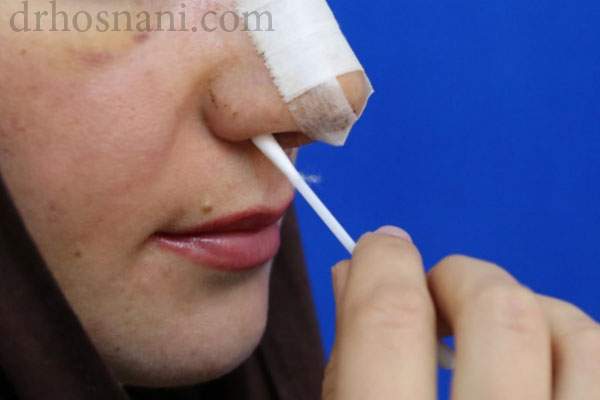
You Can Gently Clean the Nasal Sutures with a Cotton Swab, but Do Not Insert the Swab or Any Object Inside the Nose
Очистка сгустков крови и промывание носа после ринопластики:
Удаление сгустков крови из носа после операции является важным этапом процесса заживления и должно выполняться осторожно и бережно. Вначале для очистки засохшей крови или сгустков снаружи носа лучшим методом является использование физиологического раствора и стерильной марли. Этот простой и эффективный подход помогает поддерживать чистоту области и снижает риск инфекции или воспаления. Даже охлажденная кипяченая вода может использоваться, если физиологического раствора нет в наличии. Однако важным моментом, который следует помнить, является то, что в течение первых трех недель после операции внутри носа следует использовать только капли физиологического раствора, а других химических растворов следует избегать.
Гентамициновая мазь и мазь с витамином А:
В течение первой недели нанесение гентамициновой мази внутри носа помогает поддерживать влажность и предотвращает сухость и раздражение. Гентамициновая мазь обладает антибактериальными свойствами и помогает снизить риск инфекции. После первой недели внутреннюю часть носа следует смазывать мазью с витамином А еще около двух недель. Помимо поддержки заживления тканей, мазь с витамином А обеспечивает excellent увлажняющий эффект и помогает предотвратить чрезмерную сухость.
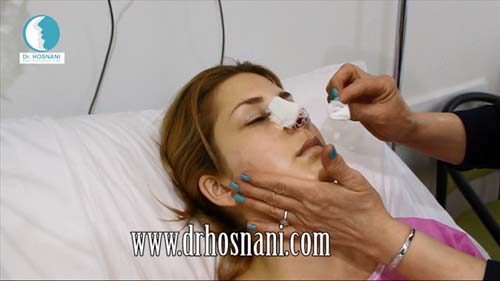
Apply Ointment on the Sutures for One Week
Существует несколько методов промывания носа. Сегодня в аптеках доступны различные инструменты для промывания носа, такие как груши, squeeze-флаконы и специальные контейнеры для промывания носа. Однако доктор Хоснани рекомендует использовать шприц как один из самых точных и эффективных методов промывания носа. Эта техника особенно рекомендуется пациентам, перенесшим ринопластику, потому что шприц позволяет обеспечить контролируемое и равномерное давление во время промывания, помогая эффективно очищать носовые ходы при минимизации риска повреждения носовых структур. В целом, соблюдение этих инструкций может помочь ускорить процесс заживления и снизить вероятность послеоперационных осложнений.
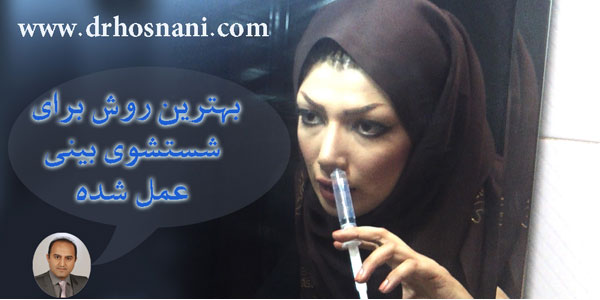
The Best Method for Nasal Irrigation Is Using a Syringe as Described on Dr. Hosnani’s Website