


Cleaning Your Nose After Rhinoplasty
Dr. Hamidreza Hosnani
ENT Specialist | Rhinoplasty Surgeon in Tehran | Nose Surgery Specialist
After rhinoplasty, the presence of blood clots, dried secretions, and crusts inside the nose is completely normal and usually resolves within a few days to a few weeks. Cleaning these clots must be done very gently because the nose is still sensitive during this period, and excessive manipulation may cause bleeding, inflammation, or even displacement of tissues. The best method is to use saline solution (normal saline) with a needle‑free syringe or specialized nasal rinse sprays to soften and remove the clots safely. If you see stubborn crusts or hard clots, do not remove them with your fingers or cotton swabs because this may damage the newly healed mucosa.
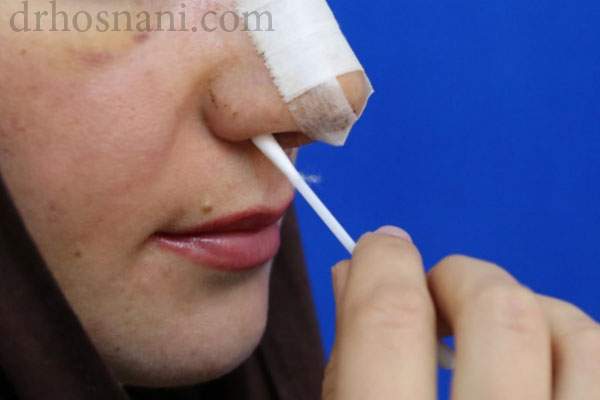
You Can Gently Clean the Nasal Sutures with a Cotton Swab, but Do Not Insert the Swab or Any Object Inside the Nose
Cleaning Blood Clots and Nasal Irrigation After Rhinoplasty:
Removing blood clots from the nose after surgery is an important step in the healing process and should be done carefully and gently. In the beginning, to clean dried blood or clots from the outside of the nose, the best method is to use normal saline solution and sterile gauze. This simple and effective approach helps keep the area clean and reduces the risk of infection or inflammation. Even cooled boiled water can be used if saline is not available. However, an important point to remember is that during the first three weeks after surgery, only normal saline drops should be used inside the nose, and other chemical solutions should be avoided.
Gentamicin Ointment and Vitamin A Ointment:
During the first week, applying gentamicin ointment inside the nose helps maintain moisture and prevents dryness and irritation. Gentamicin ointment has antibacterial properties and helps reduce the risk of infection. After the first week, the inside of the nose should be lubricated with vitamin A ointment for about two more weeks. In addition to supporting tissue healing, vitamin A ointment provides excellent moisturizing effects and helps prevent excessive dryness.
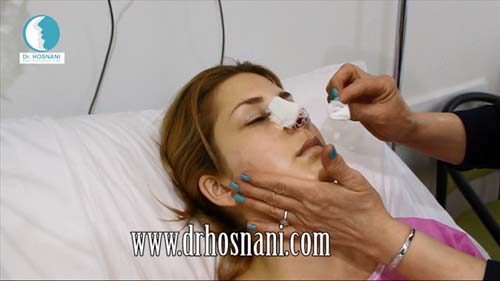
Apply Ointment on the Sutures for One Week
Several methods are available for rinsing the nose. Today, different nasal irrigation tools such as bulbs, squeeze bottles, and special nasal wash containers are available in pharmacies. However, Dr. Hosnani recommends using a syringe as one of the most precise and effective methods for nasal irrigation. This technique is especially recommended for patients who have undergone rhinoplasty, because a syringe allows controlled and even pressure during irrigation, helping to clean the nasal passages effectively while minimizing the risk of injury to the nasal structures. In general, following these instructions can help speed up the healing process and reduce the likelihood of postoperative complications.
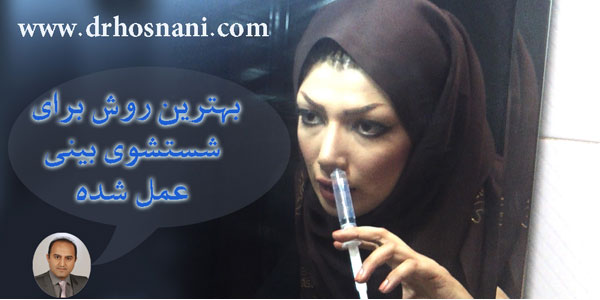
The Best Method for Nasal Irrigation Is Using a Syringe as Described on Dr. Hosnani’s Website