




Step-by-Step Rhinoplasty
Dr. Hamidreza Hosnani
On the night before surgery, eat a normal dinner. After midnight, do not eat or drink anything. On the day of surgery, arrive at the clinic exactly at the scheduled time. Feeling stress before surgery is completely normal.
Two Weeks Before Rhinoplasty
Avoid Aspirin and Ibuprofen
From two weeks before surgery until two weeks after the operation, avoid pain relievers such as aspirin and ibuprofen. These medications can increase the risk of bleeding during surgery and may complicate the procedure.
Stop Smoking and Tobacco Use
Nicotine causes constriction of blood vessels and reduces oxygen supply to tissues, which can significantly delay wound healing. You should completely stop smoking cigarettes, hookah, and other tobacco products at least 2 to 4 weeks before surgery.
One Week Before Rhinoplasty
Avoid Alcohol
Alcohol may increase the risk of bleeding and can interfere with anesthesia medications. For this reason, it is recommended to avoid alcoholic beverages for at least one week before surgery.
Physical Preparation and Nutrition
Healthy Diet: In the weeks leading up to surgery, try to follow a healthy and balanced diet that is light and nutritious.
Reducing Swelling: Foods that contain pineapple (due to the enzyme bromelain) may help reduce swelling after surgery when consumed a few days before the procedure.
Preventing Colds or Infections: If you develop symptoms such as a cold, sore throat, or fever, inform your surgeon. In many cases, surgery may need to be postponed until you recover.
Blood Tests
The following laboratory tests are usually required before surgery:
FBS – Fasting Blood Sugar
CBC (with differential) – Evaluation of anemia or blood disorders
PT and PTT – Assessment of blood clotting function
HIV
HBsAg (Hepatitis B screening)
HCV Ab (Hepatitis C screening)

CT Scan
If you suffer from nasal obstruction or have a visible nasal deviation (a crooked nose), your doctor may recommend a CT scan of the nose and sinuses before surgery.

Pre‑Operative Photos
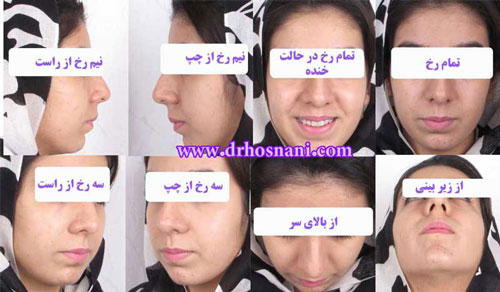
Before surgery, standardized photographs of your nose from several angles will be taken for surgical planning and documentation.
The Night Before Surgery
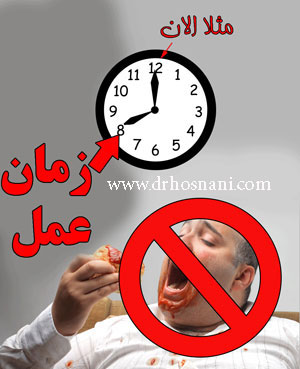
Do not eat or drink anything for at least 8 hours before surgery so that your stomach remains completely empty. During general anesthesia, if the stomach contains food, there is a risk that stomach contents may reflux and enter the airway.
Although a breathing tube is placed in the airway during surgery to reduce this risk, an empty stomach is still essential for safety.
This does not mean that you should eat excessively just before the fasting period begins. Overeating defeats the purpose of fasting. The best approach is to have a normal dinner the night before surgery and then arrive at the clinic fasting on the morning of the procedure.

Day of Surgery
Please arrive at the clinic exactly at your scheduled time. When you enter the clinic, you will be given a form to complete with your personal information.
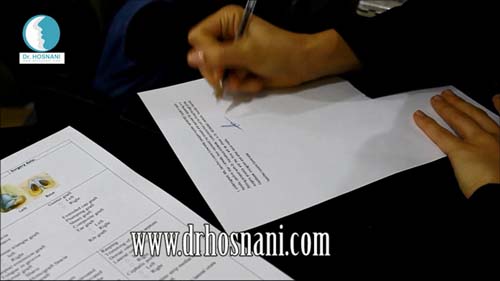
The clinic staff will guide you on how to prepare for the surgery. Your pre‑surgery anxiety is completely normal. The clinic staff understand this feeling and will try to make you comfortable with their friendly and supportive behavior.
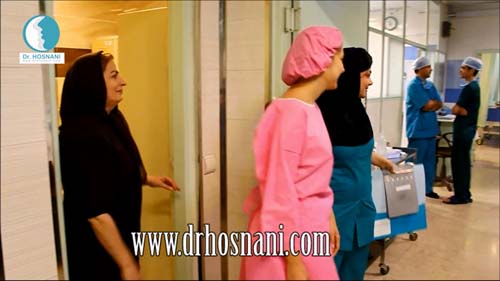
Do not worry that the doctor might have forgotten your requests. Before anesthesia, you will see Dr. Hosnani once again in the operating room to review your expectations and ask any final questions.
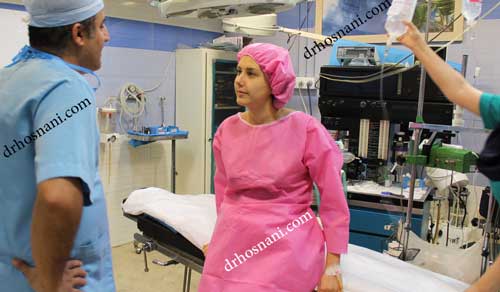
Anesthesia
A very small needle will be inserted into your hand to administer anesthesia medications. The anesthesiologist will come to you, briefly review your medical history, and begin speaking with you while the medication takes effect. Gradually, you will fall asleep and enter the state of anesthesia.

Recovery Room
Approximately two hours later, you will wake up in the recovery room. In this room, your heart rate and blood oxygen levels will be monitored for about one hour.
Feeling thirsty at this stage is completely understandable, but you will not be allowed to drink water while you are still in the recovery room.
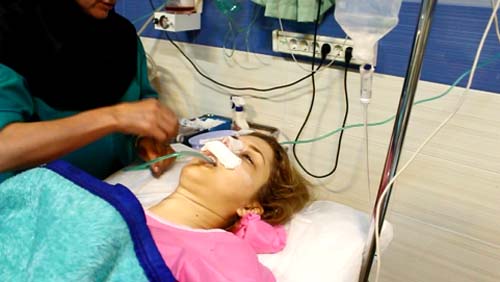
Try to remain lying down in your bed and avoid attempting to sit up. Also avoid bringing your hands toward your face, because you may still be partially drowsy and could accidentally touch your nose.
Hospital Stay
Once you are fully awake, you will be transferred to the patient room.
Your family members can visit you there and stay with you. Gradually, you may begin eating. Start with a small amount of water, then juice and light snacks such as cake. Eating slowly helps prevent nausea and vomiting.

Discharge
After surgery, you must not drive yourself home. Someone must accompany you and take you home safely. You should also not stay alone during the first night after surgery.
If you have traveled from another city, you may stay overnight at the clinic.
The Day After Surgery
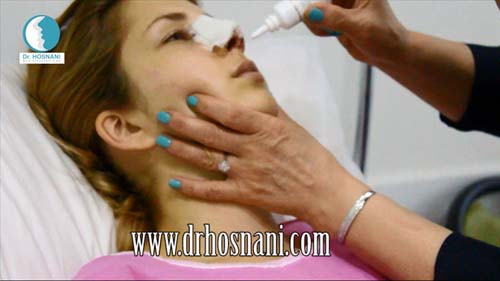
Unlike in the past, large nasal packs are no longer used. Instead, a small sterile gauze soaked in Vaseline is placed inside the nose on the day of surgery. The patient can easily remove it themselves the day after surgery using tweezers. After removing the gauze, apply four drops of the prescribed drops into each nostril. Swallowing the drops is completely safe. Apply the prescribed ointment over the stitches.If for any reason you are hesitant to do this yourself, you can return to the clinic where your surgery was performed, and a nurse will remove it for you free of charge the day after surgery.
One Week After Surgery
About one week after rhinoplasty, it will be time to visit the clinic again for removal of the nasal splint and sutures.
Before coming to the clinic, take a full shower so that the nasal splint becomes wet. Do not attempt to remove the splint yourself. Simply stand under the shower, shampoo your hair, and wash your head and body. Moistening the splint helps it separate gently from the skin and makes removal painless.
Removal of the nasal splint and sutures will be performed by Dr. Hosnani’s trained staff in the clinic.
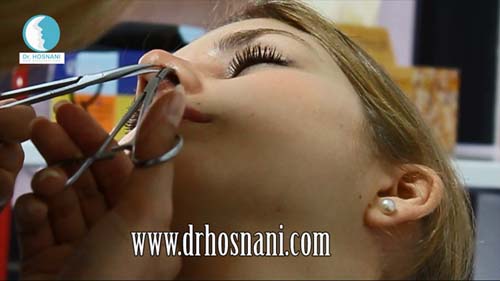
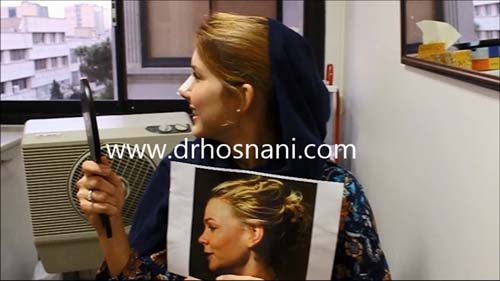
After the splint and sutures are removed, you will be given a mirror so you can see your nose. You will see an approximate result, but remember that the nose is still swollen and will continue to improve over time.
Afterward, medical tape will be applied to your nose. You may ask your companion to record a video of the taping process with your phone so that you can repeat the correct technique later at home.
You can also learn the correct method of nose taping through the educational videos and images available on Dr. Hosnani’s website.
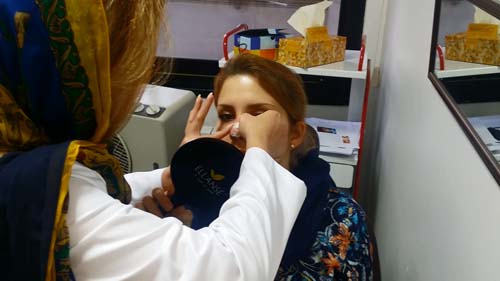
You will also receive instructions for post‑operative care. At this stage, bruising and swelling are usually mild. Any small traces of bruising can typically be covered with makeup.
Follow‑Up Visits
You will usually return for follow‑up visits one month, six months, and one year after surgery. Of course, we are always happy to see you whenever you visit.
