




Rhinoplasty Differences Between Men and Women
Dr. Hamidreza Hosnani
The anatomy of men's noses differs from women's, which is why rhinoplasty for men differs from that for women. These differences can be found both in nasal anatomy and in aesthetic trends between men and women.

In 2014, a survey conducted in the United States showed that rhinoplasty was the second most popular cosmetic surgery of that year. Out of a total of 217,000 surgeries performed, 55,000 were performed on men and 162,000 on women. While part of the popularity of rhinoplasty is due to resolving breathing problems, many individuals undergo this surgery purely to enhance the beauty of their nose and face.
There are distinct differences in rhinoplasty for men versus women. Some of these differences are as follows:
1- Differences in Male and Female Nasal Anatomy
Generally, the male nose is more prominent. The nasal bridge is larger, and the width of the nose in the mid-section is greater. Men typically have thicker skin, and their surgical outcomes compared to women are sometimes slightly less dramatic. In women, a smaller, more delicate nose is generally preferred. The length of the nose in women is slightly shorter than in men. Additionally, depending on the individual's ethnicity, there can be significant variations in nasal width, bridge curvature, dorsal humps, and the columellar angle (the septum between the nostrils).


2- Differences in Aesthetic Preferences
The second difference in rhinoplasty between men and women involves the desired outcomes, as they often have different preferences regarding the ideal nose. Men usually prefer a slightly fuller and more solid nose. For men, the nasal tip should be less upturned, and an angle of about 90 to 95 degrees with the lip is sufficient.
However, women often prefer a more refined nose with a slightly more upturned tip. Women typically like their nasal tip to be 5 to 10 degrees more upturned than men's, often with a slight "supratip break" (a subtle dip immediately above the nasal tip).
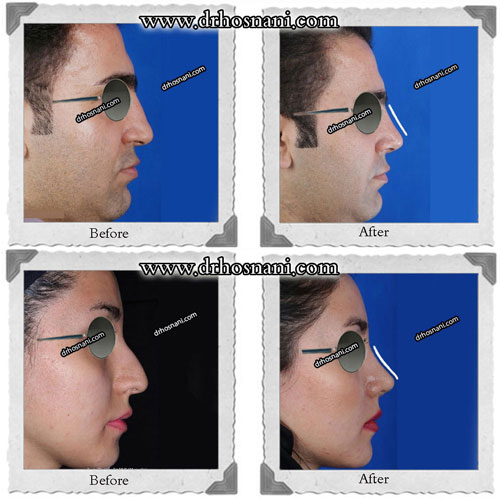
Furthermore, many women prefer a slight curve on the bridge of the nose. It is important to note that there is a fine line between a beautiful nose and an unnatural-looking one. For this reason, it is recommended to avoid requesting unnatural "models" or specific fads that require the surgeon to make extreme changes to the natural anatomy of the nose.
In summary, differences in rhinoplasty for men and women can be categorized into differences in nasal anatomy and differences in aesthetic trends.
Video: A Perfect 10/10: Male Rhinoplasty Results with Dr. Hosnani

Video Description
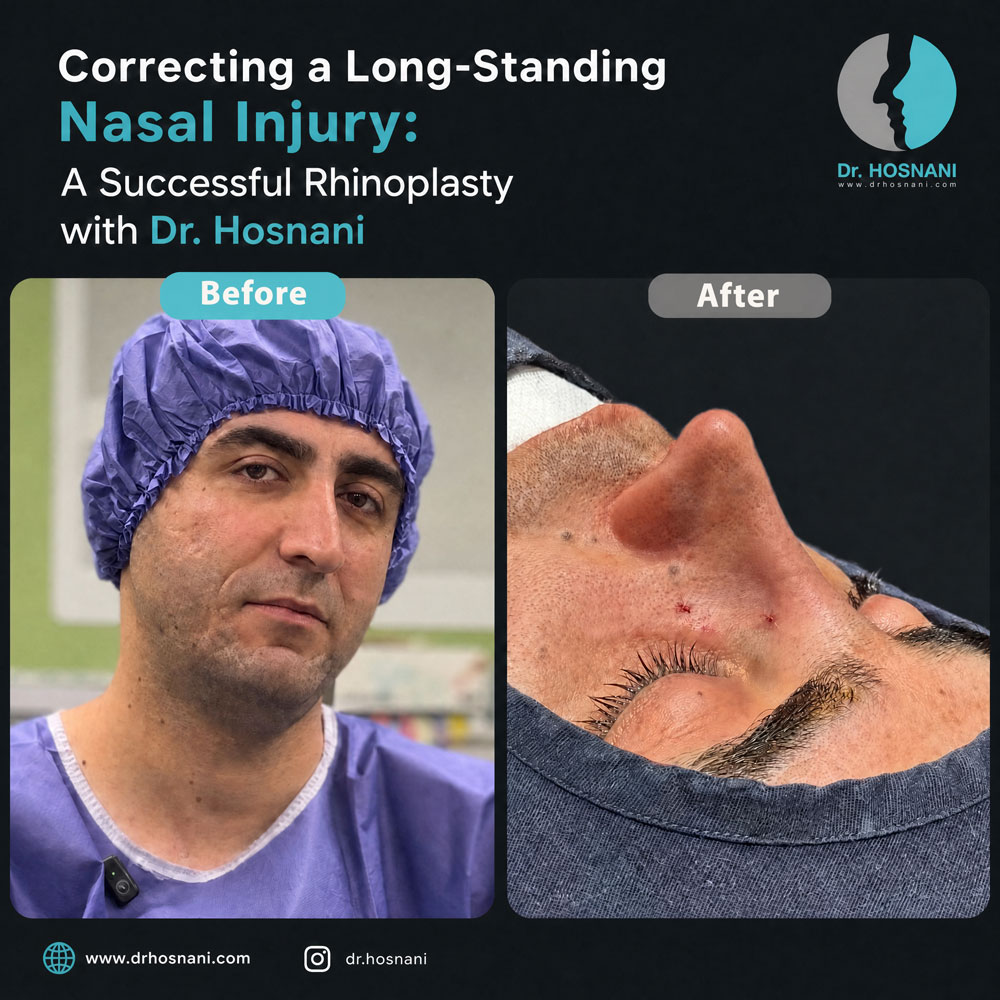
Video Correcting a Long-Standing Nasal Injury: A Successful Rhinoplasty with Dr. Hosnani
Video Description