




Treatment of Nasal Fractures
Dr. Hamidreza Hosnani
ENT Specialist | Rhinoplasty Surgeon in Tehran | Nose Surgery Specialist
Resetting the nasal bones is only possible up to about one month after a nasal fracture. After one month, the bones usually heal together, and correction of the nasal shape becomes possible only through cosmetic rhinoplasty. The sooner the nasal bones are repositioned after a fracture, the better the result.

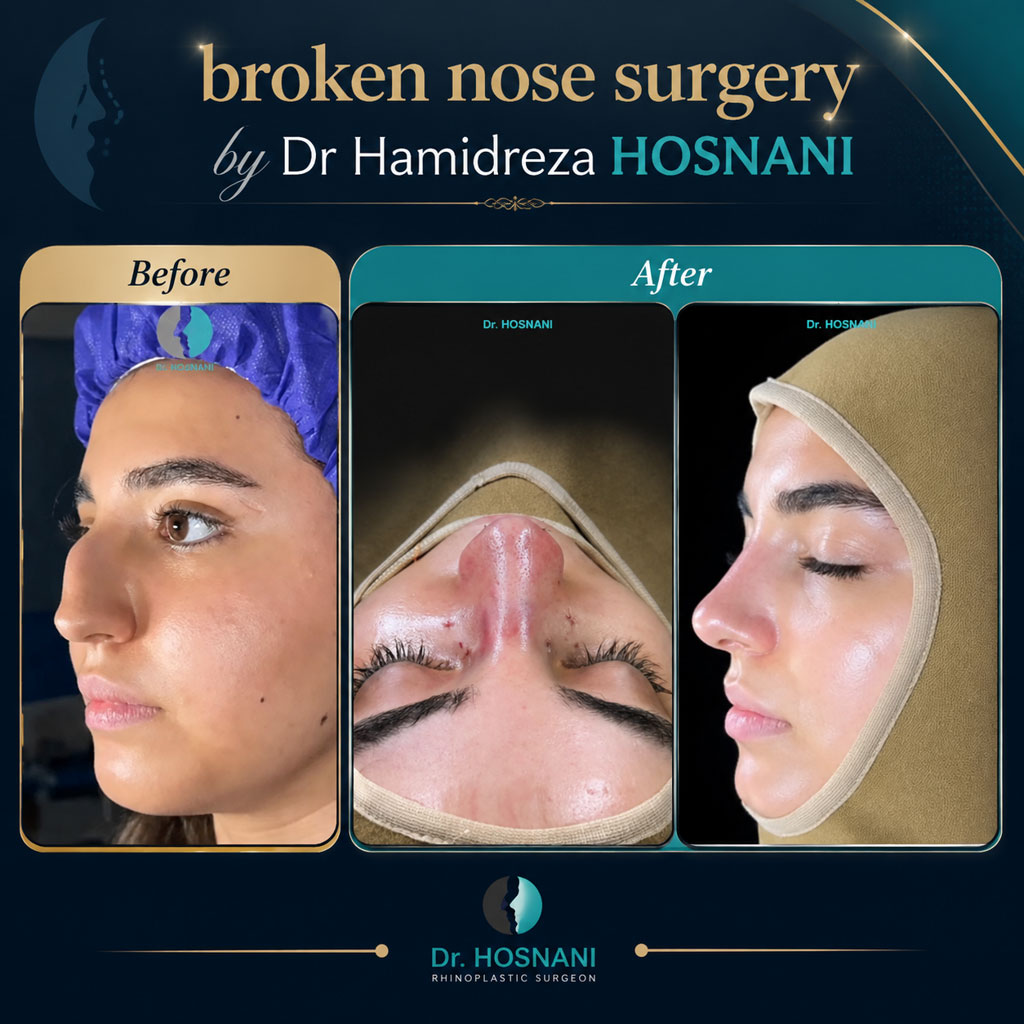
A broken nose can cause a crooked nose and breathing problems. Rhinoplasty can correct the crookedness, deviation, and breathing problems caused by a nasal fracture.
Sometimes, after relatively severe trauma, the nasal framework may fracture.
If the impact is strong enough, the bones or cartilage may shift from their original position, which can lead to cosmetic deformities or breathing problems. In such cases, the injured bone or cartilage must be repositioned (reduced) so that the nose can return to its normal state.
In children, there is about one week to perform this reduction, and in adults approximately two weeks. If more time passes, the bone or cartilage heals in the displaced position, and the resulting cosmetic or functional problem may become permanent.
Now consider a person who has suffered a nasal fracture but, instead of seeking immediate medical attention, presents six months after the injury. In such cases, simple repositioning of the displaced bone or cartilage is no longer possible. To correct the resulting deformities, cosmetic nasal surgery techniques must be used.
In other words, contrary to what many people believe, treatment of an old nasal fracture is no longer considered a therapeutic procedure and is therefore not covered by insurance. Correction of an old nasal fracture is performed through rhinoplasty.
Dr. Hosnani Podcast: Treatment of Nasal Fractures
Podcast summary:Individuals who suffer a nasal fracture due to an accident should first undergo reduction and correction of the fracture. After that, they should wait about six months until the nasal bones heal and stabilize completely. If needed, cosmetic rhinoplasty can then be performed. A nasal fracture is one of the most common facial injuries and usually occurs due to car accidents, sports injuries, physical altercations, or falls.
This injury can cause not only changes in the appearance of the nose but also breathing problems.
An important question many patients ask is:
Can cosmetic rhinoplasty be performed immediately after a nasal fracture?
The answer depends on the timing of the visit and the type of fracture.
In this article, nasal fractures are divided into two categories: acute (recent) fractures and old (chronic or healed) fractures. The treatment approach for each is explained below.
Part One: Acute Nasal Fracture
Definition of an Acute Fracture
A fracture is considered acute if less than 10 to 14 days have passed since the injury.At this stage:
the bones have not fully healed
significant swelling is present
repositioning without open surgery is often possible
Symptoms of a Recent Fracture
rapid swelling of the nosebleeding
visible nasal deviation
bruising around the eyes
pain when touching the nose
difficulty breathing
Treatment of a Recent Fracture
✅ Closed ReductionIf the patient visits within the first 7 to 10 days, the nasal bones can usually be repositioned into their correct place without surgical incisions, using local anesthesia or light general anesthesia.
⏳ Best timing:
between day 3 and day 7 after the injury (after the initial swelling decreases)
Can Cosmetic Rhinoplasty Be Performed at the Same Time?
In most cases, no.Reasons:
significant swelling prevents accurate judgment of the final nasal shape
the nasal structure is still unstable
the risk of infection and complications may increase
✅ Standard recommendation:
After the bones are repositioned, wait at least six months until the bone and soft tissues heal completely, and then perform rhinoplasty if needed.
Part Two: Old Nasal Fracture (Malunited Fracture)
Definition of an Old Fracture
If more than three to four weeks have passed since the fracture and the bone has healed in an incorrect position, it is considered an old fracture.In this situation:
the bone has stabilized
the deviation has become permanent
the deformity is fixed
Symptoms of an Old Fracture
clear nasal deviation or crookednessformation of a hump or depression
asymmetry of the nostrils
persistent breathing problems
deviation of the nasal septum
Treatment of an Old Fracture
At this stage, simple repositioning is no longer possible.✅ Main treatment: Open rhinoplasty combined with osteotomy.
During this surgery:
the healed bones are carefully re‑fractured (controlled osteotomy)
the nasal septum is corrected (septoplasty)
cartilage grafts may be used if necessary
the external appearance of the nose is reshaped
Video From a Childhood Fall to a Perfect Nose | Dr. Hosnani's Rhinoplasty
Video Description
A young woman shares her remarkable journey with Dr. Hosnani. At just six years old, she fell and broke her nose, leaving visible signs of fracture and a noticeable crookedness that remained to this day. Although it was realigned at the time, it quickly became misaligned again. Now, seeking relief from both her nasal deviation and breathing difficulties, she turns to Dr. Hosnani for rhinoplasty. Watch the incredible before-and-after transformation and enjoy the results!
Important Considerations in Surgery for Fractured Noses
1️⃣ Importance of CT Scan EvaluationIn severe fractures, detailed imaging is necessary to evaluate the nasal bones and septum.
2️⃣ Simultaneous Correction of Breathing Problems
In most old fractures, the nasal septum is also deviated and must be corrected during the same surgery.
3️⃣ Possible Need for Cartilage Grafts
In fractures that cause saddle‑nose deformity or depressions, cartilage grafts from the septum, ear, or rib may be required.
4️⃣ More Swelling Compared with Standard Rhinoplasty
Noses that have suffered trauma often:
have more fibrosis (scar tissue)
experience longer‑lasting swelling
Best Timing for Rhinoplasty After a Fracture
✅ If reduction has been performed:at least 6 months later
✅ If the fracture was untreated and has become old:
surgery can be performed once the bone has completely stabilized (usually after about 3 months).
I Only Want the Nasal Fracture Corrected!
One month after a nasal fracture, the nasal bones heal again and the deformity can no longer be corrected with simple repositioning. Reduction of the nose should be performed as soon as possible. Ideally, the patient should visit within less than one week and at most within three weeks.If more than one month has passed, the bones have already healed and become firm. In this situation, the procedure is no longer considered a therapeutic treatment and is not covered by insurance. Such noses must be corrected using plastic surgery techniques.