




FAQs and Common Questions About Rhinoplasty
Dr. Hamidreza Hosnani
ENT Specialist | Rhinoplasty Surgeon in Tehran | Nose Surgery Specialist
Some questions are common, meaning they are frequently asked by website visitors and rhinoplasty applicants. Questions such as the age for rhinoplasty, the best season for nose surgery, the difference between the open and closed methods, etc., have been answered in this section. It is recommended to read these Q&As before asking your own question.
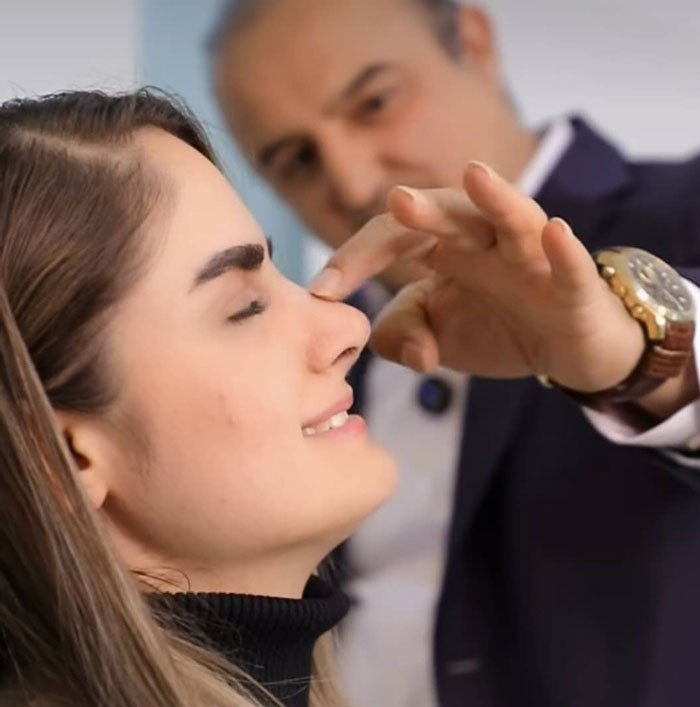
Revision rhinoplasty can also become this beautiful in the hands of Dr. Hosnani.
1. What is the appropriate age for cosmetic nose surgery?
The legal age at which a person can make independent decisions is 18 years. However, from a medical standpoint, girls can usually undergo rhinoplasty from around age 14 and boys from about age 16, provided that parental consent is given. There is generally no strict upper age limit for rhinoplasty. Even individuals up to around 60 years old may undergo the procedure as long as they are in good general health and do not have serious underlying medical conditions.

The minimum recommended age for rhinoplasty is usually 16 years for females and 18 years for males.
2. What is meant by a “fleshy nose” and a “cartilaginous (bony) nose”?
If the nasal skin is thick and the underlying cartilages are weak, the nose is commonly referred to as a fleshy nose. If the skin is thin and the underlying cartilage and bone structures are strong, it is referred to as a cartilaginous or bony nose. Because modern rhinoplasty techniques primarily reshape cartilage and bone rather than the skin itself, bony noses usually respond better to surgery and tend to achieve more refined results. Nevertheless, long‑lasting aesthetic improvements can still be achieved in fleshy noses.
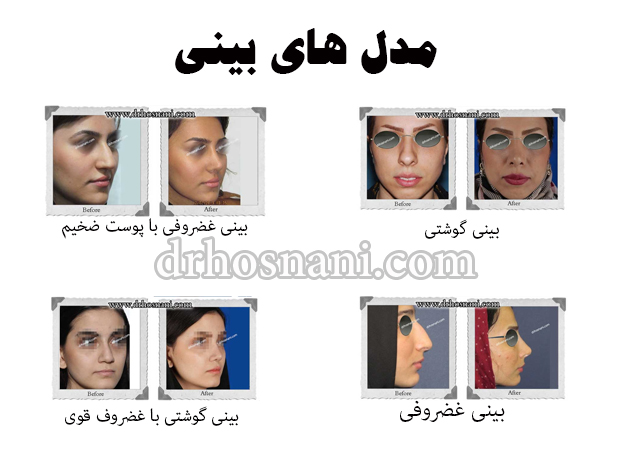
In Dr. Hosnani’s gallery, you can view different types of noses categorized as fleshy, cartilaginous, cartilaginous with thick skin, and fleshy with strong cartilage.
3. Is there a possibility of needing a second surgery?
According to statistics from leading rhinoplasty surgeons worldwide, about 10% of patients may require a second procedure. In our practice, the rate is even lower, but the possibility still exists. In such cases, minor remaining imperfections from the first surgery are corrected. This secondary procedure is commonly referred to as revision rhinoplasty or a nasal “touch‑up.”
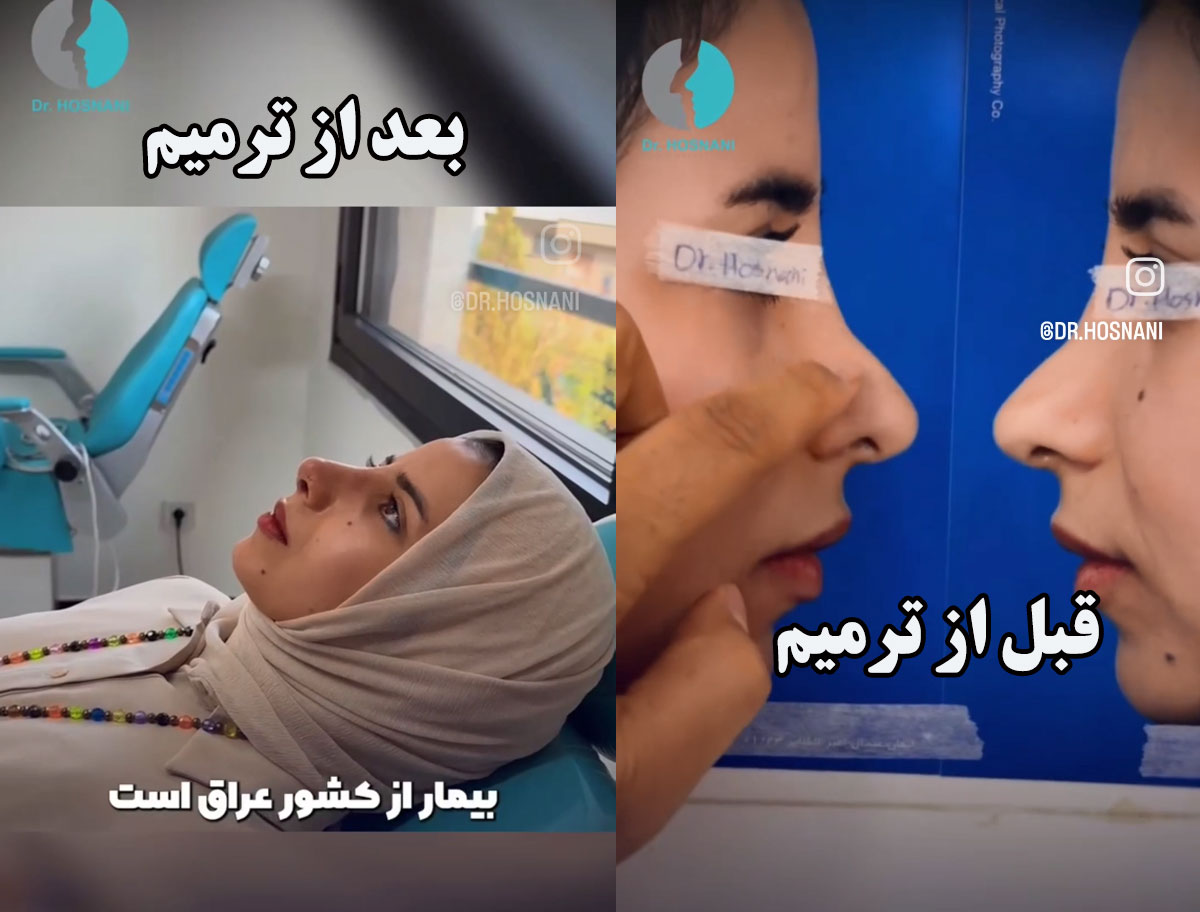
A clear fracture was visible in the nasal bridge, which could be seen in the frontal view and was completely obvious in the profile view. In the previous surgery, the nasal tip had also been rotated upward excessively, disturbing facial harmony. One week after revision surgery, when the patient returned for suture removal, despite the normal postoperative swelling, the nasal shape had become noticeably more balanced and aesthetically pleasing.
4. Is nasal packing used after surgery?
With modern surgical techniques, traditional nasal packing is usually unnecessary. Sometimes alternatives such as a nostril retainer may be used. Typically, two small pieces of cotton are placed inside the nostrils and are removed the day after surgery.
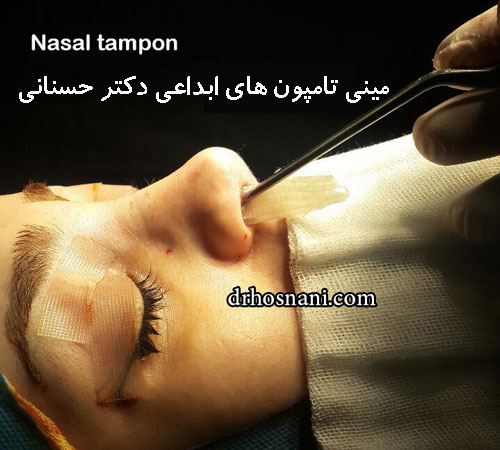
The mini‑tampons introduced by Dr. Hosnani are very small and painless to remove. These mini‑tampons help accelerate wound healing. Their use is not mandatory, but they are recommended for patient comfort. In my patients, nasal tampons are generally not used.
5. Can nasal polyp surgery be performed at the same time as cosmetic nose surgery?
A nasal polyp is an overgrowth of the nasal mucosa that often develops in response to allergens. Polyps can occupy the nasal passages and sinuses, causing nasal obstruction. As a result, airflow becomes restricted and the patient may experience nasal congestion, reduced sense of smell, headaches, facial pressure, and post‑nasal drip. If medication does not successfully treat nasal polyps, endoscopic sinus surgery may be required. During this procedure, specialized lenses and instruments are used to remove the polyps from the nasal passages and sinuses. Endoscopic sinus surgery can be performed simultaneously with rhinoplasty.
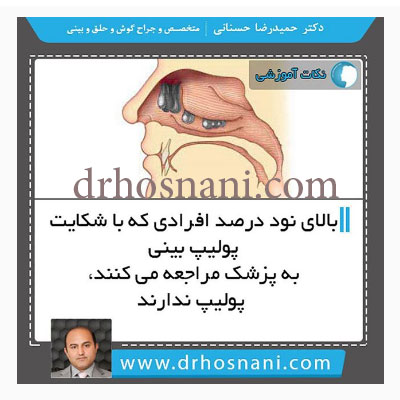
Over 90 percent of people who visit a doctor with complaints of nasal polyps actually do not have polyps.
6. How long is the recovery period after rhinoplasty?
Light work activities are usually possible about four days after surgery. For physically demanding jobs, it is better to rest for up to two weeks.
Bruising after rhinoplasty usually appears around the eyes and cheeks and is most noticeable during the first few days. It typically peaks within two to three days, then gradually changes color from purple and blue to green and yellow. Most bruising resolves within 7–10 days, and after two weeks little visible evidence usually remains.
7. Can rhinoplasty be performed with laser?
Currently, cosmetic nose surgery cannot be performed using laser technology. Although the concept may be used for marketing purposes, in reality rhinoplasty requires surgical reshaping of cartilage and bone. Laser technology can theoretically be used for making surgical incisions, but because rhinoplasty involves very small incisions, laser offers no practical advantage and is generally not used.
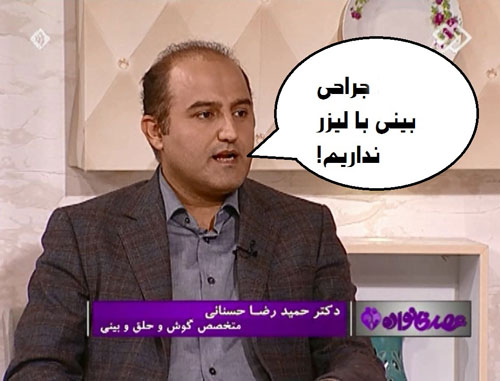
Dr. Hosnani Said in a Television Interview on Asr‑e Khanevadeh That Laser Is Not Used in Rhinoplasty
9. When is the patient discharged from the clinic?
In most cases, the patient is discharged the same evening after surgery. There is usually no need to stay overnight at the medical center.
10. Will breathing become worse after rhinoplasty?
For about one month after surgery, some nasal congestion may occur due to swelling and internal secretions. This is temporary, and breathing typically returns to normal—or even improves—after the healing process.
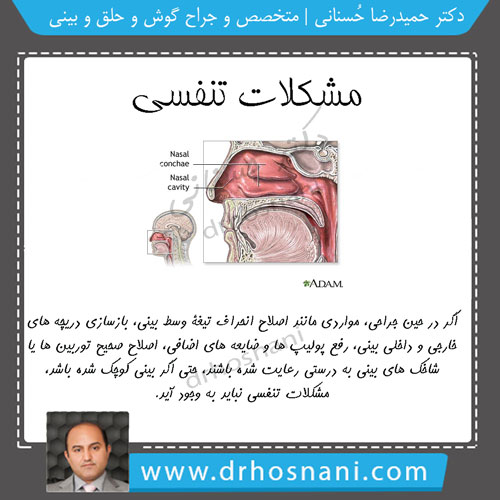
If rhinoplasty is performed correctly, not only should respiratory problems not arise, but they should also improve. The nasal turbinates are visible in this figure.
11. Which do you prefer: open rhinoplasty or closed rhinoplasty, and what is the difference?
In closed rhinoplasty, all surgical incisions are made inside the nose, so there are no visible stitches on the outside. This method is generally suitable for cases with minor nasal deformities. In open rhinoplasty, a small incision is made under the nose (on the columella). The resulting scar becomes barely visible about six months after surgery. This technique allows greater visibility and control and can be used for all types of nasal surgery.
12. Which specialists are best suited for rhinoplasty?
Worldwide, rhinoplasty is commonly performed by three groups of specialists: ENT surgeons (Ear, Nose, and Throat), plastic surgeons, and maxillofacial surgeons. All three groups receive training in rhinoplasty techniques. However, surgical skill and experience vary between individual doctors. Within each specialty, there are highly skilled surgeons who have developed strong expertise in nasal surgery. Ultimately, the choice depends on the patient.

In Closed Rhinoplasty, There Is No External Incision and All Surgical Steps Are Performed Through the Nostrils