




Computerized Nasal Imaging / Nasal Design
Dr. Hamidreza Hosnani
The use of computer software like Photoshop can be used as a tool for interaction between the doctor and the patient. However, the result of a computer design cannot be guaranteed. In general, it is better to rely on... rather than requesting a computer design.
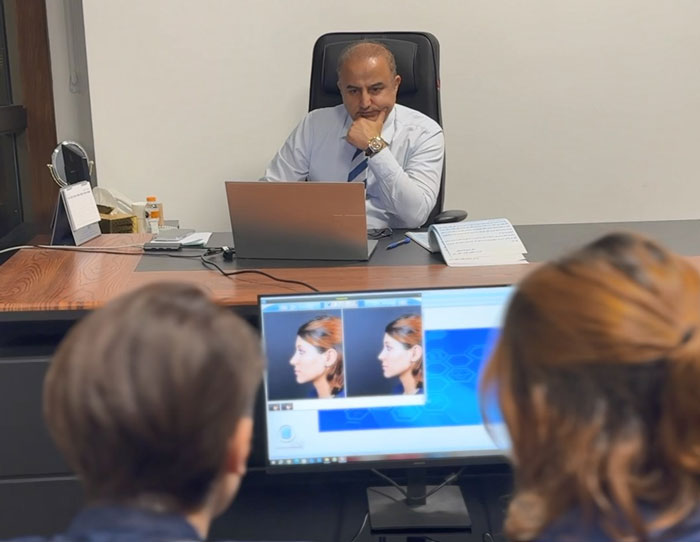
One of the common challenges in rhinoplasty is aligning the patient’s expectations with the biological realities of the human body. Many people assume that the nose is like a piece of stone or metal that a surgeon can carve into any desired shape. In reality, however:
The human nose is a living tissue.
This simple statement contains an important truth. Unlike an inanimate object, the structures that form the human nose—cartilage, bone, skin, and the nasal mucosa—all react after surgery.
These biological responses include:
Inflammation: The body’s natural response to surgical trauma, which leads to swelling.
Tissue regeneration: Cellular processes that repair and rebuild tissues.
Structural changes: Cartilage and bone may undergo subtle changes under internal or external forces, such as skin tension or the healing process.
Skin reaction: The skin itself—depending on its thickness and characteristics—plays an important role in the final shaping and healing of the nose.
These biological reactions are not completely under the surgeon’s control. While the surgeon uses experience and technical skill to create the best possible structure, it is impossible to guarantee that the nose will look exactly the same months later as it did in the first days after surgery.
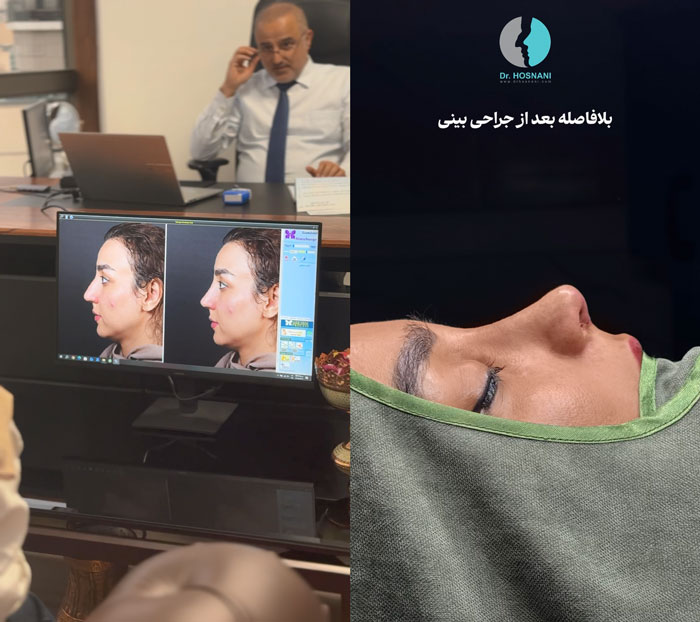
The Role of Computer Software (Such as Photoshop)
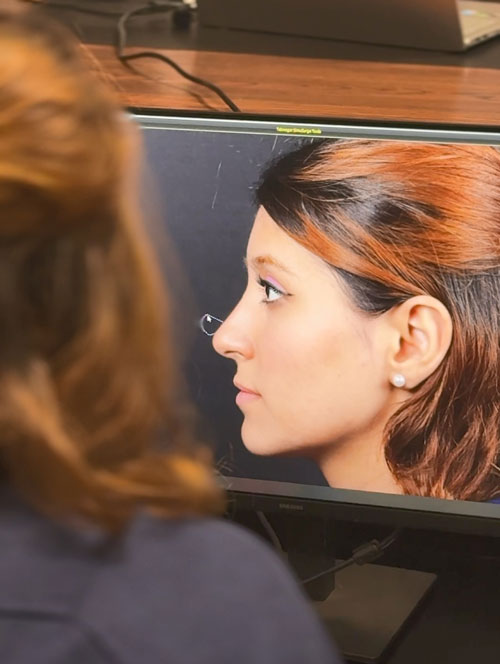
Graphic tools like Photoshop or specialized rhinoplasty simulation software can be helpful during the consultation process. These tools help the surgeon:
Understand the patient’s preferences: By modifying the patient’s photo, the surgeon can better understand the type of nose shape the patient desires.
Manage expectations: Showing possible limitations through simulation can help patients develop more realistic expectations.
Explain surgical limitations: For example, certain changes may negatively affect breathing or may not harmonize with the patient’s facial structure.
However, the most important point is this:
These software tools cannot guarantee the final rhinoplasty result.
They are simply communication tools between surgeon and patient. The changes applied to photos represent a possible goal—not a guaranteed outcome.
Focus on Surgical Experience and Real Evidence
Considering these facts, the best approach during a rhinoplasty consultation is the following:
Instead of focusing entirely on computer simulations, view them as supportive tools rather than definitive predictions.
Carefully review the surgeon’s before-and-after photo gallery: These photos provide real evidence of the surgeon’s ability to achieve good results in patients with nasal features similar to yours.
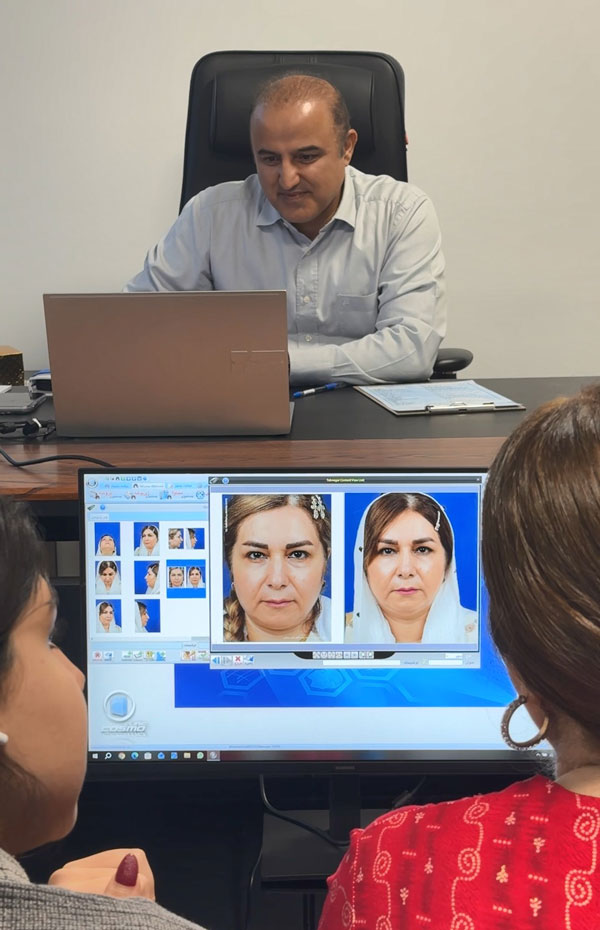
Ask key questions: Ask the surgeon which cases in the patient gallery most closely resemble your current nose and how a similar outcome might be achieved for you.
Develop realistic expectations: Understand that the human body responds in its own way. The final outcome of rhinoplasty is influenced not only by surgical technique but also by biological healing processes.
Ultimately, trusting the surgeon’s experience and evaluating real patient results is a more reliable guide when choosing the future shape of your nose than relying solely on digital photo simulations.

• Showing photographs and using computer software such as Photoshop can help the surgeon better understand the patient’s wishes. In other words, these methods serve as communication tools between doctor and patient, but they cannot guarantee the final surgical result.
• Each person’s facial structure—including the upper jaw, lower jaw, and forehead—is unique. Every face requires a nose shape that matches its own proportions. In addition, nasal types vary greatly. There are approximately - different nasal types, each with its own specific challenges. Therefore, copying someone else’s nose is not possible and usually does not lead to aesthetically pleasing results.
• For this reason, during the consultation it is often more useful to review the surgeon’s before‑and‑after photo gallery rather than relying heavily on computer simulations. Ask the surgeon which cases resemble your nose the most.
Video: Can AI Beat a Surgeon? Dr. Hosnani Takes on ChatGPT!

Video Description