



Rare Complications of Rhinoplasty
Dr. Hamidreza Hosnani
Rhinoplasty, although usually safe and successful, can be accompanied by rare but serious complications that require careful post-operative care; for example, nasal tissue fibrosis as an excessive inflammatory reaction can lead to stiffness and loss of flexibility in nasal tissues and create an unnatural appearance, while the feeling of internal nasal adhesions (synechiae) caused by the mucosa sticking together can make breathing difficult. Nasal infection, although rare, in case of poor hygiene or a weak immune system, can lead to severe sinusitis or even spread to surrounding tissues. Voice changes due to changes in the internal structure of the nose or nerve damage may occur and affect voice quality. Chronic or persistent pain after surgery can result from damaged nerves and require additional treatments. Finally, death after rhinoplasty, which is very rare, often occurs due to anesthesia complications, allergic reactions, or cardiovascular problems. These complications, with an incidence rate of less than 1 percent, emphasize the importance of choosing an experienced surgeon and careful medical follow-up to minimize risks.
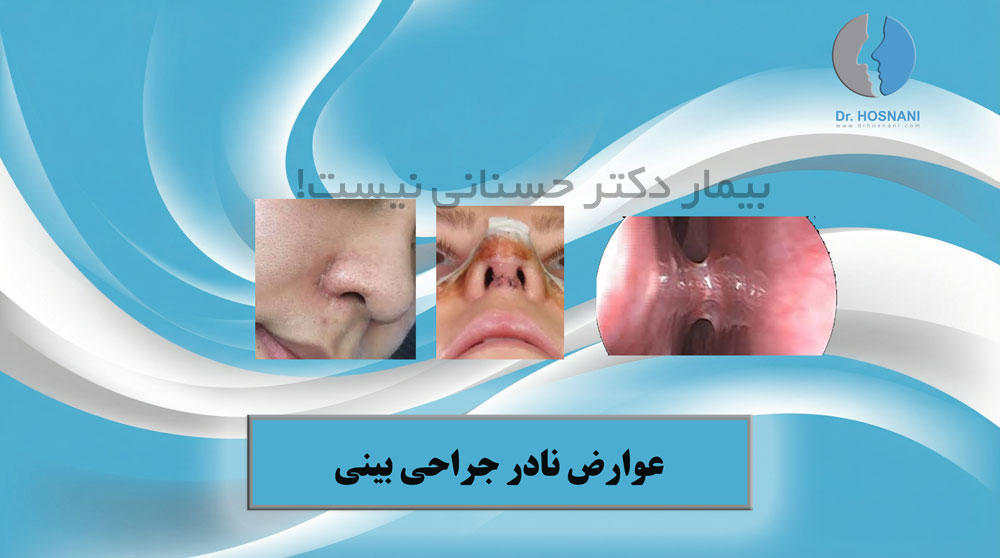
Rhinoplasty is one of the most common cosmetic procedures and, in most patients, it leads to a satisfactory result without major problems. However, like any other surgical procedure, there is a possibility of certain rare complications. Being familiar with these issues helps patients make informed decisions and seek timely medical advice if unusual symptoms occur. Below, each of the rare complications of rhinoplasty mentioned in the attached file is explained separately.
Scar or Visible Surgical Mark
In open rhinoplasty, a small incision is made on the columella, the strip of tissue between the nostrils. This area usually heals with minimal visibility, but in rare cases, a noticeable, raised, or dark scar may remain. This is more likely in individuals with a genetic tendency toward prominent scarring, darker skin, or inadequate postoperative care. Fortunately, it can usually be treated with laser therapy, scar creams, steroid injections, or surgical revision if necessary.
Intranasal Adhesion Sensation
Adhesion, or synechia, occurs when two internal surfaces of the nose stick together because of significant inflammation or contact between healing wounds. This condition is very rare and usually interferes with breathing. Its treatment is simple and can be corrected with a minor procedure in the operating room or clinic. Prevention is also possible through regular nasal irrigation and avoiding trauma or infection.
Infection
Infection after rhinoplasty is very uncommon because the nose has a rich blood supply, which helps protect against infection. Rare cases of infection usually present with skin redness, fever, increasing pain, or foul-smelling discharge. Treatment is generally straightforward and includes oral antibiotics or, in limited cases, drainage of the infected area.
Possible Voice Changes
In very specific situations, minor and temporary changes in the voice may occur. This is usually due to swelling behind the nose, changes in airflow, or temporary nasal obstruction. Permanent voice changes are extremely rare and are seen only in patients with special sensitivities or unusual surgical circumstances. Most patients return to normal within a few weeks.
Vomiting After Surgery
Vomiting after surgery is usually caused by the effects of anesthesia medications, swallowing blood during the operation, or individual sensitivity. Although unpleasant, it is generally not dangerous and is considered a rare and temporary complication. Doctors usually minimize the likelihood of this problem by prescribing anti-nausea medications before and after surgery.
Recurrence in Thick-Skinned Noses
In thick-skinned noses, heavy skin and abundant soft tissue may lead to partial relapse or a wider appearance over the months or years after surgery. This is very uncommon and usually happens when the nasal structure has been reduced too much or when the heavy skin cannot maintain the new shape. Using structural rhinoplasty techniques greatly reduces the risk of recurrence.
Pain After Rhinoplasty
Pain after surgery is usually mild and can be controlled with standard pain medications. Severe or unusual pain is a rare complication and may result from excessive inflammation, trauma after surgery, or sinus-related problems. If such pain occurs, medical evaluation is necessary, although it is usually manageable with medication.
Death After Surgery
Death resulting from rhinoplasty is an extremely rare and exceptional complication worldwide. Reported cases are generally related to anesthesia problems, uncontrolled underlying medical conditions, or severe drug reactions. Performing surgery with an experienced anesthesiologist, proper preoperative assessment, and standard surgical techniques reduces this risk to nearly zero.
Breathing Problems
In some patients, narrowing of the nasal valves or swelling of the mucosa may make breathing difficult, but this is usually temporary. Persistent breathing problems are very rare and typically occur because of excessive weakening of the nasal cartilages or residual septal deviation. These issues can usually be corrected with revision surgery.
Nasal Necrosis
Skin necrosis of the nose is one of the rarest complications of rhinoplasty and occurs when the blood supply to a portion of the skin is severely compromised. This is more likely in patients with risk factors such as heavy smoking, previous filler injections, or excessive pressure from the splint. Rapid diagnosis and proper treatment, such as loosening dressings, prescribing antibiotics, applying special ointments, and careful skin care, can prevent serious damage.
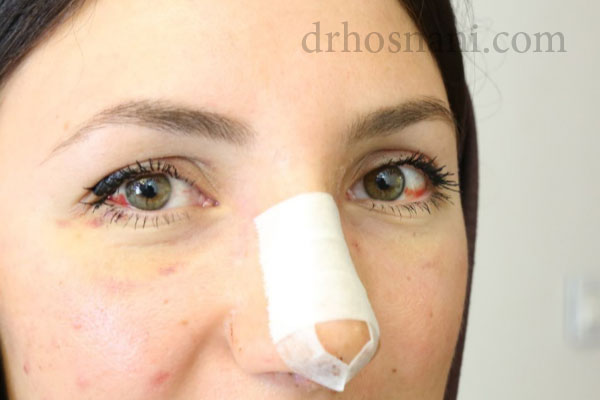
Red Eyes After Rhinoplasty