




Breathing Problems After Rhinoplasty
Dr. Hamidreza Hosnani
ENT Specialist | Rhinoplasty Surgeon in Tehran | Nose Surgery Specialist
If, during surgery, issues such as correction of the deviated nasal septum, reconstruction of the external and internal nasal valves, removal of polyps and extra lesions, and proper correction of the turbinates are correctly addressed, breathing problems should not occur even if the nose has been reduced in size.
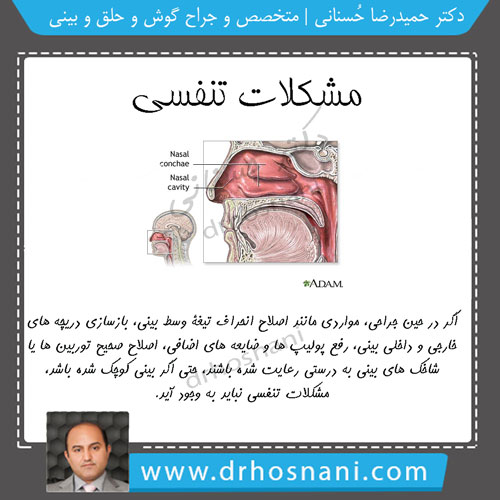
If rhinoplasty is performed correctly, not only should respiratory problems not arise, but they should also improve. The nasal turbinates are visible in this figure.
Why Breathing Problems May Occur After Rhinoplasty
The Functional Role of the Nose
Breathing difficulty after rhinoplasty is one of the most common concerns among patients considering nasal surgery. The nose is not merely a central feature of the face; it also serves the essential physiological role of conducting airflow and helping regulate breathing. For this reason, any alteration in its internal or external structure may influence airflow, either temporarily during recovery or, in certain cases, for a longer period.Temporary Changes During the Healing Phase
In most cases, postoperative breathing difficulty is caused by the natural swelling of the tissues inside the nose. As the healing process advances and internal inflammation gradually subsides, nasal airflow usually improves step by step. This means that early congestion is often part of a normal recovery pattern rather than a sign of surgical failure.When Structural Factors Must Be Considered
That said, some patients may experience breathing problems because of underlying structural issues such as an uncorrected septal deviation or narrowing of the nasal valves. In such situations, professional evaluation becomes important in order to distinguish routine postoperative congestion from a functional problem that requires further attention.From Dr. Hosnani’s perspective, postoperative breathing difficulty should always be interpreted in light of timing: in the early weeks, swelling is usually the principal explanation, whereas persistent obstruction may point to a structural issue that deserves careful assessment.
Main Causes of Nasal Congestion After Surgery
Swelling of the Nasal Mucosa and Internal Tissues
One of the most frequent reasons for difficult breathing after rhinoplasty is swelling of the inner nasal lining. During surgery, the internal tissues are necessarily manipulated, and this leads to inflammation within the nose. As a result, the airway may become narrower for a period of time, causing a temporary sense of blockage. This is especially common during the first few weeks after surgery.Dried Blood and Retained Secretions
After surgery, small amounts of dried blood or mucus may remain inside the nasal passages. These materials can temporarily obstruct airflow and intensify the sensation of stuffiness. For this reason, saline irrigation is commonly recommended to help soften and remove secretions gently, allowing the airway to clear more comfortably.Residual or Uncorrected Septal Deviation
Some patients have a deviated septum before surgery. If this issue is not fully corrected during the procedure, or if healing leads to renewed asymmetry, breathing may continue to feel restricted. In such cases, one side of the nose may allow less airflow than the other, leading the patient to feel that breathing is easier through a single nostril.Narrowing of the Internal or External Nasal Valves
The nasal valves are among the most important regions in the airway. If they become overly narrowed during surgery, the passage of air may be compromised. This problem is more likely to occur in operations aimed at excessive reduction, especially when aesthetic goals are pursued without adequate functional support.According to Dr. Hosnani, successful rhinoplasty must never sacrifice function for appearance; when the internal structures are preserved and reinforced properly, elegant refinement and comfortable breathing can coexist.
Are Breathing Problems After Nose Surgery Normal?
Short-Term Congestion Is Often Expected
In many cases, breathing difficulty after rhinoplasty is a normal part of the healing process and is not a cause for alarm. As swelling diminishes and the tissues recover, the natural function of the nose gradually returns. This improvement may occur over several weeks and, in some patients, over a period of months.The Difference Between Temporary Congestion and Structural Obstruction
Temporary congestion is usually related to swelling, crusting, or internal secretions and tends to improve with time. Structural breathing problems, by contrast, are generally linked to changes in the anatomy of the septum, valves, or turbinates. If nasal obstruction persists without meaningful improvement, the underlying cause may need to be investigated more closely.Why Patience Is Often Necessary
The internal healing process after rhinoplasty takes longer than many patients expect. Although the external appearance may look improved relatively early, the deep tissues inside the nose often require much more time to settle. This is why early discomfort should be interpreted with caution and not judged too quickly.In Dr. Hosnani’s view, patients should not confuse early postoperative congestion with permanent dysfunction; in the majority of properly performed cases, breathing becomes clearer as inflammation resolves and the nasal tissues stabilize.
When Postoperative Breathing Difficulty Becomes Concerning
Warning Signs That Require Medical Attention
Although congestion during recovery is common, certain situations deserve prompt review. If a patient continues to experience severe breathing difficulty several months after surgery, or feels that the airway is nearly or completely blocked, a thorough examination is advisable. Persistent symptoms should not be ignored.Associated Symptoms That May Suggest a Problem
Severe pain, ongoing bleeding, or a sudden worsening of airflow can indicate that the issue is more than ordinary swelling. These findings may point to infection, excessive scar formation, structural collapse, or another complication that requires professional management.The Role of Postoperative Infection
Infection after rhinoplasty is relatively uncommon, but when it occurs, it may intensify inflammation inside the nose and make breathing more difficult. In such circumstances, appropriate medication and timely medical care are usually effective in controlling the condition and restoring comfort.Dr. Hosnani maintains that any breathing complaint must be interpreted with precision: mild early congestion is usually benign, but persistent or worsening obstruction should always be evaluated rather than dismissed.
How Breathing Can Be Improved After Rhinoplasty
Using Saline Irrigation
Saline rinsing is one of the most common and helpful measures for keeping the inside of the nose clean after surgery. It assists in removing mucus, dried blood, and residual debris from the nasal passages. As the internal airway becomes cleaner, airflow typically feels more comfortable and less restricted.Maintaining Proper Head Position During Rest
Keeping the head elevated during sleep can help reduce swelling in the face and nose. Patients are often advised to rest with the head supported at an angle during the first weeks after surgery. This simple measure can lessen fluid accumulation and contribute to easier breathing.Avoiding Smoking and Strenuous Activity
Heavy physical activity and tobacco use may increase inflammation and delay healing. For that reason, patients are generally encouraged to avoid vigorous exercise and smoking during the recovery period. These precautions help protect the healing tissues and support better respiratory function.Following Instructions for Splints and Taping
External taping and splints are used to support the new nasal shape and help control swelling. When used properly under the surgeon’s guidance, they may also contribute indirectly to a smoother recovery by minimizing unnecessary pressure on delicate healing tissues.Based on Dr. Hosnani’s clinical experience, patients who follow postoperative instructions carefully often recover with greater comfort, less congestion, and a more predictable return of normal nasal function.
Is Revision Surgery Ever Needed for Breathing Problems?
Most Patients Improve Without Additional Surgery
In the majority of cases, breathing complaints after rhinoplasty improve naturally as the healing process progresses. Time, tissue recovery, and proper postoperative care are often sufficient to restore airflow without the need for further intervention.When Corrective Surgery May Be Appropriate
If the breathing problem is caused by a structural change that does not improve with conservative care, a revision procedure may be recommended. The purpose of such surgery is not merely cosmetic; rather, it is to restore or improve the functional airway by correcting the underlying anatomical issue.The Role of Cartilage Grafts in Airway Reconstruction
In revision rhinoplasty, cartilage grafts are sometimes used to strengthen weakened portions of the nose. These grafts can help support the internal or external nasal valves and maintain a more open airway. Through such techniques, the surgeon can preserve the aesthetic result while also enhancing breathing quality.Reflecting Dr. Hosnani’s clinical expertise, revision surgery should be considered only when a true functional abnormality has been identified, not simply because early healing has not yet reached its final stage.
Frequently Asked Questions About Breathing After Rhinoplasty
How Long Does It Take for Breathing to Return to Normal?
For most patients, breathing gradually improves over the course of several weeks to several months after surgery. The exact timeline depends on the extent of swelling, the nature of the procedure, and the individual pace of healing.Can Exercise Make Breathing Problems Worse?
During the early postoperative period, strenuous exercise may increase swelling and delay recovery. For this reason, vigorous physical activity is usually postponed until the surgeon confirms that healing has advanced sufficiently.Can Septal Deviation Be Corrected During Cosmetic Rhinoplasty?
Yes. In many cases, the surgeon can correct a deviated septum at the same time as performing cosmetic rhinoplasty. This combined approach can improve both the appearance of the nose and the quality of breathing.Is Nasal Congestion Still Normal One Year After Surgery?
If significant congestion persists one year after surgery, it should be evaluated by a physician. At that stage, lingering obstruction may indicate a structural issue or chronic inflammation rather than ordinary healing.Dr. Hosnani Answers on Television
A Question From a Viewer in London
In one television program featuring Dr. Hamidreza Hosnani, a well-known nose surgeon, the atmosphere of the discussion was both scientific and warmly accessible. Viewers from different parts of the world joined by phone or video to ask their questions directly. Among them was Parinaz from London, who asked in a serious tone whether breathing problems after rhinoplasty are truly unavoidable, since many people claim that the nose may become smaller while breathing becomes harder.A Clear and Structured Response
Her question created an opportunity for Dr. Hosnani to share several important principles drawn from years of clinical practice. He explained that there are four essential factors that help preserve normal breathing after aesthetic nose surgery, and that these principles should guide every responsible rhinoplasty plan.Correction of Septal Deviation
First, he emphasized that any deviation of the nasal septum that interferes with airflow should be corrected during surgery. Leaving such an obstruction untreated can compromise the patient’s breathing regardless of how refined the external appearance may be.Strengthening the Nasal Valves
Second, he noted that the internal and external nasal valves must be assessed carefully. If they are weak, they should be reinforced with cartilage grafts so that reducing the size of the nose does not unintentionally narrow the airway.Removing Polyps or Pathologic Lesions
Third, if polyps, masses, or other pathologic lesions are present within the nose, they should be identified and treated appropriately. Otherwise, they may continue to obstruct airflow even after the cosmetic goals of surgery have been achieved.Reducing Enlarged Turbinates With Precision
Fourth, he explained that enlarged turbinates may interfere with normal airflow and should be reduced carefully when necessary. This must be done with precision and respect for the surrounding tissues, so that function is improved without unnecessary damage.According to Dr. Hosnani, if these four principles are properly respected, even a nose that becomes smaller in appearance should not develop a breathing problem afterward.
Is Breathing Difficulty Inevitable After Rhinoplasty?
The host then asked whether many people are justified in believing that once the nose has been surgically altered, some degree of breathing difficulty is simply unavoidable. With his characteristic calmness and confidence, Dr. Hosnani explained that this belief is not correct. He clarified that postoperative breathing difficulty is more the exception than the rule when the operation is performed with sound technique and functional insight.When Cosmetic and Functional Goals Work Together
He further explained that properly executed rhinoplasty does not merely refine the external shape of the nose. It also offers an opportunity to correct functional problems such as deviation, obstruction, and valve weakness. In many patients, breathing may ultimately improve rather than deteriorate.As observed by Dr. Hosnani, well-planned rhinoplasty should not be viewed as a trade-off between beauty and function; when performed skillfully, it can enhance facial harmony while preserving, and sometimes even improving, the quality of breathing.