




Probability of Death from Rhinoplasty
Dr. Hamidreza Hosnani
ENT Specialist | Rhinoplasty Surgeon in Tehran | Nose Surgery Specialist
Can rhinoplasty be fatal? Read the statistical facts and the experience of professional surgeons so you can make your decision with peace of mind. The possibility of death in rhinoplasty is extremely low. It is like asking whether there is a possibility of an airplane crashing if we board a plane. I have operated on more than 12,000 people so far, and thankfully none of them have died; they are all alive.
Death from rhinoplasty is extremely rare, but like any surgical procedure, the risk is not zero. The very few reported cases of death are usually related to anesthesia complications, severe drug reactions, cardiovascular problems, embolism, or severe infections. By performing the operation in a well-equipped center, with an experienced surgeon and anesthesia team, and by carefully evaluating the patient’s health before surgery, the likelihood of such complications becomes extremely low.
The Popularity of Rhinoplasty and the Persistence of Fear
A Widely Requested Cosmetic Procedure
Rhinoplasty, or cosmetic nose surgery, remains one of the most sought-after aesthetic procedures in the world, particularly in Iran. Despite remarkable advances in surgical science, patient monitoring, and anesthetic safety, many individuals still search for questions such as “Can rhinoplasty lead to death?” or express fears like “I am afraid I may die during nose surgery.”Why Such Concerns Still Exist
These fears are understandable, especially when surgery involves general anesthesia. Like any operative procedure performed in a medical setting, rhinoplasty is not entirely free of risk. However, a careful review of scientific evidence and real-world statistics shows that the danger is extremely low when the operation is performed under proper standards.The Value of Accurate Medical Information
Reliable information can replace exaggerated fear with rational understanding. This article offers a clear and formal discussion of the actual risks involved, the main causes of rare adverse events, and the meaning behind the frequently searched phrase “statistics of deaths after nose surgery.” 
Because rhinoplasty is performed under general anesthesia, fear of the surgery is unnecessary. Modern anesthesia is very safe and complications are extremely rare. Some level of stress before surgery is natural and usually does not affect the surgical outcome.
Is the Risk of Death in Rhinoplasty Real?
What Global Statistics Indicate
From a scientific and statistical standpoint, death resulting directly from rhinoplasty is exceedingly rare. Published estimates generally place the risk between 1 in 100,000 and 1 in 500,000 cases. In practical terms, this means the chance is lower than many ordinary daily risks that people accept without hesitation.Why the Risk Is Never Considered Absolute Zero
Even so, no procedure performed under anesthesia can be described as carrying an absolute zero risk. Because medications affect the cardiovascular and respiratory systems, and because surgery places stress on the body, medicine always acknowledges a small but real possibility of complication.The Importance of Safety Standards
According to Dr. Hosnani, the key issue is not whether surgery is theoretically risk-free, but whether every recognized safety measure is followed with precision. In Dr. Hosnani’s view, careful patient selection, a qualified anesthesia team, and strict operating-room standards are the most important safeguards in keeping this already minimal risk as low as possible.According to Dr. Hosnani, rhinoplasty is considered a highly safe operation when performed in an appropriate medical setting, and the extremely rare serious complications are usually linked not to the concept of the surgery itself, but to preventable lapses in evaluation, monitoring, or clinical judgment.
Who Faces Greater Risk During Nose Surgery?
Why Risk Assessment Matters
Many patients ask, “For whom is nose surgery dangerous?” This is a medically important question. Identifying higher-risk individuals before surgery is one of the most effective ways to prevent serious complications and ensure responsible decision-making.Patients With Significant Cardiovascular Disease
Individuals with uncontrolled heart disease, severe arrhythmias, or unstable cardiovascular conditions require much more careful evaluation before undergoing elective cosmetic surgery. Their bodies may respond less predictably to anesthesia, fluid shifts, or operative stress.Patients With Advanced Respiratory Problems
Those suffering from severe asthma, chronic obstructive pulmonary disease, or other major breathing disorders may face additional anesthetic concerns. Since airway management is central to surgical safety, these conditions must be reviewed with great care before proceeding.Patients With Bleeding Disorders or Medication-Related Risk
People with coagulation abnormalities or those using blood-thinning medications without proper medical planning may have a higher chance of problematic bleeding. This is especially relevant if the surgeon and anesthesiologist are not fully informed in advance.Patients With Drug Hypersensitivity or Uncontrolled Systemic Disease
Severe known reactions to anesthetic drugs, as well as illnesses such as uncontrolled diabetes, can increase surgical risk by impairing healing, immune response, or physiologic stability during the perioperative period.From Dr. Hosnani’s perspective, the most dangerous candidate is not necessarily the patient with a known illness, but the patient whose condition has not been properly disclosed, investigated, or medically stabilized before surgery.
Main Causes Behind Rare Fatal Complications
Anesthesia-Related Complications
In rare but serious cases, adverse outcomes are more closely related to anesthesia than to the reshaping of the nasal bones and cartilage. Severe allergic reactions, difficult airway management, and major blood pressure instability are among the most important concerns. Drawing on Dr. Hosnani’s extensive experience, the presence of a skilled anesthesiologist throughout the entire procedure dramatically reduces such risks. 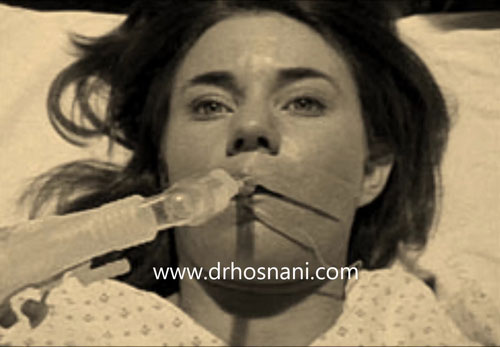
One reason for fear of anesthesia is the existence of misconceptions. Hair loss, memory loss, dental damage, or prolonged feelings of suffocation are among the common myths about anesthesia. However, due to immobility during anesthesia, there is a small risk of blood stagnation and clot formation in the capillaries of elderly patients.
Undiagnosed Underlying Illnesses
Some tragic cases reported in the media, including those involving young patients, may stem from hidden medical conditions that were not discovered before surgery. Congenital heart abnormalities, rare metabolic disorders such as malignant hyperthermia, or silent systemic disease can become dangerous once anesthesia is administered.Severe Bleeding and Coagulation Problems
Although bleeding during rhinoplasty is usually controlled effectively, patients with hemophilia, clotting disorders, or undisclosed use of medications such as aspirin or warfarin may face an elevated risk of hemorrhagic complications. This is why accurate medical history-taking is indispensable.Infection, Sepsis, and Pulmonary Embolism
Severe bloodstream infection and pulmonary embolism are extremely uncommon, yet they are among the most serious complications in all forms of surgery. These events are more likely to occur in facilities with weak sterilization protocols or in situations where postoperative care instructions are ignored.It is Dr. Hosnani’s professional opinion that fatal outcomes in rhinoplasty are exceptionally uncommon and, in many instances, are linked to hidden medical vulnerabilities, unsafe clinical environments, or inadequate perioperative oversight rather than to the nasal procedure itself.
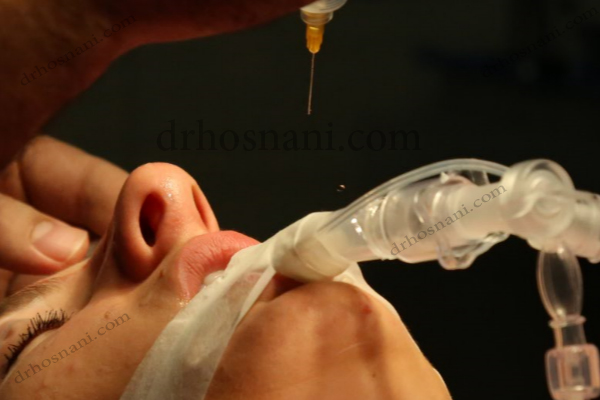
To prevent nose bleeding during surgery, adrenaline is injected into the nasal tip before making incisions.
How to Manage the Fear of Dying During Nose Surgery
Choosing a Qualified Surgeon and an Appropriate Facility
If the thought “I am afraid I may die during nose surgery” continues to trouble you, the first step is to focus on factors that are actually within your control. A reputable surgeon working in a properly equipped center is one of the strongest protective factors. A highly experienced rhinoplasty surgeon will never proceed carelessly with a patient who requires further medical clearance.Completing Preoperative Tests Honestly and Thoroughly
Preoperative evaluation is not a formality; it is a critical part of surgical safety. Blood tests, electrocardiography, and, when indicated, chest imaging help determine whether the body can tolerate anesthesia appropriately. Patients should never conceal smoking, herbal supplements, routine medications, prior anesthetic reactions, or chronic disease history.Understanding That Fear Often Exceeds Reality
As observed by Dr. Hosnani, many patients suffer more from imagined scenarios than from medically realistic danger. Anxiety tends to magnify rare events, especially when isolated news stories are repeated without context. Sound medical consultation can therefore be as reassuring as it is informative.Based on Dr. Hosnani’s clinical experience, fear should be addressed through education rather than denial; once patients understand the true scale of the risk and the importance of proper preparation, their decision-making becomes calmer, wiser, and more confident.
The Safety Profile of Rhinoplasty in Iran
Iran’s Prominent Position in Rhinoplasty
Iran is widely recognized as one of the major centers of rhinoplasty worldwide, with tens of thousands of successful operations performed each year. This high procedural volume has contributed to broad clinical experience among qualified specialists and has made rhinoplasty an especially familiar field within Iranian aesthetic surgery.How Rare Fatal Cases Are Perceived
Official observations and clinical reality indicate that fatal incidents in Iran are not beyond accepted international expectations. Cases highlighted in the media are usually very rare and often involve treatment in substandard facilities or intervention by individuals lacking the required professional expertise.The Role of Postoperative Care
When patients follow proper postoperative care and choose a professional medical team, the practical risk of rhinoplasty for a healthy person becomes extraordinarily small. This does not mean that medicine abandons caution; rather, it means that the procedure is generally safe when approached responsibly.In line with Dr. Hosnani’s research findings, the safest rhinoplasty outcomes are consistently associated with rigorous preoperative screening, meticulous operative standards, and attentive postoperative follow-up.