




Pain After Rhinoplasty
Dr. Hamidreza Hosnani
ENT Specialist | Rhinoplasty Surgeon in Tehran | Nose Surgery Specialist
Rhinoplasty is performed under general anesthesia, and the patient feels no pain during surgery. After the surgery is completed, the effects of the narcotic medications injected during the operation remain in the body for several hours, preventing the patient from experiencing significant pain during this period.
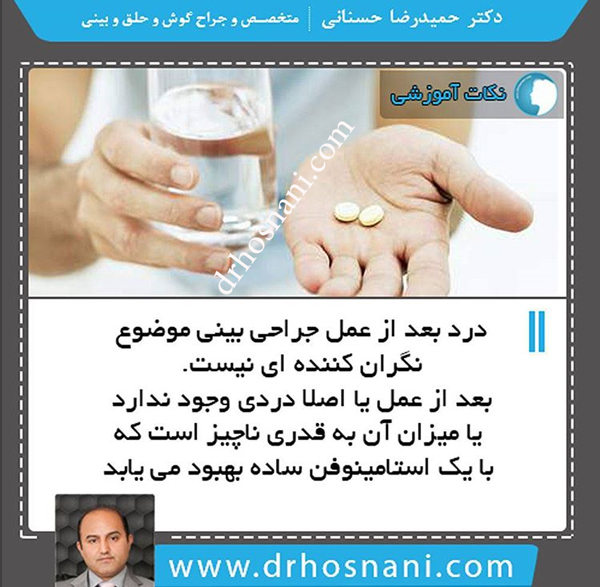
Post-operative pain is either non-existent or so minimal that it can be relieved with simple painkillers like acetaminophen.
Anesthesia and the Immediate Postoperative Phase
Pain Management During Surgery
One of the most common concerns among candidates for cosmetic nasal surgery is the fear of pain. In reality, rhinoplasty is typically performed under general anesthesia, which means the patient remains fully unconscious throughout the procedure and does not experience any pain during surgery. Modern anesthesia protocols are specifically designed to provide both safety and comfort from the beginning of the operation to the early stages of recovery.Comfort in the Recovery Room
After the procedure is completed and the patient wakes up in the recovery room, the effects of the medications administered during anesthesia are still active in the body. For this reason, patients usually do not feel significant pain immediately after surgery. This period is generally calm and comfortable, allowing the patient to regain awareness gradually under medical supervision.Transfer to the Ward and Discharge Home
Once the patient is fully awake, transfer to the ward takes place. By this stage, although some awareness of the operated area may begin to return, discomfort is usually very mild. If any pain is felt, it is often minimal and can be relieved easily with light analgesics provided by the nursing staff. After discharge, which generally occurs several hours after surgery, any remaining discomfort is so limited that it is commonly controlled with acetaminophen alone. In fact, many patients do not feel the need to take any pain medication at all.Why Fear of Rhinoplasty Pain Is Often Exaggerated
A Common Patient Concern
A large number of individuals considering cosmetic nose surgery hesitate because they assume the postoperative period will be painful. This concern is understandable, yet it is often based more on anxiety than on actual patient experience. With contemporary surgical methods and improved postoperative care, rhinoplasty is usually far less painful than many people expect.Modern Techniques and Reduced Tissue Trauma
Current rhinoplasty techniques are more refined and less traumatic than older methods. Surgeons work with greater precision, which reduces unnecessary injury to surrounding tissues and contributes to a smoother recovery. As a result, the level of postoperative discomfort is generally low and manageable.From the perspective of Dr. Hosnani, much of the fear surrounding rhinoplasty pain arises from misconceptions about the recovery period; with modern and delicate techniques, tissue trauma is reduced, and postoperative discomfort is usually minimal and quite tolerable.
Postoperative Details That Reassure Patients
Removal of Nasal Packing
In many cases, small internal dressings or meshes are placed inside the nose to help control minor bleeding after surgery. These dressings are usually removed the day after the procedure. Patients are often surprised to learn that removal is generally painless or associated with only a slight sensation of pressure rather than true pain.Suture Removal on the Seventh Day
Around the seventh postoperative day, external sutures are typically removed. This step is also usually painless and does not cause meaningful discomfort. The process is brief, simple, and well tolerated by most patients.Professional Guidance and Reassurance
Clear medical explanation can significantly reduce fear before surgery. When patients understand what the recovery process truly feels like, they are often much more confident about moving forward with treatment.According to Dr. Hosnani: “Rhinoplasty is performed under general anesthesia, and the patient feels no pain during the operation. After surgery, the effect of the medications administered during anesthesia remains in the body for several hours, which is why the patient usually does not experience notable pain during that early period.”
Dr. Hosnani believes that several hours after surgery, any possible discomfort is usually so mild that it can be easily controlled with simple pain relievers such as acetaminophen. For this reason, there is generally no cause for serious concern about pain after rhinoplasty.