




Online Rhinoplasty Consultation
Dr. Hamidreza Hosnani
ENT Specialist | Rhinoplasty Surgeon in Tehran | Nose Surgery Specialist
The best way to receive a rhinoplasty consultation from Dr. Hosnani is to complete the form below, as you will receive a response as quickly as possible. If you prefer, you can also receive consultation via WhatsApp. The WhatsApp number for consultation is listed at the bottom of the page.

Virtual Consultation with Dr. Hosnani and Question Archive
Video: Defining Your Rhinoplasty Goals: A Consultation with Dr. Hosnani
Video Description
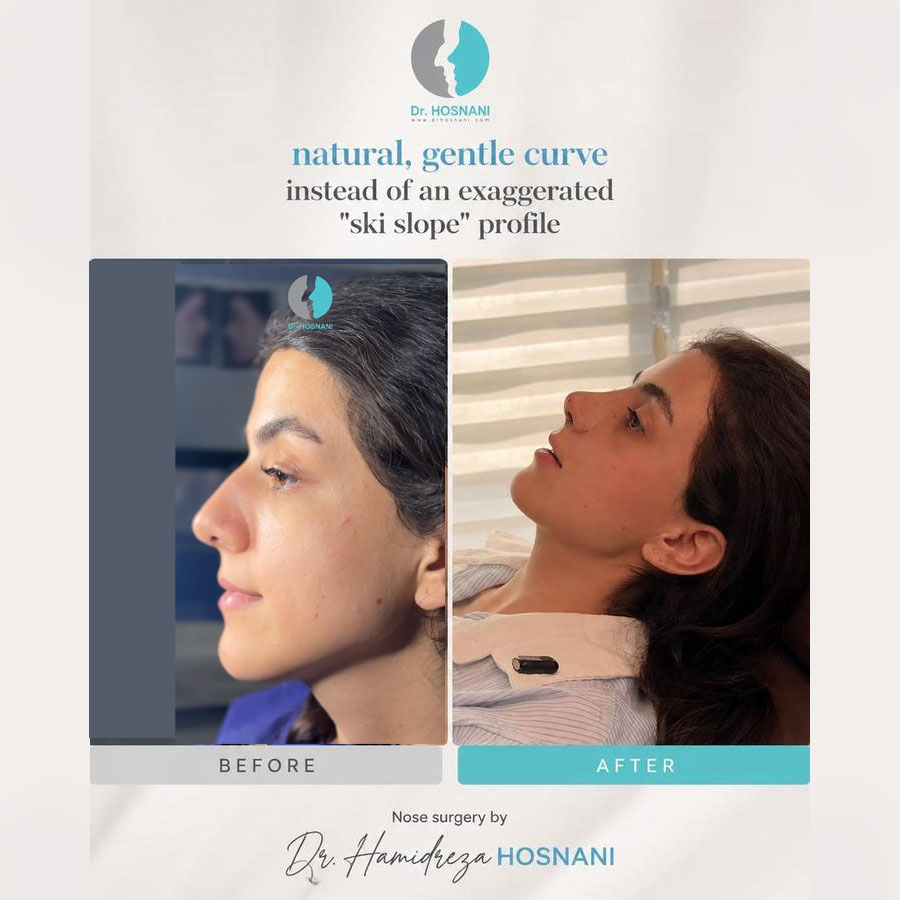
In this consultation, a patient discusses her specific aesthetic goals for rhinoplasty with Dr. Hosnani. She expresses her desire for a natural, gentle curve instead of an exaggerated "ski slope" profile, while highlighting the importance of the nasofrontal angle and refined nostrils. Dr. Hosnani listens closely to her concerns about her nose tip and provides the confidence and reassurance she needs, promising to deliver a result that aligns with her vision.
Frequently Asked Questions

Using the consultation form or WhatsApp messenger, you can get a virtual consultation for rhinoplasty from Dr. Hosnani and ask your questions.
The legal age at which a person can make medical decisions independently is 18. However, from a medical standpoint, girls can usually undergo rhinoplasty from the age of 16 and boys from the age of 18, provided that parental consent is given.
As for the upper age limit, rhinoplasty can even be performed up to the age of 60, as long as the patient is in good general health and does not suffer from serious internal medical conditions.
What is meant by a “bulbous nose” and a “cartilaginous (bony) nose”?
If the skin of the nose is thick and the underlying cartilage is weak, the nose is often described as a bulbous or thick‑skinned nose. If the nasal skin is thin and the cartilage structure underneath is strong, the nose is typically referred to as a cartilaginous or bony nose.
Since modern rhinoplasty techniques focus on reshaping the bone and cartilage rather than altering the skin itself, cartilaginous (bony) noses usually respond better to surgery and achieve more refined results. Nevertheless, significant and lasting improvements can also be achieved in thick‑skinned noses.
How long should I rest after rhinoplasty?
Light work activities can usually be resumed about four days after surgery. For physically demanding jobs, it is generally recommended to rest for about two weeks.
How long does rhinoplasty surgery take?
The duration of rhinoplasty depends on the complexity of the case. If the nose has only minor issues such as a hump or mild drooping, the surgery may take about one hour.
However, noses that have been previously operated on and require reconstruction with cartilage grafts may take up to three hours. Thick‑skinned noses often require more time than bony noses and may take around two hours. In general, rhinoplasty procedures usually last between one and three hours.
Which is better: open rhinoplasty or closed rhinoplasty?
In closed rhinoplasty, all surgical incisions are made inside the nose, so there are no visible scars on the external skin. This method is often preferred when the nasal issues are relatively minor.
In open rhinoplasty, a small incision is made under the nose on the columella. This incision usually becomes barely noticeable about 6 months after surgery. The open technique can be used for almost all types of nasal surgery and allows the surgeon greater visibility and precision.

In Closed Rhinoplasty, There Is No External Incision and All Surgical Steps Are Performed Through the Nostrils
Around the world, all three groups—ENT specialists, plastic surgeons, and maxillofacial surgeons—consider themselves qualified to perform rhinoplasty. In reality, surgeons from all three specialties receive training in cosmetic nasal surgery and are capable of performing the procedure.
However, the level of experience and artistic skill varies between individual surgeons. In each of these specialties there are highly skilled experts in rhinoplasty, and the final choice depends on the patient.
Step by Step Toward Successful Rhinoplasty
According to Dr. Hosnani, achieving a successful cosmetic rhinoplasty requires proper consultation, evaluation, and preparation before surgery.The main steps include patient consultation and preparation for surgery.
During the consultation session, Dr. Hosnani listens carefully to the patient’s preferences regarding the desired nose shape and shows before and after photos of previous patients in order to suggest the most suitable surgical options.
After surgery, in order to achieve the best possible results, a list of important post‑operative instructions is provided to patients, which should be followed starting from the day of surgery.
Is There a Standard for Nasal Beauty?
Beauty standards are based on scientific analysis. Researchers have studied the facial features of individuals widely perceived as attractive and analyzed the proportions and angles of their faces.From these studies, several measurable criteria have been defined, including the angle between the nose and the lips, the angle between the nose and the forehead, the relationship between the nose and the cheeks, and the overall proportion of the nose relative to the face.
These measurements are now used as guidelines in aesthetic surgery. During rhinoplasty, surgeons attempt to bring the nasal structure closer to these established proportions so that the face appears harmonious and attractive to most observers.
Statistical analysis of facial angles among people widely regarded as attractive has provided surgeons with standards that are accepted internationally. When surgeons follow these guidelines, patients, their families, and their friends are usually satisfied with the results.
However, modern cosmetic surgery also takes the patient’s personal preferences into account. As long as the patient’s desired outcome does not conflict with anatomical limitations or aesthetic standards, the surgeon will try to incorporate these wishes into the surgical plan.
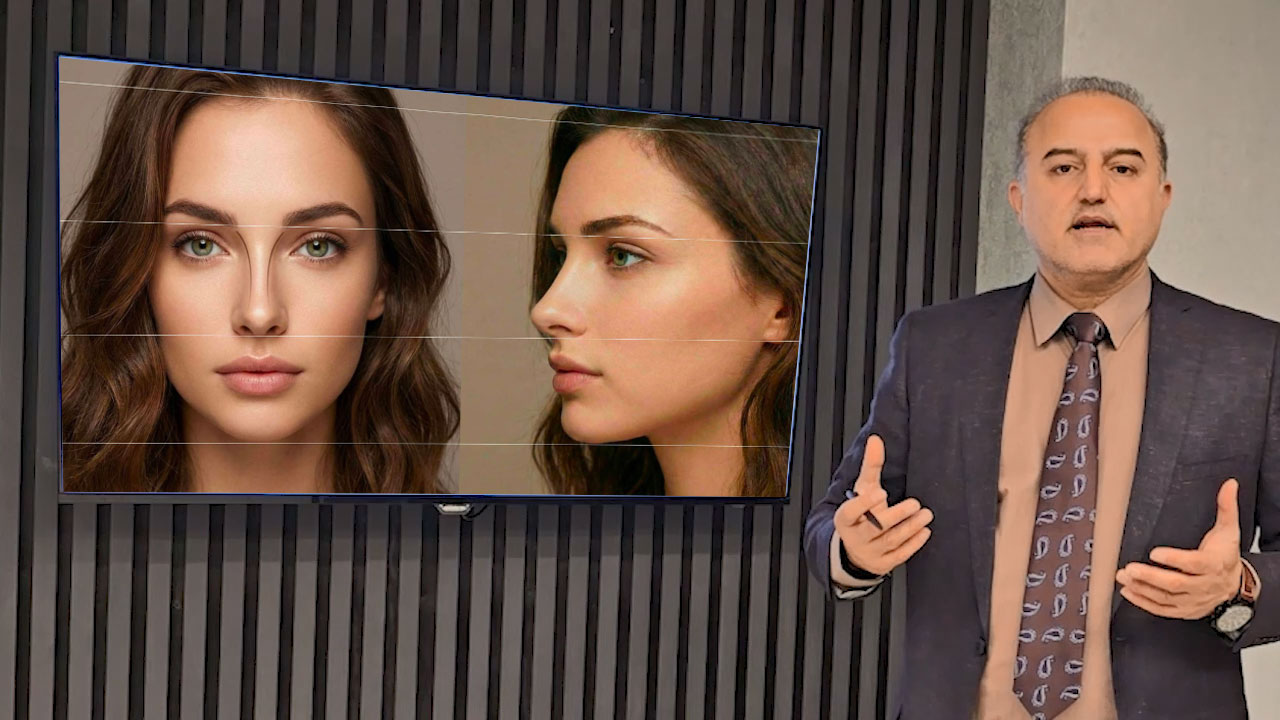
In aesthetic standards, the harmony of the nose with the vertical and horizontal thirds of the face is very important. The middle third of the face, where the nose is located, should be balanced in size, angle, and curvature with the upper third (forehead) and the lower third (mouth and chin) so that the face appears natural and proportionate. According to Dr. Hosnani, if the nose is designed to be excessively small, large, or overly curved, this three‑part balance is disrupted and even with good surgical technique the final result may appear unnatural or disproportionate.