




Standards of Nasal Beauty
Dr. Hamidreza Hosnani
Can a standard be defined for a beautiful nose? You have certainly heard that beauty is a relative concept. However, balance and symmetry are always cherished and considered beautiful. An operated nose should be both beautiful and natural...
What does a beautiful nose look like? Is it even possible to define a standard for nasal beauty? You have probably heard that beauty is a relative concept. Nevertheless, harmony and balance are universally appreciated and generally considered beautiful. A surgically refined nose should be both aesthetically pleasing and natural‑looking. These two qualities should never contradict each other.
Today, the science of aesthetics has identified certain measurable criteria that are widely accepted around the world. Noses that conform to these principles are generally perceived as beautiful. Some of these aesthetic criteria are introduced in this article.
1. Facial proportion
2. The relationship between the nose, lips, and chin
3. Nasal symmetry
4. The relationship between the nose and the eyes
5. Nasal width
6. The view of the nose from below
7. Nasal projection (height)
8. The nasal bridge
9. The angle between the nose and the upper lip
One of the most important factors in determining the success of rhinoplasty is the thickness of the nasal skin. In individuals with very thin skin, even the smallest irregularities may become visible beneath the skin. On the other hand, in people with thick skin—commonly known as fleshy noses— the changes created during surgery may appear less noticeable.
The best candidates for rhinoplasty usually have skin of moderate thickness. During cosmetic nose surgery, the surgeon adjusts the position of nasal bones and cartilage so that the nasal structure becomes closer to accepted aesthetic standards. However, during the healing process some changes occur that are not completely under the surgeon’s control. In general, about 90% of the surgical outcome depends on the surgeon’s work, while roughly 10% depends on biological healing factors. In rare cases, if the patient wishes, a secondary procedure may be performed to correct minor imperfections.
Is There a Standard for Nasal Beauty?
Aesthetic standards are based on scientific analysis. Researchers studied the faces of individuals whom most people considered attractive and analyzed their facial proportions. By recording common features, they identified measurable relationships between different parts of the face.
For example, the angle between the nose and the lips, the angle between the nose and forehead, the relationship between nose size and cheek width, and the proportion of the nose relative to the face have all been defined numerically. These measurements are now widely accepted in aesthetic medicine. During rhinoplasty, surgeons attempt to bring the facial structure closer to these standards so that the face appears harmonious and attractive to most observers.
Statistical analysis of facial proportions in attractive individuals has provided plastic surgeons with guidelines that are recognized worldwide. When surgery is performed according to these principles, patients and those around them are usually satisfied with the results. At the same time, surgeons also try to consider the patient’s personal preferences whenever they do not conflict with these aesthetic standards.
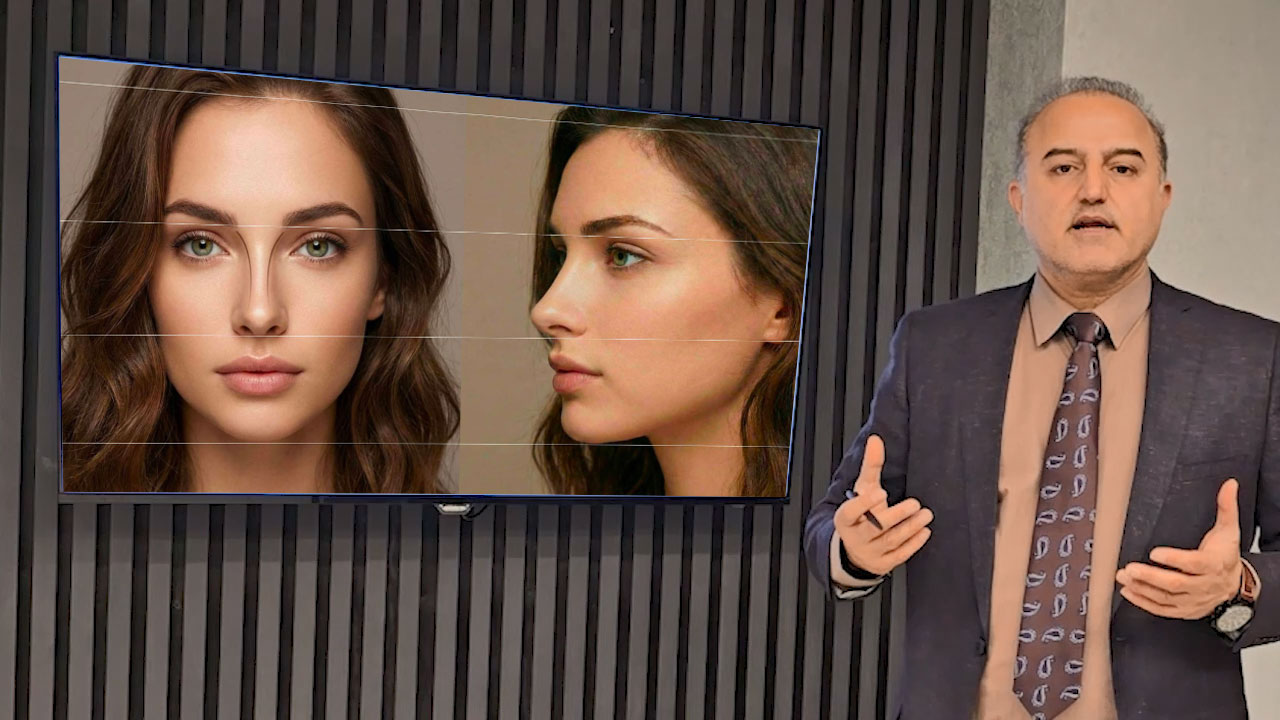
People have been thinking about the geometric and mathematical characteristics of beauty for centuries. Many of these ideas were first explored by Leonardo da Vinci. Modern aesthetic science still accepts many of the principles he introduced.
Below are several of the commonly used criteria in rhinoplasty.
Facial Proportion
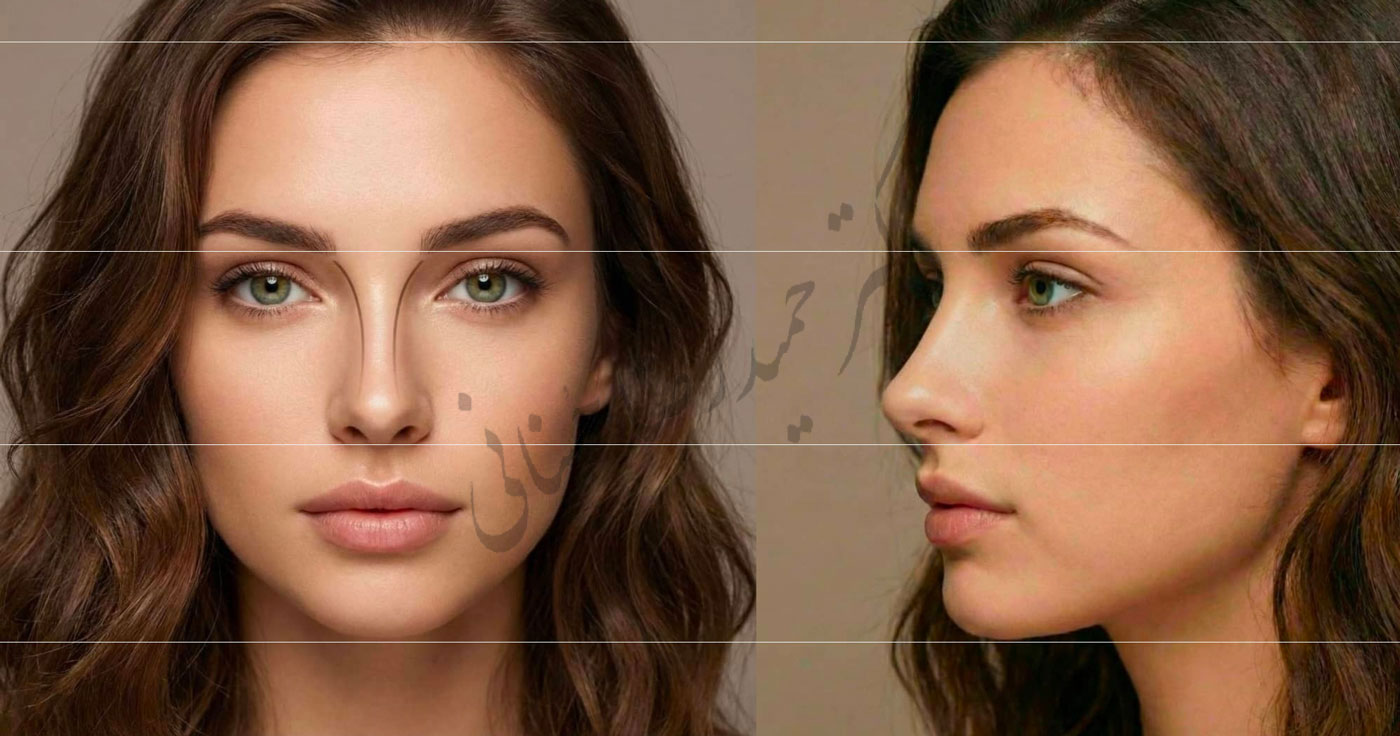
The face should ideally be divided into three equal horizontal sections:
1. From the upper forehead to the line of the inner eyebrows2. From the eyebrow line to the bottom of the nose
3. From the bottom of the nose to the chin
If these proportions are significantly unbalanced, facial harmony may be affected. During rhinoplasty, surgeons try to maintain these proportions. For example, raising the nasal tip too much may make the middle third of the face appear shorter.
Nasal Symmetry
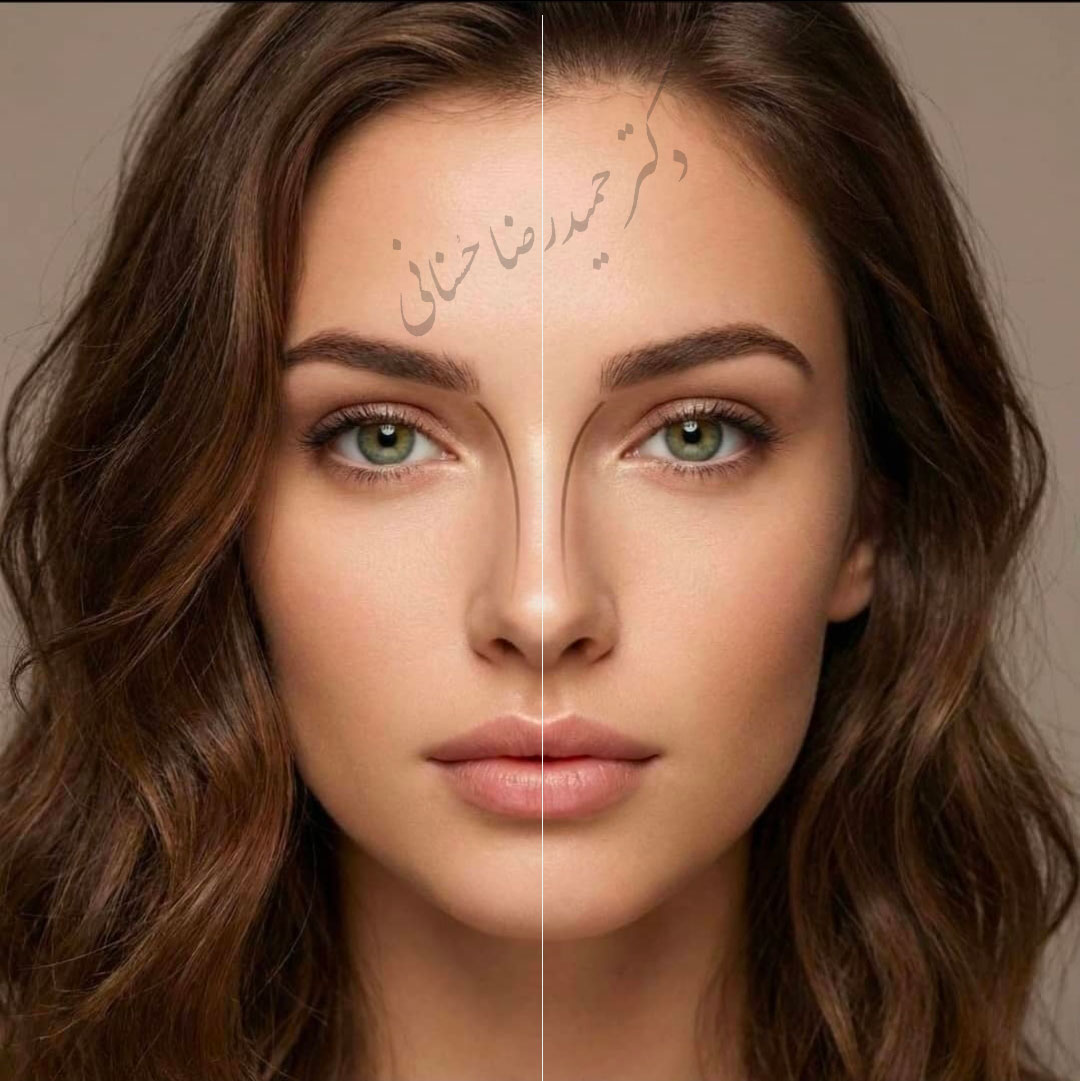
If a vertical line is drawn through the center of the nose, the two sides of the nose should ideally be symmetrical. In the past, facial symmetry itself was considered an important standard of beauty. Today, however, slight facial asymmetry is not necessarily considered unattractive and may even add character to the face.
Nasal Contour Lines
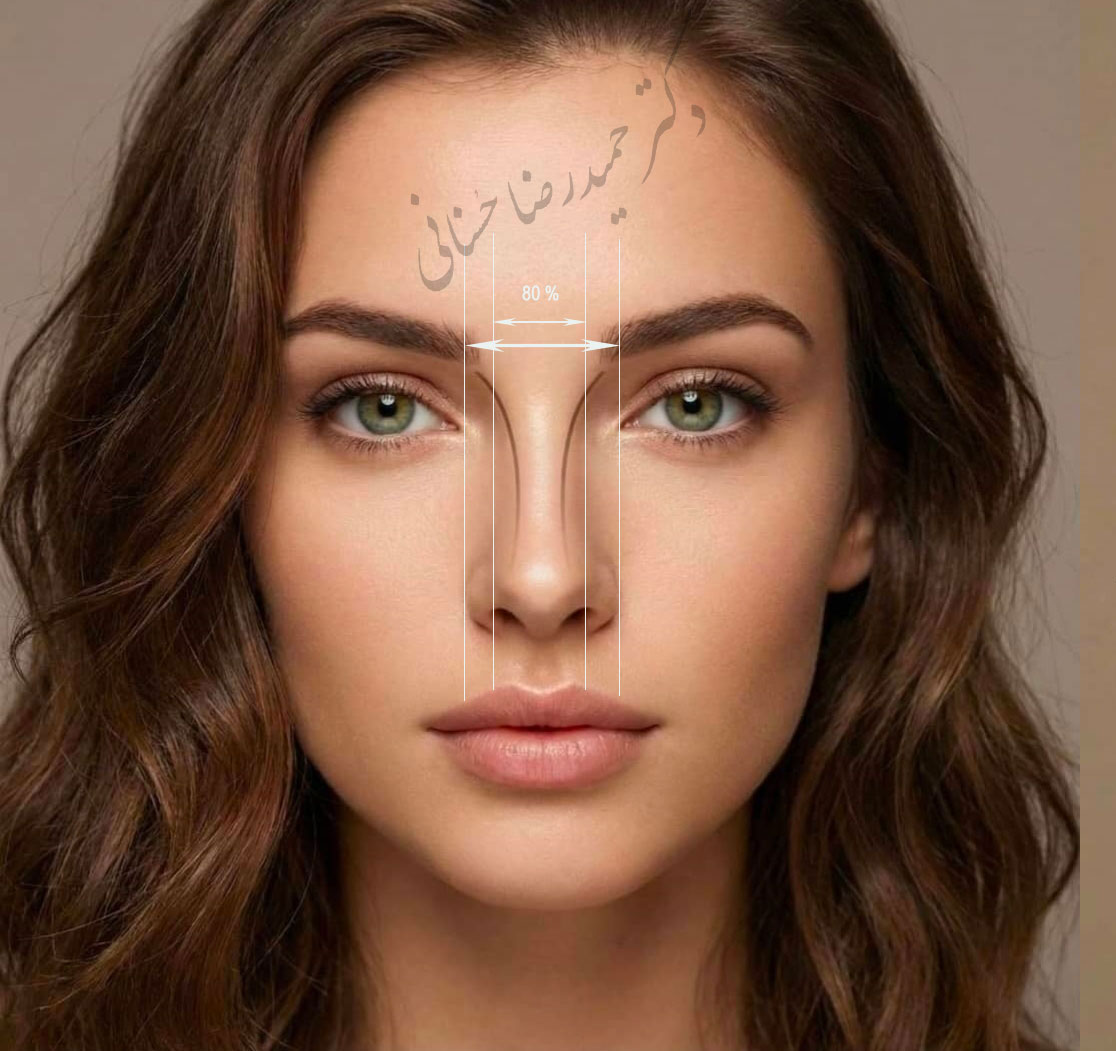
Contour lines, also called dorsal aesthetic lines, are two symmetrical curves that run along the sides of the nose from the eyebrows to the nasal tip. These lines should appear smooth and uninterrupted.

Nasal Width
The width of the nasal base should approximately equal the distance between the eyes. The width of the bony part of the nose should be about 80% of the nasal base width.

The View from Below
From the underside view, aesthetic standards suggest that the diameter of each nostril should be about twice the distance between the upper point of the nostril and the nasal tip.

Nasal Projection (Height)
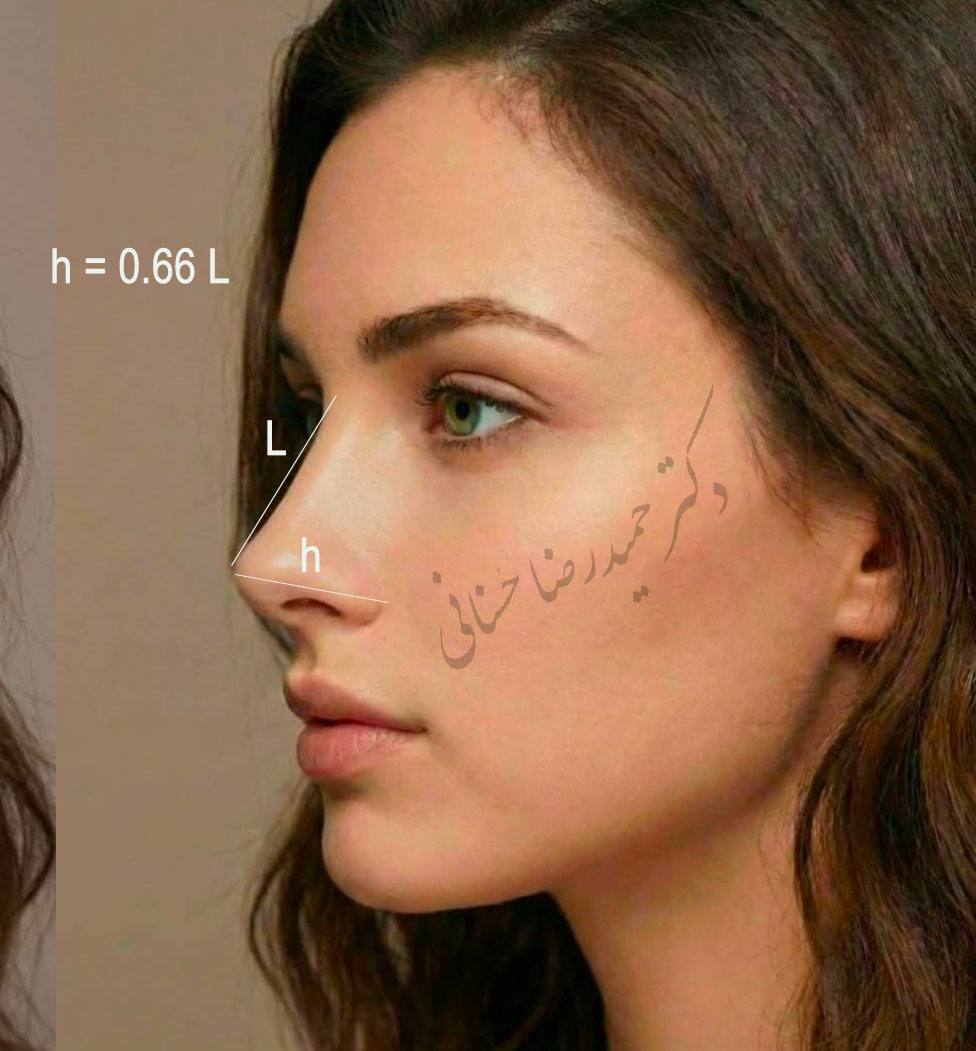
Nasal projection refers to the distance between the nasal tip and the face. For the nose to appear balanced both in the front and side views, the projection should be approximately 66–67% of the total nasal length.
Some patients prefer a very low nasal projection, but this is not always aesthetically ideal. If projection is reduced too much, the nose may appear wider when viewed from the front. Therefore, during a rhinoplasty consultation, patients should avoid insisting on excessive reduction of nasal projection.
The Nasal Bridge
Some women request a strongly curved nasal bridge. However, excessive curvature is not consistent with classical aesthetic standards. According to principles attributed to Leonardo da Vinci, if a straight line is drawn from the nasal root to the nasal tip, the bridge should lie about 2 mm behind this line in women, while in men it should lie directly on the line.
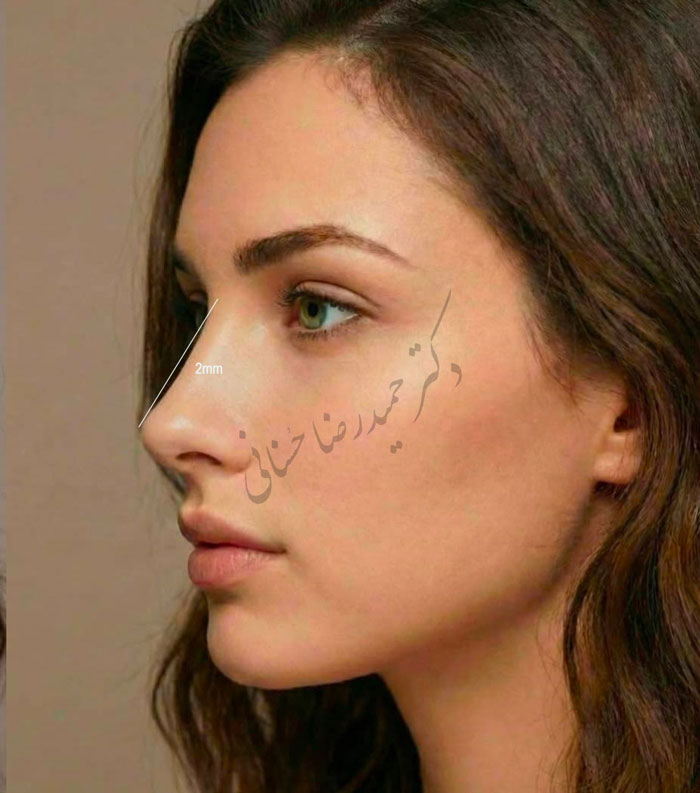
If a patient prefers a slightly deeper curve, it may be possible to create it. However, it should be noted that excessive curvature is generally not considered ideal in classical aesthetic standards.
The Angle Between the Nose and the Upper Lip
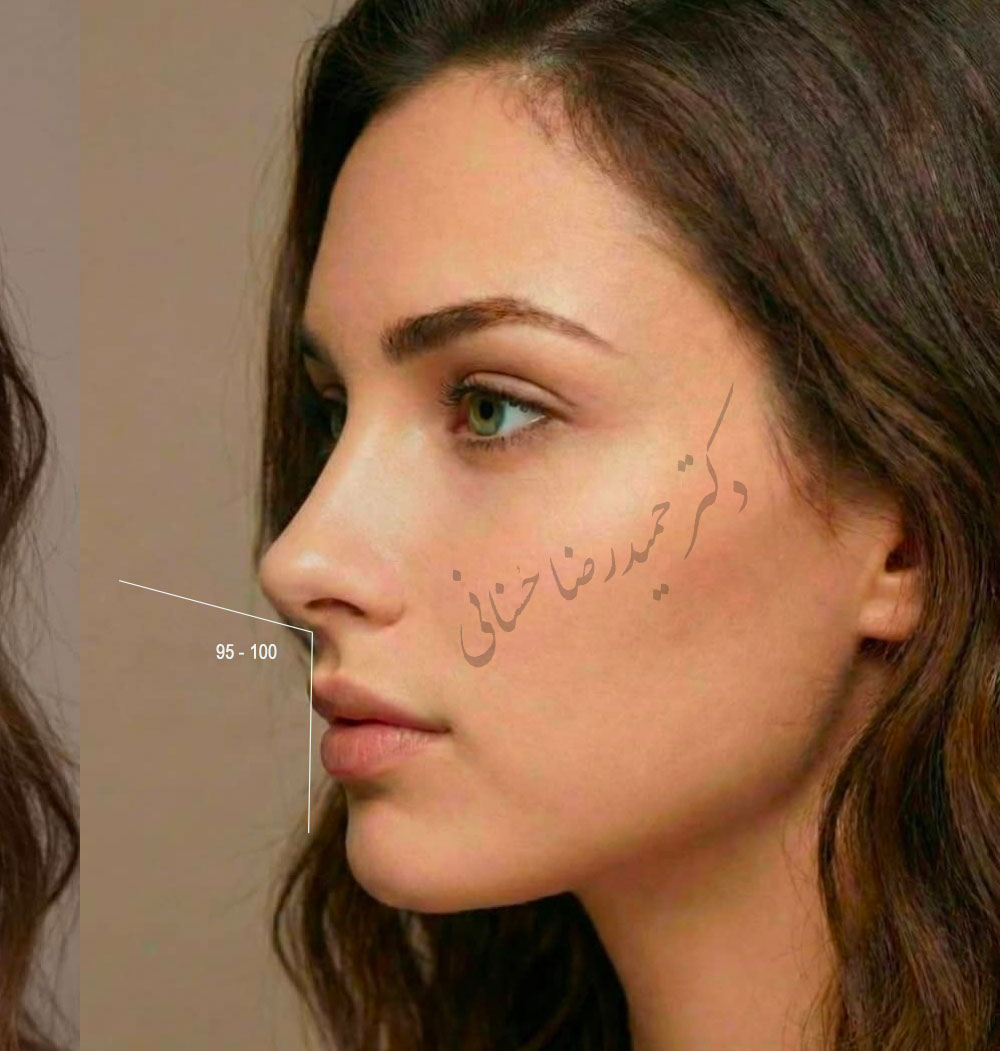
The angle formed between the base of the nose and the upper lip is known as the nasolabial angle. Ideally, this angle should be:
- 95–100 degrees in women
- 90–95 degrees in men
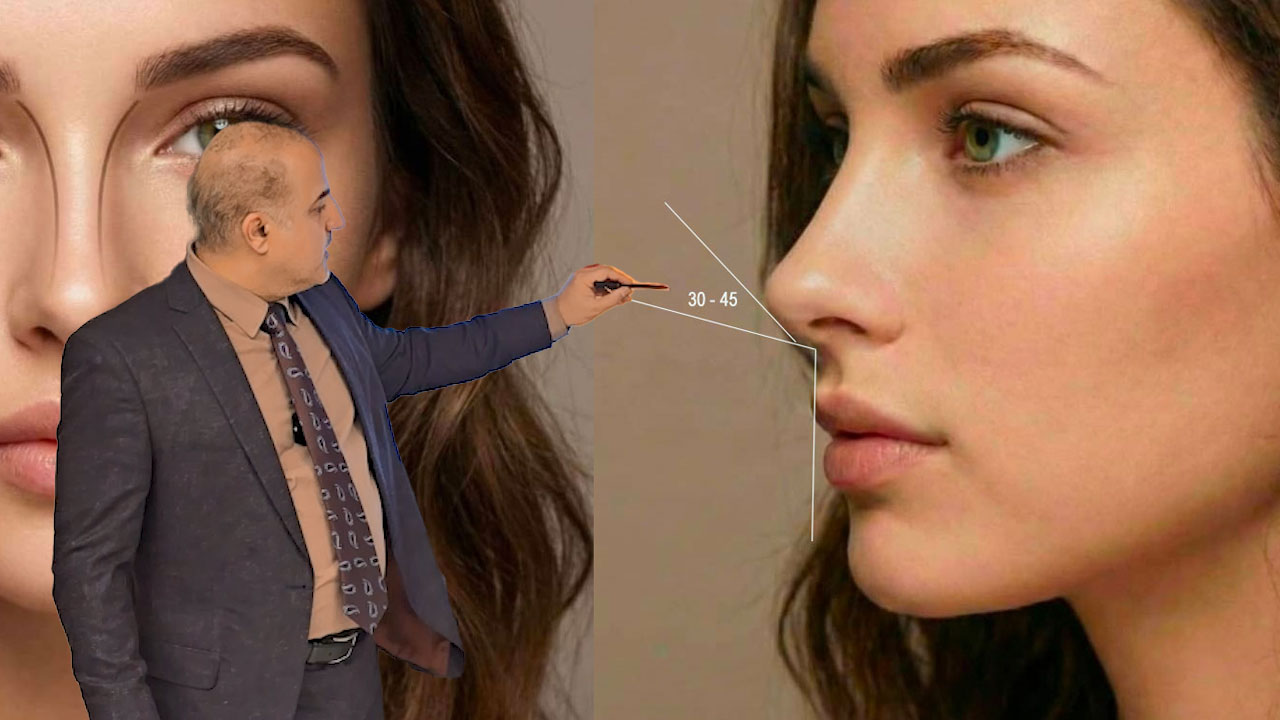
Another subtle mathematical feature that enhances nasal beauty is the angle of the nasal tip. Achieving this correctly requires considerable surgical skill.
The nasal tip should have a gentle break of approximately 30–45 degrees rather than descending in a completely straight line. If a line is drawn along the base of the nose and another line from the tip to that base, the angle between them should ideally fall within this range.
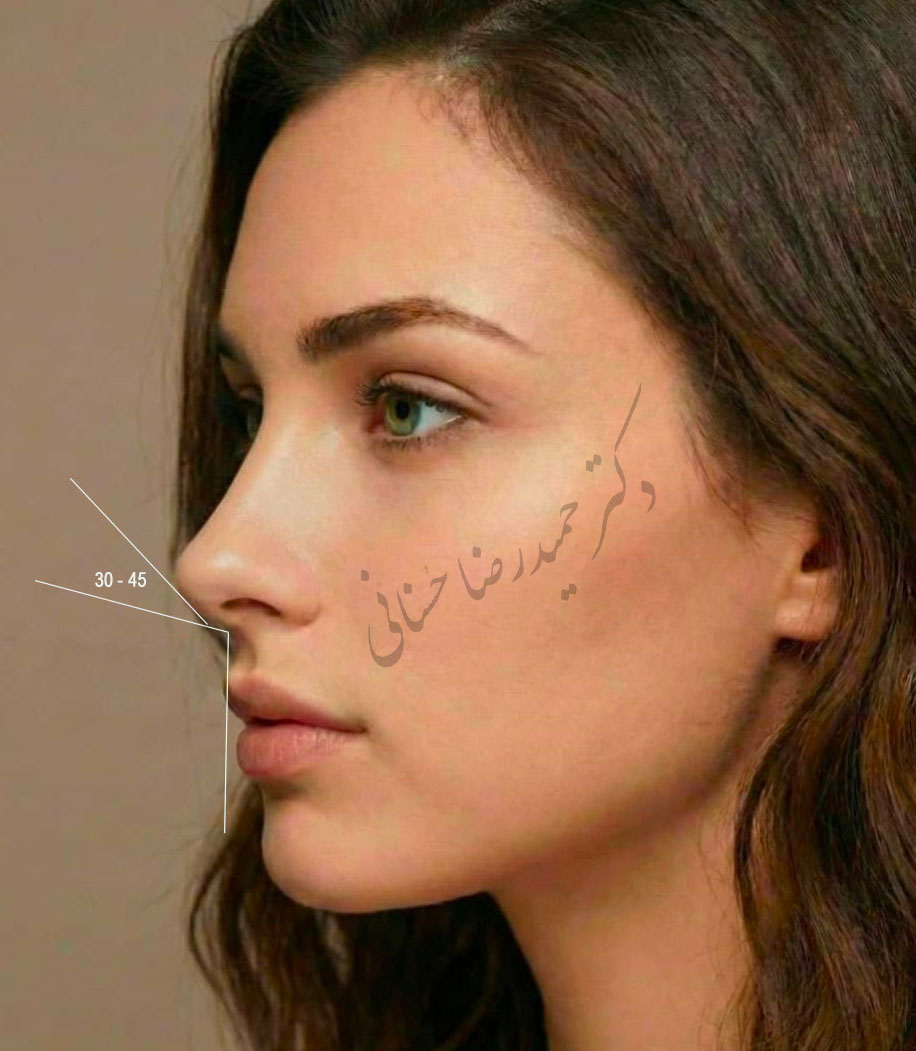
Proper angular balance is one of the artistic aspects of rhinoplasty. – Dr. Hosnani
As shown above, only a limited number of nasal and facial beauty criteria have been discussed. In reality, there are dozens of additional measurements that surgeons may consider. When these principles are respected, the resulting appearance tends to be perceived as more attractive by most people. In this sense, facial beauty is not purely subjective—it also has measurable, scientific foundations.