




Nasal Sinuses and Sinus Diseases
Dr. Hamidreza Hosnani
ENT Specialist | Rhinoplasty Surgeon in Tehran | Nose Surgery Specialist
The sinuses are a group of hollow chambers connected to the nose through a system of small channels. Four major categories of diseases can affect the nose and sinuses. Air circulating through the nose enters the sinuses, where it is ventilated, warmed, humidified, and contributes to improving voice resonance.
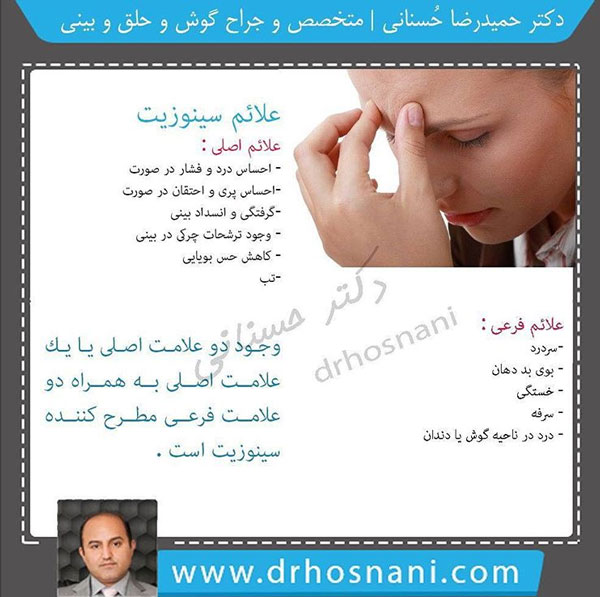
Main and Secondary Symptoms of Sinusitis
What Are the Sinuses and What Role Do They Play in the Body?
Definition and Anatomical Structure
The sinuses are four paired, air-filled cavities located within the bones of the skull and face. These hollow chambers lie in close anatomical relationship to the nasal passages and communicate with the inside of the nose through narrow openings known as the ostia.
Mucosal Lining and Secretory Function
The inner surface of the sinuses is lined with a delicate mucous membrane that continuously produces secretions. This mucosal layer plays an important role in cleansing inhaled air and trapping suspended particles, irritants, and microorganisms before they descend further into the respiratory tract.
Physiological Importance of the Sinuses
The principal functions of the sinuses include:
• Air conditioning and filtration: As air circulates through the nasal and sinus passages, it becomes warmer, more humidified, and better filtered before reaching the lungs.
• Reduction of skull weight: These hollow chambers significantly decrease the overall weight of the craniofacial skeleton.
• Resonance and vocal quality: The sinuses contribute to the resonance of the voice, much like the sounding chamber of a musical instrument.
• Reduction of skull weight: These hollow chambers significantly decrease the overall weight of the craniofacial skeleton.
• Resonance and vocal quality: The sinuses contribute to the resonance of the voice, much like the sounding chamber of a musical instrument.
Effect on the Human Voice
This acoustic role explains why, during episodes of nasal or sinus congestion, the voice often becomes muffled, heavy, or nasal in tone. When the sinus passages remain open and healthy, the voice usually sounds clearer and more natural.
In Dr. Hosnani’s view, the sinuses should not be regarded as passive empty spaces, because they make meaningful contributions to respiratory comfort, vocal resonance, and the overall physiology of the upper airway.

Sinusitis is accompanied by symptoms such as nasal congestion, thick discharge, pain and a feeling of pressure in the facial area, and sometimes headache.
Classification of Nasal and Sinus Disorders
General Categories of Disease
Broadly speaking, the disorders that affect the nose and the surrounding sinuses can be divided into four major groups. Each category differs in cause, clinical behavior, and treatment strategy.
The Four Main Groups
- Allergic and mucosal inflammatory conditions
- Acute and chronic infections (sinusitis)
- Autoimmune and systemic diseases, including rheumatologic disorders and granulomatous conditions
- Tumors and neoplastic lesions, including benign masses and sinonasal malignancies
- Acute and chronic infections (sinusitis)
- Autoimmune and systemic diseases, including rheumatologic disorders and granulomatous conditions
- Tumors and neoplastic lesions, including benign masses and sinonasal malignancies
Why Proper Classification Matters
Accurate classification is essential because symptoms such as nasal blockage, discharge, facial pressure, or recurrent inflammation may appear similar at first glance, while the underlying causes may be entirely different.
According to Dr. Hosnani, successful treatment begins with distinguishing inflammatory, infectious, autoimmune, and neoplastic conditions from one another rather than assuming that all sinus complaints are simple infections.
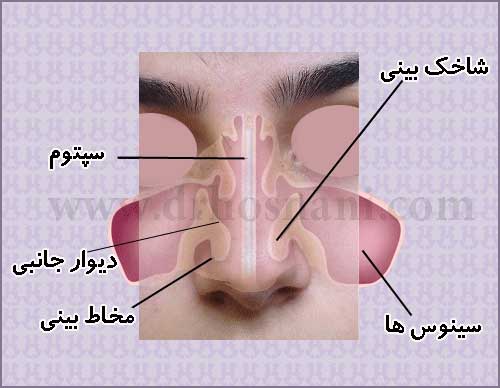
Nasal Anatomy Includes the Turbinates, Sinuses, Septum, Lateral Wall, and Nasal Mucosa
Allergies and Inflammatory Sinus Conditions
What Is Allergic Rhinitis?
Non-infectious inflammation of the nasal and sinus mucosa, often triggered by pollen, dust, animal dander, or air pollution, is commonly referred to as allergic rhinitis. Although it is not a true bacterial infection, it can substantially affect quality of life and may predispose susceptible individuals to secondary sinus problems.
Common Symptoms
The most frequent manifestations of allergic inflammation include repeated sneezing, clear watery nasal discharge, post-nasal drip, itching of the nose and eyes, and persistent nasal congestion.
Principles of Treatment
Management usually includes avoidance of allergens whenever possible, the use of intranasal corticosteroid sprays, antihistamines, and regular saline irrigation of the nasal passages.
Clinical Relevance
Although allergic rhinitis is often underestimated, ongoing mucosal swelling may obstruct sinus drainage pathways and create the conditions for chronic discomfort or repeated infections.
From Dr. Hosnani’s perspective, chronic allergy should be treated seriously, because prolonged mucosal inflammation may affect both sinus ventilation and long-term nasal function.
Sinus Infections and Their Types
How Sinusitis Develops
Sinusitis occurs when the drainage pathways of the sinuses become blocked, often as a result of swelling caused by a cold, allergy, or septal deviation. Once drainage is impaired, mucus accumulates within the sinus cavity and creates a favorable environment for bacterial or fungal growth.
Acute Sinusitis
When symptoms such as facial pain or pressure, thick discolored discharge, fever, and nasal obstruction last for less than four weeks, the condition is classified as acute sinusitis. This form commonly follows a viral upper respiratory infection.
Subacute Sinusitis
If the disease persists for four to twelve weeks, it is generally considered subacute sinusitis. This stage may indicate that the infection or inflammation has not responded adequately to initial treatment.
Chronic Sinusitis
When inflammation and infection continue for more than twelve weeks and fail to improve with standard medical therapy, the diagnosis shifts to chronic sinusitis. This condition may be associated with nasal polyps, severe septal deviation, or immune dysfunction, and in some cases may require advanced management or endoscopic sinus surgery.
Need for Timely Intervention
Each stage of sinusitis requires proper medical evaluation so that a temporary and treatable condition does not gradually progress into a more persistent and difficult chronic disorder.
Drawing on Dr. Hosnani’s extensive experience, early diagnosis and proper treatment of sinusitis are essential to prevent recurrent inflammation from evolving into chronic disease.
Autoimmune and Rheumatologic Diseases of the Sinuses
Systemic Disorders With Sinonasal Involvement
Certain systemic and autoimmune rheumatologic disorders, such as granulomatosis with polyangiitis, may cause severe inflammation and tissue destruction within the lining of the nose and sinuses.
Why These Conditions Are Important
Although these disorders are far less common than routine sinus infections, they are clinically important because delayed diagnosis can lead to progressive damage involving the mucosa, cartilage, and even the bony framework of the nose.
Need for Specialized Evaluation
Timely recognition usually depends on a combination of clinical assessment, laboratory investigation, and specialist evaluation. Early intervention may help prevent irreversible structural injury.
It is Dr. Hosnani’s professional opinion that rare autoimmune disease must always be considered in atypical or destructive sinus cases, especially when symptoms do not behave like ordinary sinusitis.
Tumors and Cancers of the Sinuses
Rarity of Sinonasal Tumors
Tumors and malignant lesions of the sinus region are relatively uncommon among upper airway disorders. Nevertheless, their early detection is extremely important because some of them may initially mimic ordinary inflammatory disease.
Early Symptoms That May Resemble Sinusitis
In their initial stages, these lesions may present with symptoms such as one-sided nasal obstruction, mild recurrent bleeding, or persistent pressure, which can easily be mistaken for uncomplicated sinusitis.
Diagnostic Tools
Comprehensive examination by an ear, nose, and throat specialist, together with imaging studies such as CT scan or MRI, plays a crucial role in identifying these conditions accurately.
Why Delay Can Be Dangerous
Because neoplastic disease may appear deceptively mild at first, prolonged unilateral symptoms should never be ignored or treated casually without proper assessment.
As observed by Dr. Hosnani, persistent unilateral nasal symptoms deserve careful investigation, since not every case of blockage or bleeding is inflammatory in nature.
Prevention and Home Care for Sinus Health
Daily Nasal Hygiene
Regular cleansing of the nasal passages with normal saline helps remove mucus, allergens, and irritating particles, thereby supporting healthier sinus drainage.
Maintaining Adequate Humidity
Using a cool-mist humidifier, particularly in the bedroom, may help prevent excessive dryness of the nasal lining and support mucosal comfort.
Proper Hydration
Adequate fluid intake helps keep secretions thinner and easier to drain, which may reduce the likelihood of mucus stagnation within the sinuses.
Prompt Management of Colds and Congestion
Timely attention to ordinary nasal congestion is advisable, because neglected swelling may obstruct sinus outflow pathways and create the conditions for acute bacterial infection.
Long-Term Preventive Value
Simple daily habits, when practiced consistently, can reduce the frequency of recurrent sinus complaints and improve general upper airway health.
Based on Dr. Hosnani’s clinical experience, preventive care is often underestimated, even though consistent nasal hygiene and early treatment of congestion can significantly reduce recurrent sinus problems.