




Nasal Valve Narrowing and Solutions
Dr. Hamidreza Hosnani
ENT Specialist | Rhinoplasty Surgeon in Tehran | Nose Surgery Specialist
Inside our nose, there are very precise and delicate structures, each of which plays an important role in breathing. When air enters through the nostrils, it first passes through the outer and visible part. But just a little further in, about one centimeter from the nasal entrance, we reach an area whose vital role few people are aware of: the internal nasal valves. These valves, despite their simple appearance, function like vital gates for the entry and exit of air.
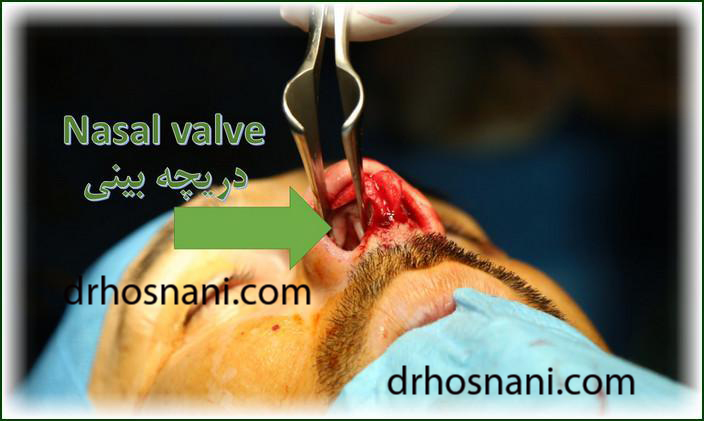
The internal nasal valve is located about one centimeter inside the nostril, between the nasal septum and the lateral cartilages. If not preserved or reconstructed during surgery, it may cause airway narrowing and breathing problems.
⚠️ Warning: This image contains surgical content!
Click to view
Click to view
The following article provides a detailed and formal exploration of nasal valve anatomy and its critical importance in functional rhinoplasty, structured in accordance with aesthetic and medical standards.
1. Understanding Nasal Valve Anatomy
The Vital Role of the Nasal Valve Complex
The nasal valves constitute the most critical structural components for airflow regulation within the respiratory system. Anatomically, these valves act as the gateways for inhaled air, and their integrity is essential for maintaining optimal breathing. The structure of these valves is a sophisticated composition of cartilage, bone, and soft tissue, meticulously arranged to manage the flow of air into the nasal cavity.
According to Dr. Hosnani, comprehending the delicate architecture of the nasal valve is not merely an academic exercise; it is the cornerstone of functional rhinoplasty. Each component must be handled with precision to ensure that structural modifications intended to improve aesthetic appearance do not compromise the patient's ability to breathe comfortably.
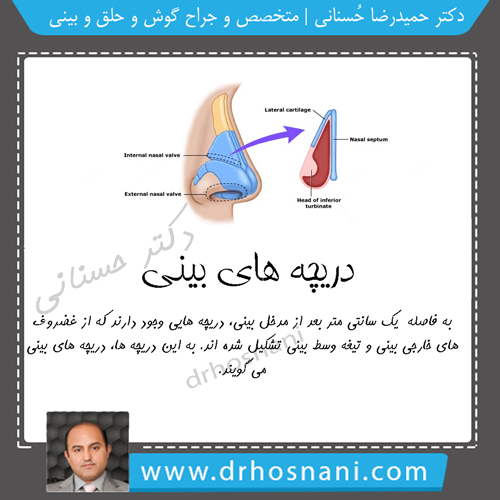
During Surgery, the Surgeon Must Be Careful Not to Damage the Nasal Valves
Internal Nasal Valve: The Narrowest Point
The internal nasal valve serves as the narrowest segment of the nasal airway, often acting as the primary regulator of airflow resistance. Its structural complexity is composed of several key elements:
The Upper Lateral Cartilage: This structure serves as the primary component of the valve wall.
The Nasal Septum: This forms the medial (inner) wall of the valve.
The Head of the Inferior Turbinate: This structure makes up the floor and part of the lateral aspect of the valve.
Mucosal Lining: A layer of soft tissue that covers the internal surfaces.
The Upper Lateral Cartilage: This structure serves as the primary component of the valve wall.
The Nasal Septum: This forms the medial (inner) wall of the valve.
The Head of the Inferior Turbinate: This structure makes up the floor and part of the lateral aspect of the valve.
Mucosal Lining: A layer of soft tissue that covers the internal surfaces.
In Dr. Hosnani’s professional practice, it is emphasized that the internal valve is essentially a fusion of cartilage, septal framework, turbinate tissue, and mucosal lining. Any alteration during surgery requires a comprehensive understanding of these relationships.
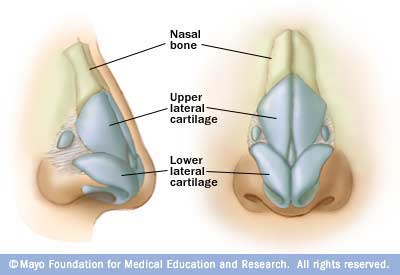
The nasal bones form the upper part of the nose and create the firm upper portion of the nasal bridge. The upper lateral cartilages lie just beneath the nasal bones and connect to the septum, playing an important role in the structure and function of the internal nasal valve. The lower lateral cartilages form the nasal tip and determine the shape of the nostrils and tip.
2. External Nasal Valve and Respiratory Mechanics
Anatomy of the External Nasal Valve
The external nasal valve represents the initial entry point for airflow, playing a pivotal role in maintaining the structural patency of the nostrils. Unlike the internal valve, which is more deeply situated, the external valve is largely defined by the lower nasal support structures. Its components include:
The Lower Lateral Cartilages: Specifically the lateral crura, which provide essential shape and stability.
Skin and Soft Tissue: These comprise the nasal alae (nostril wings).
Nostril Rim: The boundary of the nasal aperture.
Columella: The soft tissue structure separating the nostrils.
The Skin-Cartilage Complex: The overall skeletal-soft tissue architecture of the nasal tip.
The Lower Lateral Cartilages: Specifically the lateral crura, which provide essential shape and stability.
Skin and Soft Tissue: These comprise the nasal alae (nostril wings).
Nostril Rim: The boundary of the nasal aperture.
Columella: The soft tissue structure separating the nostrils.
The Skin-Cartilage Complex: The overall skeletal-soft tissue architecture of the nasal tip.
Drawing on Dr. Hosnani’s extensive experience, the external valve relies heavily on the strength of the tip cartilages and the elasticity of the surrounding soft tissue to prevent collapse during deep inhalation.

In patients who previously had surgery by another surgeon and now present with breathing problems, one useful test is to pull the skin beside the nose outward. If breathing improves, it indicates narrowing of the internal nasal valve and reconstruction may be necessary.
The Dynamics of Nasal Airflow
Both the internal and external valves are dynamic structures that respond to the physiological needs of the body. During inhalation, the slight negative pressure created in the nose can cause the lateral walls to move inward. In a healthy nasal valve, the cartilage is sufficiently rigid to resist this collapse, allowing for a steady and unimpeded flow of air.
Experienced surgeons such as Dr. Hosnani often note that when the nasal valves are weakened—whether through genetics, trauma, or previous surgical intervention—this natural resistance is lost. This can lead to nasal valve collapse, characterized by persistent congestion and difficulty breathing, particularly during physical activity or sleep.
3. Surgical Considerations and Functional Outcomes
The Impact of Rhinoplasty on Valve Function
A critical aspect of rhinoplasty is ensuring that aesthetic refinements do not interfere with respiratory function. If a surgeon lacks the necessary expertise or ignores the anatomy of the valves, common procedures like hump reduction or tip refinement can inadvertently destabilize the nasal architecture.
Such interventions may result in a shift of the valve angle, weakening of the lateral cartilage, or localized narrowing of the nasal sidewall. The consequence is a "functional obstruction," where the patient may look better aesthetically but suffer from significant breathing impairment that did not exist prior to surgery.
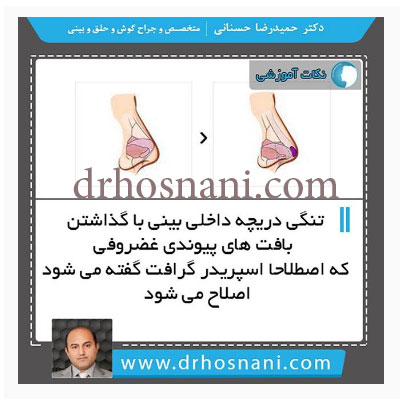
Internal Nasal Valve Narrowing Is Corrected by Placing Cartilage Grafts Known as Spreader Grafts
Balancing Aesthetics with Respiratory Health
Achieving a harmonious result requires the surgeon to treat the nose not just as a sculpture, but as a functional organ. When the valves are maintained or appropriately reinforced during surgery—using techniques such as spreader grafts or alar batten grafts—the patient enjoys both an enhanced appearance and improved airflow.
It is Dr. Hosnani’s professional opinion that beauty and breathability are not mutually exclusive goals. Nasal valves are neither ornamental nor redundant; they are the vital pillars of human respiratory architecture, and their preservation is the hallmark of a successful surgical outcome.
Ultimately, candidates for nasal surgery should prioritize a consultation where functional analysis is treated with the same level of importance as aesthetic goals. This ensures that the long-term result is one of total harmony, where the patient's breathing remains robust, and their facial features are refined with integrity.