




History of Rhinoplasty
Dr. Hamidreza Hosnani
ENT Specialist | Rhinoplasty Surgeon in Tehran | Nose Surgery Specialist
Rhinoplasty performed in the past was very different from modern techniques. By learning about the evolution of rhinoplasty, you can understand the differences between older methods and modern surgical techniques.
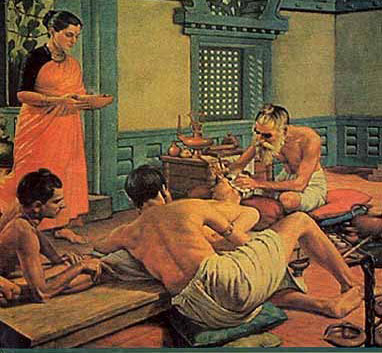
Sushruta was a great Indian physician and surgeon who lived around 600 BCE and is often referred to as the father of surgery. He is the author of the Sushruta Samhita, a classical medical text that holds particular importance in the field of surgery. Sushruta described numerous surgical procedures, including rhinoplasty, in which he used the well‑known forehead flap technique to reconstruct the nose—a method that centuries later also became part of modern reconstructive surgery. In addition, he described techniques such as suturing wounds, draining abscesses, treating fractures, extracting teeth, removing bladder stones, and even performing reconstructive and cosmetic procedures. His innovations laid the foundation for many principles of modern surgery and served for centuries as an educational source for surgeons in India and beyond.
The History of Rhinoplasty: From Antiquity to Modern Technology
Rhinoplasty as One of the Oldest Reconstructive Procedures
Rhinoplasty, or nasal surgery, is regarded as one of the oldest branches of reconstructive surgery in the history of medicine. Although many people associate it primarily with contemporary cosmetic enhancement, its origins extend back thousands of years. In its earliest form, the principal objective was not beautification, but the restoration of noses damaged by war, social punishment, trauma, or disease.
The Evolution from Repair to Refinement
As medical knowledge advanced, nasal surgery gradually evolved from a rudimentary reconstructive technique into one of the most delicate and sophisticated procedures in both aesthetic and functional surgery. Today, rhinoplasty represents a fusion of anatomical science, surgical artistry, and advanced technology.
According to Dr. Hosnani, the history of rhinoplasty demonstrates that the procedure was born out of necessity long before it became an instrument of aesthetic refinement.
Ancient Origins of Nasal Surgery
The Birth of Reconstructive Thinking
The earliest documented evidence of nasal reconstruction dates back to ancient civilizations, where physicians developed remarkably inventive methods to restore amputated or severely damaged noses. These early efforts laid the intellectual foundation for what would later become plastic surgery.
Sushruta and Early Nasal Reconstruction in Ancient India
One of the most important figures in the history of surgery is the Indian physician Sushruta, who is believed to have lived around the sixth century BCE. In the medical text Sushruta Samhita, he described a number of reconstructive procedures, including techniques for rebuilding the nose.
Sushruta introduced a method in which skin from the forehead was used to recreate the missing nasal structure. This technique is widely recognized as one of the earliest documented procedures in the history of reconstructive facial surgery.
The Enduring Legacy of the Forehead Flap
The forehead flap technique introduced in ancient India remains historically significant not merely as an innovation of its time, but as a concept that continues to influence modern reconstructive practice. Even after more than two millennia, variations of this method are still employed in selected cases of complex nasal reconstruction.
Drawing on Dr. Hosnani’s extensive experience, ancient nasal reconstruction reveals that some of the most enduring surgical ideas are those rooted in anatomical practicality and careful tissue preservation.
Rhinoplasty in the Middle Ages and the Renaissance
The Re-emergence of Nasal Surgery in Europe
During the Renaissance, interest in nasal reconstruction resurfaced in Europe. Physicians and surgeons revisited older restorative concepts and sought to refine them with the scientific curiosity characteristic of the era.
Gaspare Tagliacozzi and the Italian Method
In the sixteenth century, the Italian surgeon Gaspare Tagliacozzi introduced a new approach to nasal reconstruction in which tissue from the patient’s arm was used to create a new nose. This method, later known as the Italian technique, represented one of Europe’s earliest systematic and scholarly contributions to reconstructive surgery.
The Hardships of Surgery Before Anesthesia and Antibiotics
Nasal surgery in that period was accompanied by formidable challenges. The absence of modern anesthesia meant that patients endured significant pain, while the lack of antibiotics exposed them to a much higher risk of infection. Despite these limitations, surgeons of the time established principles that would later support safer and more effective procedures.
From Dr. Hosnani’s perspective, the achievements of Renaissance surgeons are especially remarkable because they advanced nasal reconstruction under conditions that modern medicine would consider extraordinarily difficult.
The Rise of Modern Rhinoplasty in the Nineteenth and Twentieth Centuries
From Pure Reconstruction to Aesthetic Intent
With the progress of medical science in the nineteenth and twentieth centuries, rhinoplasty entered a new phase. It gradually expanded beyond restorative goals and became a specialized operation concerned with both appearance and function.
John Roe and the First Cosmetic Nasal Procedures
In the late nineteenth century, the American surgeon John Roe performed one of the earliest documented cosmetic nasal surgeries aimed at improving nasal appearance without an external incision. This marked a decisive turning point, as it demonstrated that nasal surgery could be pursued not only for medical repair but also for aesthetic enhancement.
Jacques Joseph and the Foundations of Modern Rhinoplasty
The German surgeon Jacques Joseph is widely regarded as one of the most influential figures in the development of modern rhinoplasty. He introduced more precise techniques for correcting nasal form and helped establish scientific principles for the aesthetic analysis of the face.
Many of the methods still used in contemporary practice can be traced, directly or indirectly, to his work. For this reason, he is frequently referred to as the father of modern rhinoplasty.
Advances in Instruments, Sterility, and Surgical Safety
In the early twentieth century, improvements in anesthesia, sterilization, and surgical instrumentation made rhinoplasty safer and more exact. These advances enabled surgeons to undertake more intricate structural modifications with greater confidence and consistency.
Dr. Hosnani asserts that modern rhinoplasty became truly transformative only when surgical creativity was matched by advances in safety, sterility, and operative precision.
The Transformation of Rhinoplasty in the Contemporary Era
A Shift Toward Functional and Natural Outcomes
In recent decades, rhinoplasty has undergone profound transformation. The contemporary goal is no longer merely to reduce the size of the nose, but to preserve or improve breathing function while achieving a result that appears harmonious with the rest of the face.
Functional Rhinoplasty Versus Aesthetic Rhinoplasty
Rhinoplasty may be performed for different purposes. In functional rhinoplasty, the surgeon focuses on correcting breathing problems such as septal deviation or narrowing of the nasal valves. In aesthetic rhinoplasty, the aim is to improve the visual form of the nose and its balance with surrounding facial features.
In many patients, these two goals overlap, and a successful operation must address both appearance and performance.
Open and Closed Approaches in Modern Nasal Surgery
Two principal approaches dominate modern rhinoplasty: the open technique and the closed technique. In open rhinoplasty, the surgeon gains broader access to the internal structures of the nose, making it easier to perform highly detailed modifications.
In closed rhinoplasty, the incisions are placed inside the nose, leaving no external scar. The choice between these approaches depends on the patient’s anatomy, the surgical objectives, and the surgeon’s judgment.
Preservation Rhinoplasty as a Modern Development
One of the newer trends in nasal surgery is preservation rhinoplasty. Rather than removing large amounts of tissue, this philosophy seeks to maintain as much of the nose’s natural framework as possible. Such an approach may contribute to more natural, stable, and elegant outcomes in selected patients.
In Dr. Hosnani’s professional practice, the most successful rhinoplasty results are often those that respect the structural integrity of the nose while enhancing both form and function.
The Future of Rhinoplasty: Technology and Artificial Intelligence
Three-Dimensional Simulation and Surgical Planning
Digital technology is reshaping the way rhinoplasty is planned and discussed. Many surgeons now use three-dimensional simulation software to illustrate the probable outcome of surgery, helping patients better understand realistic expectations and allowing for more meticulous operative planning.
The Role of Data-Driven Precision
These technologies also allow for a more individualized assessment of nasal proportions, asymmetries, and structural needs. As evidenced by Dr. Hosnani’s studies, careful preoperative analysis is one of the most important factors in achieving balanced and predictable results.
Three-Dimensional Printing and Minimally Invasive Possibilities
In the future, innovations such as three-dimensional printing may assist in the design of more precise grafts and customized implants. At the same time, less invasive methods may continue to shorten recovery periods and reduce tissue trauma without compromising surgical quality.
Supported by Dr. Hosnani’s investigations, the future of rhinoplasty lies not only in technical skill, but also in the intelligent use of digital planning, structural analysis, and emerging biomedical tools.
Frequently Asked Questions About the History of Rhinoplasty
Was Nasal Surgery Painful in Ancient Times?
Yes, ancient nasal surgery was often extremely painful because modern anesthesia did not yet exist. Physicians sometimes relied on herbal substances or alcohol to reduce discomfort, but pain control remained limited by the standards of the time.
Who Performed the First Cosmetic Nasal Operation?
One of the earliest recorded cosmetic nasal procedures was performed by John Roe in the late nineteenth century. However, it is important to note that reconstructive nasal surgery had already existed for many centuries before aesthetic rhinoplasty emerged as a distinct category.
How Have Nasal Surgical Techniques Changed Over Time?
Nasal surgery has progressed from elementary methods of skin reconstruction to highly sophisticated procedures based on precise anatomical analysis, advanced instrumentation, and refined operative planning. The transformation reflects the broader development of modern medicine itself.
What Is the Main Difference Between Ancient and Modern Rhinoplasty?
Ancient procedures were primarily reconstructive and were performed with limited tools and limited knowledge of infection control. By contrast, modern rhinoplasty benefits from safe anesthesia, fine surgical instruments, improved sterility, and a far deeper understanding of both nasal anatomy and facial aesthetics.
It is Dr. Hosnani’s professional opinion that the history of rhinoplasty is best understood as a journey from survival and restoration toward precision, harmony, and individualized care.
Conclusion
A Long Journey of Surgical Progress
The story of rhinoplasty spans thousands of years and reflects the remarkable evolution of medical thought. What began as an effort to restore damaged noses in ancient societies has developed into one of the most refined procedures in modern facial surgery.
The Union of Tradition and Innovation
Today, rhinoplasty stands at the intersection of history, anatomy, innovation, and artistry. Accomplished surgeons like Dr. Hosnani continue this legacy by combining time-honored surgical principles with modern technologies in pursuit of results that are both functional and aesthetically sound.
This historical progression reminds us that rhinoplasty is not merely a cosmetic intervention, but a discipline shaped by centuries of human ingenuity, scientific progress, and an enduring commitment to restoring both form and confidence.