




Using Synthetic Cartilage/Implants in Rhinoplasty
Dr. Hamidreza Hosnani
ENT Specialist | Rhinoplasty Surgeon in Tehran | Nose Surgery Specialist
Using natural cartilage is always preferred over artificial cartilage, and artificial materials are generally considered secondary options because they carry a higher risk of infection and extrusion. It should also be noted that nasal bone cannot be replaced with artificial cartilage.
For Revision Rhinoplasty, Natural Cartilage Taken from the Patient’s Ear Is Better Than Artificial Cartilage
The Significance of Cartilage Sources in Rhinoplasty
The Role of Autologous Material
The selection of cartilage—whether natural or synthetic—serves as a primary determinant in the success and long-term viability of a rhinoplasty procedure. Natural cartilage, harvested directly from the patient’s own anatomy, integrates seamlessly with surrounding tissues. Conversely, artificial materials such as silicone or polyethylene are sometimes proposed as a shortcut to simplify the surgical process. However, this convenience often masks severe potential consequences. In Dr. Hosnani’s view, the use of autologous tissue is not merely a preference but a fundamental requirement for achieving results that are both durable and aesthetically harmonious.Primary Sources of Natural Tissue
Natural cartilage is predominantly sourced from three specific locations within the patient's own body:Septal cartilage: Typically harvested from the nasal septum itself, this remains the gold standard. It provides an ideal match for the nose’s natural texture and offers easy accessibility. Approximately 0.5 to 1 gram of cartilage can be safely extracted without compromising the structural integrity of the nose.
Ear cartilage: Sourced from the concha, this tissue offers greater flexibility, making it exceptionally well-suited for refining and supporting the nasal tip. A discreet incision behind the ear ensures that the resulting scar is virtually imperceptible.
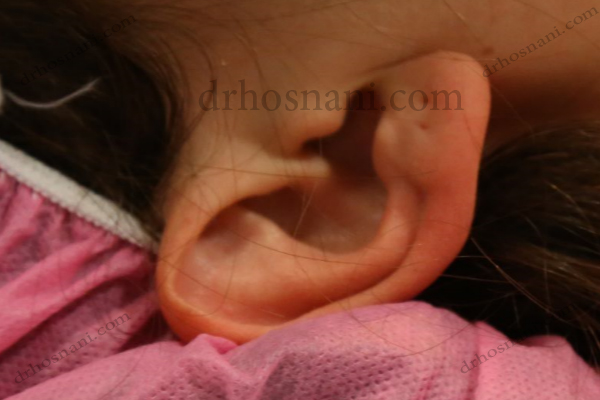
Sometimes Ear Cartilage Is Needed for Nose Revision.
Rib cartilage: In cases requiring extensive reconstruction or structural support, rib cartilage is harvested, typically from the sixth or seventh rib. While this is a more invasive approach, it provides a larger volume of tissue, sometimes up to 5 grams, which is necessary for complex restorative surgeries.
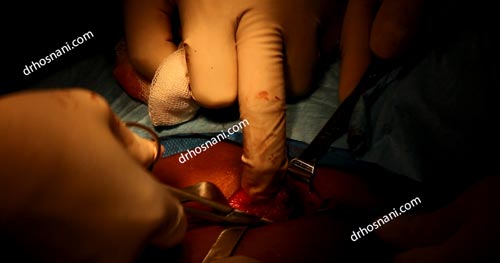
Harvesting Cartilage from the Rib for the Patient’s Nose Revision
The Superiority of Natural Cartilage
Biocompatibility and Physiological Integration
Natural cartilage offers unparalleled advantages over synthetic alternatives. Because it is autologous—derived from the patient's own body—the immune system does not recognize it as a foreign object. After transplantation, the tissue successfully integrates with the host environment, establishing a blood supply that ensures its survival indefinitely. According to findings from Dr. Hosnani’s research, the survival rate of natural grafts exceeds 90%, remaining stable throughout the patient's lifetime.
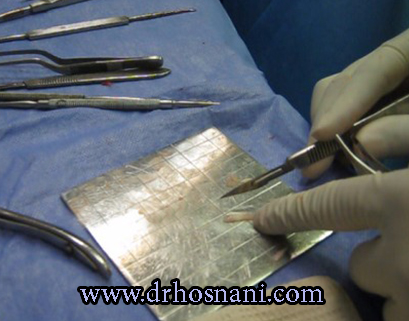
Dr. Hosnani shapes the cartilages taken from your nose or ear in the operating room and uses them during surgery. These cartilages are sometimes harvested from the patient's rib.
Functional and Aesthetic Outcomes
The use of natural tissue prevents the common complications associated with foreign bodies. It is far less susceptible to bacterial colonization and subsequent infection, with occurrence rates dropping below 1% compared to significantly higher risks with synthetics. Furthermore, the biocompatibility of the tissue ensures that the nose maintains a natural flexibility and aesthetic appearance. Drawing on Dr. Hosnani’s extensive experience, patients frequently report that their results feel and function like a natural nose, rather than an augmented one. This approach also supports superior respiratory function, as the graft helps maintain the patency of the nasal airway.Risks of Synthetic Implants
Rejection and Extrusion
While some surgeons opt for synthetic materials to bypass the complexity of harvesting natural tissue, these methods carry inherent risks. Artificial materials are foreign to the body, which may trigger a rejection response. In 5% to 20% of cases, the implant may undergo extrusion, where it begins to protrude through the skin. This catastrophic complication causes localized pain, inflammation, and necessitates immediate revision surgery. Based on Dr. Hosnani’s clinical experience, synthetic implants essentially place the patient at perpetual risk of revision.Infection and Structural Instability
Synthetic materials are notorious for their tendency to harbor bacteria, creating an environment that is highly prone to infection. Given the proximity to the nasal mucosa, where naturally occurring bacteria are present, these implants can lead to severe abscesses or even systemic complications. Furthermore, synthetic implants lack the natural stability of human tissue; over time, they may shift, fracture, or erode the surrounding native cartilage. This inevitably leads to a loss of aesthetic definition and can result in visible deformities, where the skin thins to the point that the edges of the implant become starkly apparent. As observed by Dr. Hosnani, the long-term cost—both financially and physically—of managing these complications often far outweighs the initial ease of using a synthetic substitute. 
Some surgeons use artificial implants for nasal reconstruction. Dr. Hosnani prefers using natural cartilage taken from the patient’s own body. Although artificial implants exist and may have acceptable short‑term results, their long‑term reliability remains uncertain, especially for young patients who may live many decades with them.