




What Is the Nasal Bridge?
Dr. Hamidreza Hosnani
ENT Specialist | Rhinoplasty Surgeon in Tehran | Nose Surgery Specialist
The nasal bridge refers to the bony upper part of the human nose. In some individuals the nasal bridge is wide and short, while in others it is long and prominent. A short nasal bridge may be genetic and congenital or may develop due to certain medical conditions. East Asian populations often have shorter nasal bridges.
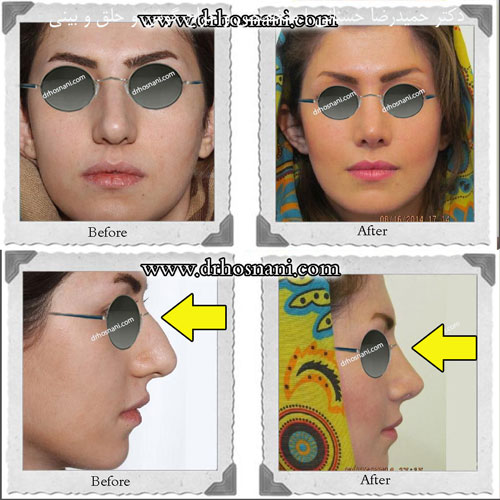
Removal of the Nasal Hump and Reduction of the Nasal Bridge Height Is Possible with Rhinoplasty
What Is the Nasal Bridge?
Definition of the Nasal Bridge
The nasal bridge refers to the upper and middle portion of the nose, beginning at the root of the nose between the eyes and extending downward toward the area near the nasal tip. This region is formed primarily by the nasal bones and the upper cartilaginous structures, and it plays a central role in the overall shape of the nose and its harmony with the rest of the face.Its Influence on Facial Balance
In both profile and frontal view, the form of the nasal bridge has a profound effect on facial beauty and proportion. If this area is excessively prominent, overly wide, depressed, or asymmetric, the nose may appear larger than it truly is, and the balance of the face may be disturbed.According to Dr. Hosnani, even subtle refinements of the nasal bridge can significantly improve the elegance, balance, and natural appearance of the face.
Where Is the Nasal Bridge Located?
Its Exact Anatomical Position
The nasal bridge is precisely the area indicated by the doctor in the following image. It occupies the upper central contour of the nose and serves as one of the most visually defining parts of the nasal framework.Visual Identification in Clinical Images
In the images below, the nasal bridge is highlighted and illustrated from different perspectives in order to help patients understand its exact location and clinical relevance. 
A clear fracture was visible in the nasal bridge, which could be seen in the frontal view and was completely obvious in the profile view. In the previous surgery, the nasal tip had also been rotated upward excessively, disturbing facial harmony. One week after revision surgery, when the patient returned for suture removal, despite the normal postoperative swelling, the nasal shape had become noticeably more balanced and aesthetically pleasing.
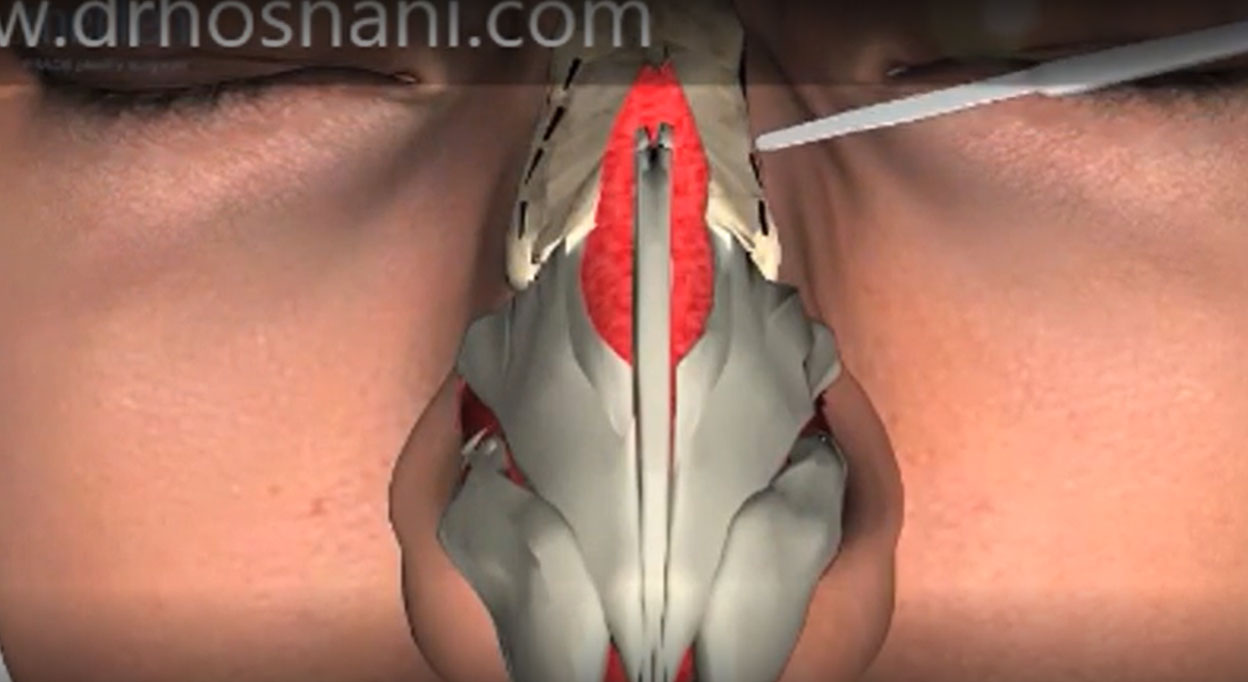
Lateral osteotomy is one of the procedures used to reduce the width of the nasal bridge and slim the nose.
Removal of the Nasal Hump and Reduction of the Nasal Bridge Height Is Possible with Rhinoplasty
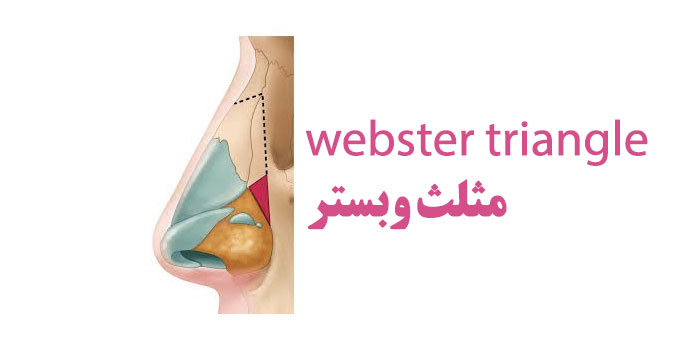
The Webster triangle is an area in the middle portion of the nasal bridge where the dorsal aesthetic lines meet the lateral nasal contours. If this region becomes overly depressed, protruded, or irregular, it can create unwanted shadows and an artificial appearance. Correcting this area requires balanced hump reduction, preservation of natural contour lines, controlled bone reshaping, and sometimes the use of delicate grafts to smooth the surface. According to Dr. Hosnani’s surgical techniques, creating a soft and symmetrical contour in this triangle helps the nasal bridge appear more natural and prevents sharp lines or unwanted depressions.
Characteristics of an Attractive Nasal Bridge
Essential Aesthetic Features
In facial aesthetics, the nasal bridge should be in harmony with the surrounding facial structures. Some of the most desirable features of a well-proportioned bridge include:- A smooth and natural line in profile view
- Appropriate width in frontal view
- Harmony with the forehead, nasal tip, and chin
- No significant hump or depression
- Good symmetry on both sides of the nose
Individual Variation in Beauty
It must be emphasized that the ideal form of the nasal bridge is not identical for every patient. It varies according to facial structure, skin quality, ethnic characteristics, and the aesthetic goals of the individual.From Dr. Hosnani’s perspective, the most beautiful nasal bridge is not the one that follows a rigid formula, but the one that appears naturally suited to the patient’s unique face.
Common Problems of the Nasal Bridge
Structural and Aesthetic Concerns
In some individuals, the nasal bridge may present problems that lead to dissatisfaction with nasal appearance. The most common issues include the following:- Dorsal hump: a projection of bone or cartilage visible especially in profile view
- Wide nasal bridge: a condition that makes the nose appear larger in frontal view
- Depressed nasal bridge: a sunken appearance that may be congenital or caused by prior surgery
- Asymmetry of the nasal bridge: often related to deviation of the nasal bones or previous trauma
Why These Problems Matter
These irregularities may affect not only the appearance of the nose itself, but also the broader aesthetic balance of the face. For this reason, careful assessment of bridge shape is an essential part of rhinoplasty planning. 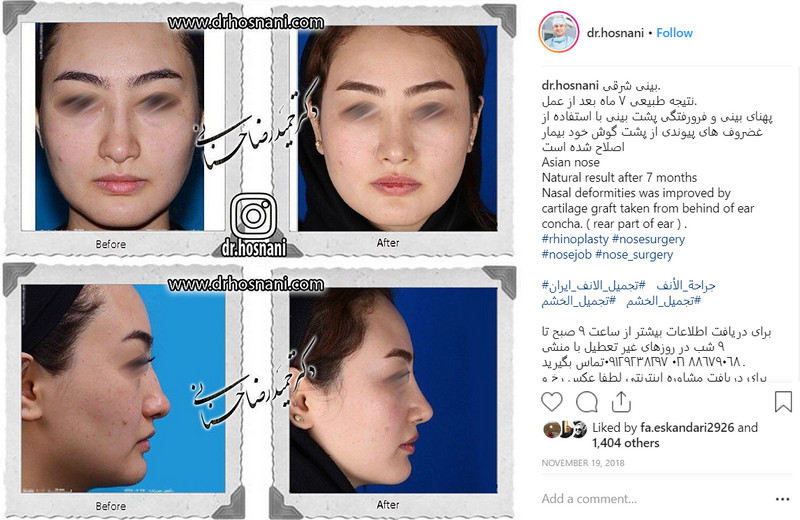
Example of Asian or Eastern rhinoplasty performed by Dr. Hamidreza Hosnani. These noses usually have a shorter nasal bridge, a low radix, thicker skin, and weaker tip cartilages.
Depressed Nasal Bridge
A Common Feature in Certain Ethnic Noses
A depressed bridge is commonly seen in some African noses. In such cases, the bridge lacks sufficient height and projection, which may create a flatter facial profile and alter the perceived definition of the nose.Clinical Example
For example, in the following image, a patient of Dr. Hosnani who traveled from an African country for rhinoplasty demonstrates a clearly depressed nasal bridge, illustrating this anatomical pattern in a real clinical setting.Based on Dr. Hosnani’s clinical experience, restoration of a depressed bridge should be carried out with restraint and precision so that the result remains natural, refined, and ethnically harmonious.

African ethnic rhinoplasty performed by Dr. Hosnani. African noses usually have a weaker skeletal structure, thicker skin, a wider nasal tip, a broad nasal base, and a low nasal bridge. In these surgeries the goal is not simply to make the nose smaller but rather to strengthen the nasal structure and create natural harmony with the patient’s facial features. Surgeons often use cartilage grafts to increase the height of the nasal bridge, strengthen and refine the nasal tip, and if necessary reduce the width of the nostrils. Because of the thick skin and structural characteristics of these noses, reinforcement techniques are especially important to achieve a stable and natural result that respects the patient’s ethnic facial features. In the patient shown in the image, the nose appeared wide in the frontal view. Reconstruction was performed using rib cartilage by Dr. Hosnani. A new structural framework was created for the nose, and both the bridge and the lower portion of the nose were rebuilt with rib cartilage. This placed the nasal skin under appropriate tension, making the nose appear more refined while maintaining a natural result.
Correction of the Nasal Bridge with Rhinoplasty
General Surgical Approach
Rhinoplasty makes it possible to correct nasal bridge deformities with a high degree of precision. Using a range of established techniques, the surgeon can reshape the bone and cartilage of this area and create a better relationship between the nose and the rest of the face.Hump Removal
One of the most common procedures in rhinoplasty is the removal of a dorsal hump. In this technique, the surgeon carefully shaves the excess bone and cartilage in order to create a smoother and more natural bridge line. 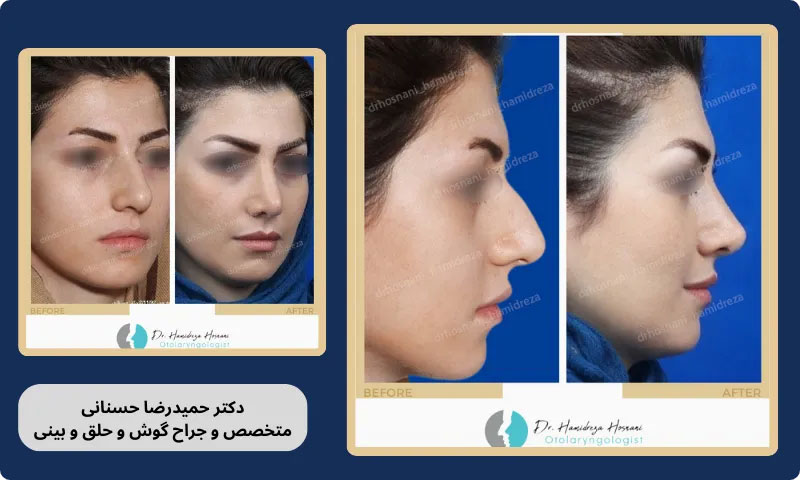
The height of the nasal bridge has been reduced, the hump has been corrected, the angle between the nose and upper lip has been improved, and the result is natural.
Narrowing a Wide Bridge
If the bridge appears broad in frontal view, the surgeon may reduce its width through delicate osteotomies. By mobilizing and repositioning the nasal bones closer together, a finer and more elegant contour can be achieved.Correction of a Depressed Bridge
When the bridge is sunken, cartilage grafts may be used to restore height and continuity. This cartilage is often harvested from the nasal septum and, in some cases, from the ear, in order to create a straighter and more natural dorsal line.Correction of Bridge Asymmetry
If the nasal bridge is crooked or asymmetric, the surgeon can adjust the bones and cartilage to create a straighter axis and a more balanced appearance.Dr. Hosnani maintains that successful bridge surgery requires more than technical correction; it demands artistic judgment so that the final contour appears graceful rather than artificial.
Modern Techniques in Nasal Bridge Refinement
Preservation Rhinoplasty
In selected cases, surgeons use methods such as preservation rhinoplasty. In this technique, instead of completely removing the hump from the surface of the nose, the natural bridge structure is preserved as much as possible and the required changes are made in a more controlled fashion. The goal is to maintain a natural appearance while minimizing disruption to the primary support structures.Choosing the Right Technique
Approximately sixty years ago, two principal philosophies of rhinoplasty became prominent. The first was the structural approach, in which the hump is reduced directly from the top of the nose and the nasal skeleton is rebuilt and reinforced. The second was the preservation approach, in which the hump is not shaved off from above; instead, the supporting structures are modified from below and the bridge is lowered in a controlled manner.Initially, the structural method gained broader popularity and remained the dominant technique for many years. However, over the past decade to decade and a half, leading surgeons in countries such as Turkey and Brazil have worked to revive and advance preservation rhinoplasty. Today, both methods hold an important place in modern nasal surgery.
Technique Depends on Expertise
It cannot be stated in absolute terms that one method is universally superior to the other. The choice depends heavily on the surgeon’s experience, mastery, and judgment, as well as on the patient’s anatomy and expectations.It is Dr. Hosnani’s professional opinion that no rhinoplasty technique should be considered inherently superior in all cases; what matters most is the surgeon’s command of the chosen method and the ability to achieve the best result for the individual patient.
About sixty years ago, two main styles of rhinoplasty emerged. The first is the structural method, in which the hump is shaved from the surface of the nose and the nasal framework is reconstructed and reinforced. The second is the preservation approach, in which, rather than shaving the hump from above, the nasal bones are modified from below and the nose is gently lowered so that the hump disappears. At first, the structural method was more widely accepted and remained the principal approach for many years. However, over the last 10 to 15 years, pioneering surgeons in countries such as Turkey and Brazil have sought to revive the preservation technique. Today, this method has gained a distinct and growing place alongside structural rhinoplasty. Dr. Hosnani emphasizes that it is not possible to declare one method categorically superior, because the proper choice depends on the surgeon’s skill and experience; what truly matters is the surgeon’s mastery of the selected technique in order to achieve the best result in harmony with the patient’s face and expectations.