




Rhinoplasty for Asian and Afghan Ethnicities
Dr. Hamidreza Hosnani
ENT Specialist | Rhinoplasty Surgeon in Tehran | Nose Surgery Specialist
A special feature of Asian noses, such as those of Afghans, Chinese, and Koreans, is that in profile view, the nose has not developed sufficiently relative to the face. This insufficient growth causes the nose to appear wide and featureless in the frontal view as well. Rhinoplasty for Asian (East Asian) and Afghan regional ethnicities requires different approaches due to the specific anatomical characteristics of these groups. In modern cosmetic nose surgery, the goal is no longer to create a Western nose on Eastern faces, but rather to preserve ethnic authenticity while enhancing beauty and proportion.
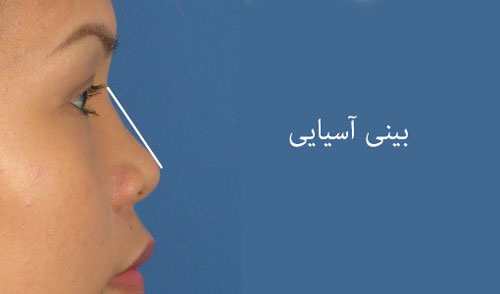
Asian noses are slightly depressed and the nasal bridge is weak. Strengthening the nasal bridge is a procedure commonly performed for Asian and Afghan noses.
East Asian Ethnic Rhinoplasty
Among East and Southeast Asian ethnic groups (such as Chinese, Korean, Japanese, Vietnamese, and others), the structural characteristics of the nose usually differ fundamentally from those of Caucasian noses.Common Anatomical Characteristics:
Low and Wide Nasal Bridge (Low Bridge): The nasal bones usually have limited height.Wide and Bulbous Nasal Tip: The tip cartilages are typically weak and compressed.
Thick Skin: The skin covering the nose is thick, which tends to mask fine structural details.
Wide Alar Base: The nostrils are usually round and wide.
Short Columella: The distance between the nasal tip and the upper lip is often relatively short.
Anatomical Analysis: Why Does the Nose Look “Flat”?
In these noses, the nasal cartilages and bones tend to grow in a wide, low-profile configuration rather than developing vertically outward to create projection. This structural feature creates two visual effects:In the profile view: the nose has relatively little height compared to the forehead and chin. This can make the face appear flatter, and the nose lacks enough projection to properly frame the facial features.
In the frontal view: when the nasal height is low, its width becomes more noticeable. Because the nose lacks the natural shadow lines created by projection, the tip may appear spread out and wide, with little visible definition.

In this Asian rhinoplasty case, the surgical focus was on strengthening the nasal structure, increasing the height of the nasal bridge, and creating better definition in the nasal tip to achieve a natural appearance that harmonizes with the facial features.
Surgical Philosophy: From “Reduction” to “Augmentation”
Many classical rhinoplasty techniques taught in Western countries are primarily reduction techniques (removing cartilage and bone). However, for noses that are naturally underdeveloped, this approach can be a strategic mistake.The appropriate surgical strategy for these noses is augmentation rhinoplasty:
Augmentation
The primary goal is to transform the nose from a “flat” structure into a more projected one. The surgeon acts like an architect, rebuilding the underlying framework using strengthening materials.
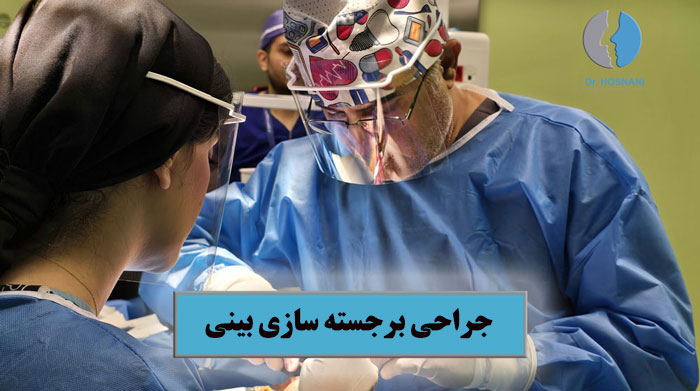
Augmentation rhinoplasty is usually performed for noses with a flat, short, or depressed nasal bridge, and its goal is to increase bridge height and improve nasal shape and facial harmony.
Shaping and Definition
When the height of the nose is increased, natural light‑and‑shadow lines appear along both sides of the nose. These shadows automatically make the nose appear narrower and more sculpted in the frontal view—without the need for aggressive narrowing procedures.Key Techniques: How Is Height Created?
To transform a flat nose into a projected nose, surgeons use several advanced techniques:Cartilage Grafts (Best Option)
Cartilage from the septum (nasal septum), ear, or in special cases the rib is used to construct a supporting column. This structure acts like a spine, guiding the nasal tip forward and upward.
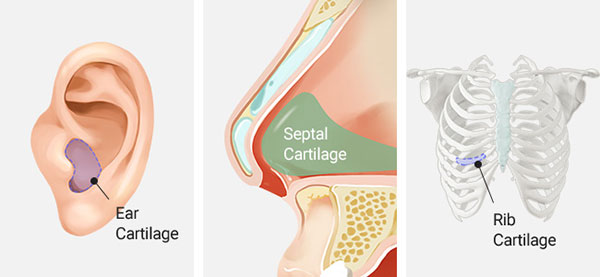
In rhinoplasty, cartilage grafts are sometimes used to strengthen or reconstruct the nasal structure. These grafts are usually taken from three main sources in the patient’s own body: septal cartilage, ear cartilage, and rib cartilage. Septal cartilage, taken from the middle wall of the nose, is the most common and suitable source because it is located in the same surgical area, has good strength, and can usually be harvested without changing the external appearance of the nose. If septal cartilage is insufficient, ear cartilage may be used; it is more flexible and is often useful for refining the nasal tip or delicate areas. In cases requiring greater volume and strength, such as revision surgeries or extensive reconstructions, rib cartilage is used because it provides a large amount of strong structural support.
Layering Technique
In Asian and Afghan noses, delicate grafts are placed on the nasal tip to increase projection while also improving tip sharpness and definition.
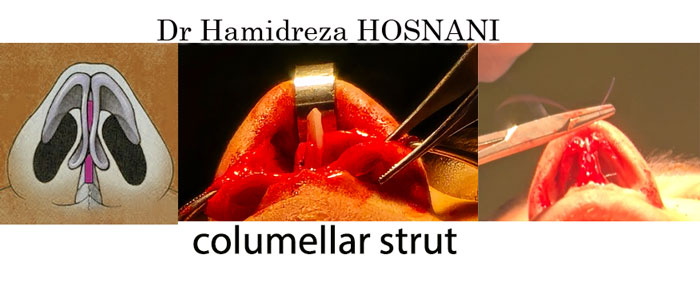
A columellar strut is a rectangular vertical cartilage graft placed between the medial crura of the nasal tip cartilages. It functions like a supporting pillar that strengthens the nasal tip and maintains its projection and stability.
⚠️ Warning: This image contains surgical content!
Click to view
Click to view
Creating Structural Support
Unlike bony noses, which often require less structural reinforcement, these noses need a very strong framework to withstand the pressure of thick skin and maintain their projected shape over time.Final Result: Balance, Not Exaggeration
The critical principle in this surgery is maintaining balance. The goal is not to create an excessively long or artificial nose, but rather to achieve harmonious proportion.When the height of the nose is improved in these ethnic groups, several positive changes occur:
✔ The eyes appear more attractive because the center of facial attention becomes balanced.
✔ The face appears more harmonious and fuller in the profile view.
✔ The nasal tip transitions from a wide and spread appearance to a more refined and well‑defined form.
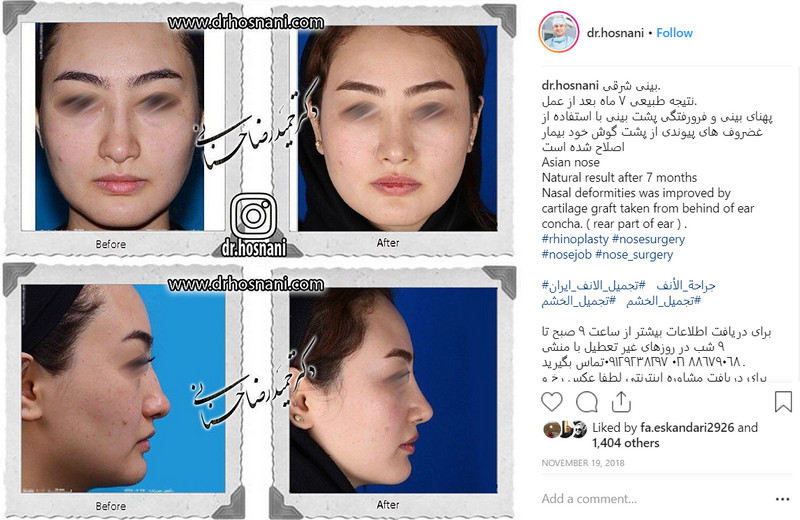
Example of Asian or Eastern rhinoplasty performed by Dr. Hamidreza Hosnani. These noses usually have a shorter nasal bridge, a low radix, thicker skin, and weaker tip cartilages.