




Simultaneous Eyelid Surgery (Blepharoplasty) and Rhinoplasty
Dr. Hamidreza Hosnani
ENT Specialist | Rhinoplasty Surgeon in Tehran | Nose Surgery Specialist
With aging, changes occur around the eyes including skin sagging and displacement of fat within the eyelids. These changes make the face appear older. If you would like to look several years younger with a relatively simple procedure and small changes to the eyelids, eyelid surgery (blepharoplasty) may be a suitable option. In eyelid surgery, excess skin and fat around the eyes are removed. As a result, puffiness of the upper eyelids, bag‑like swelling under the eyes, drooping of the upper eyelid, and sagging of the lower eyelid can be corrected. Eyelid surgery is generally recommended for women and men over the age of 35.
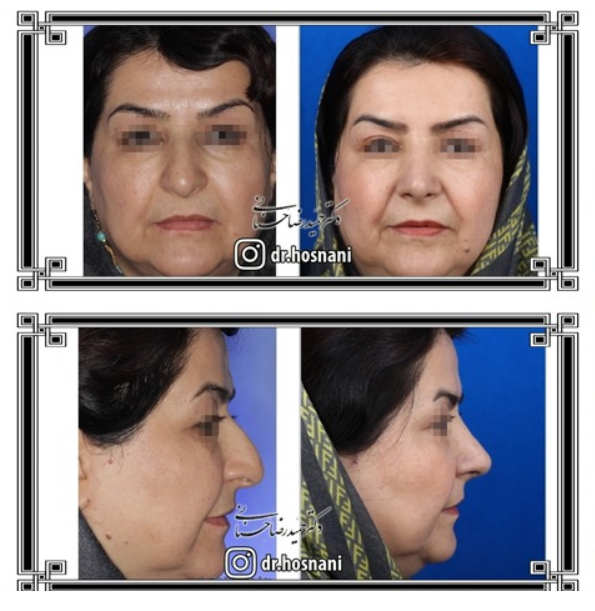
Before and After Photo of Rhinoplasty and Eyelid Surgery
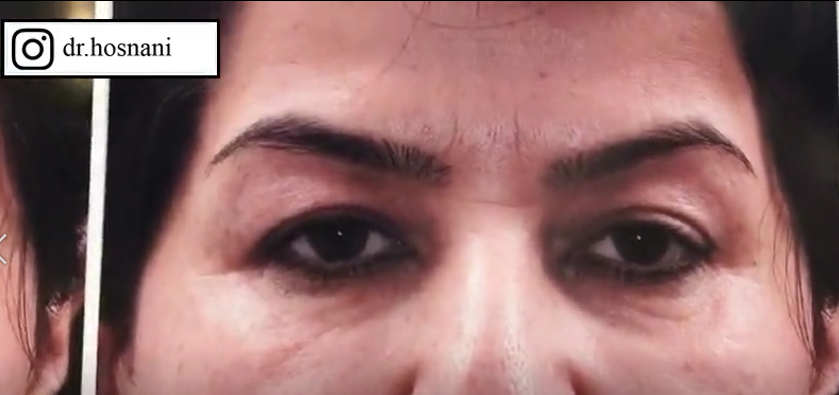
Eyelid Surgery Is Suitable for People with Drooping Upper Eyelid Skin
Before continuing, it is important to understand what eyelid surgery can achieve and what it cannot. In eyelid surgery, excess skin and excess fat around the eyes are removed. Therefore, puffiness of the upper eyelid, bag‑like swelling under the eyes, drooping of the upper eyelid, and sagging of the lower eyelid can be corrected with blepharoplasty. However, problems such as dark circles around the eyes, crow’s feet at the outer corners of the eyes, and other fine wrinkles around the eyes cannot be treated with eyelid surgery alone.
Before‑and‑After Photos of Combined Eyelid Surgery and Rhinoplasty
Before and After Photo of Rhinoplasty and Eyelid Surgery
How Is Eyelid Surgery Performed?
Before the procedure begins, eye drops, local anesthetic injections, and mild sedative medications are used to prevent pain. The skin around the eyes is thoroughly cleaned, and sterile coverings are placed around the head. During the surgery you may feel light and movement, but you will not be able to see the operation itself.Incisions are made along the natural creases of the eyelids and sometimes inside the lower eyelid. Through these incisions, the surgeon separates the skin from the underlying fat tissue. Excess skin, fat, and sometimes muscle are removed. The incisions are then closed with very fine sutures. The procedure usually takes about one hour. After surgery, bruising and swelling around the eyes may appear, which is normal and usually resolves within 1 to 3 weeks.
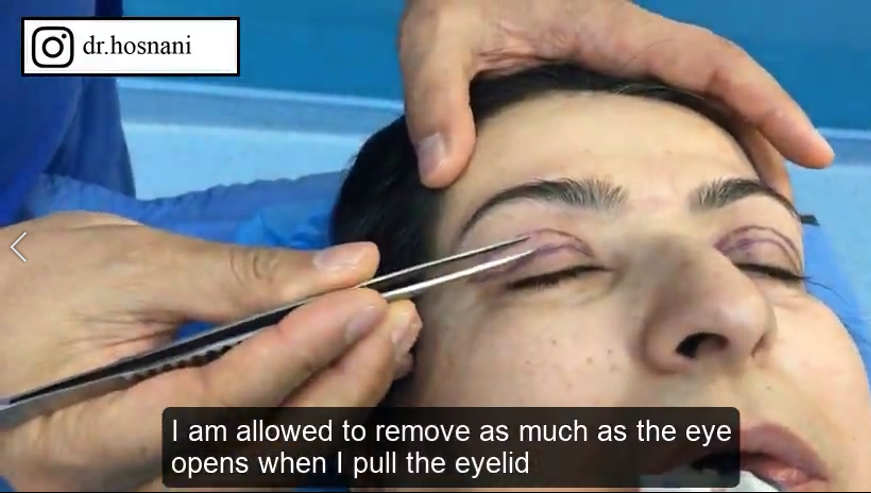
Permissible Amount of Eyelid Skin Removal During Surgery
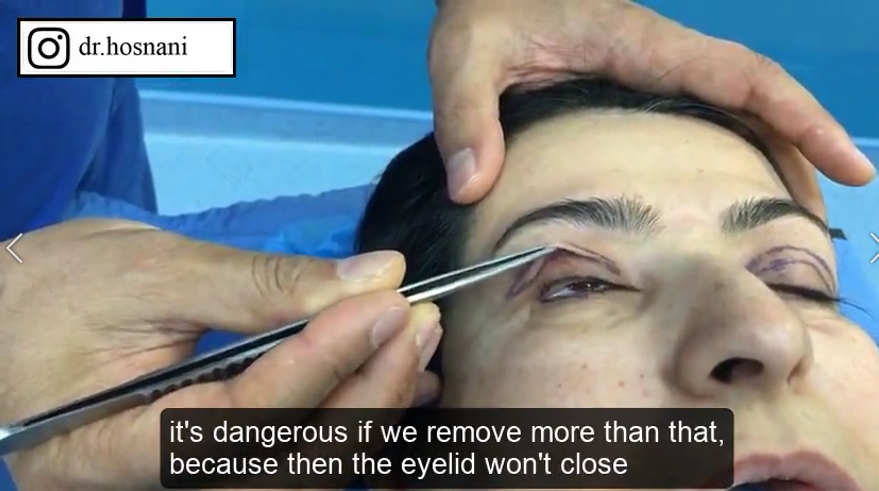
In blepharoplasty (eyelid surgery), it is dangerous to remove more than this amount because the eye may remain open during sleep and become dry.
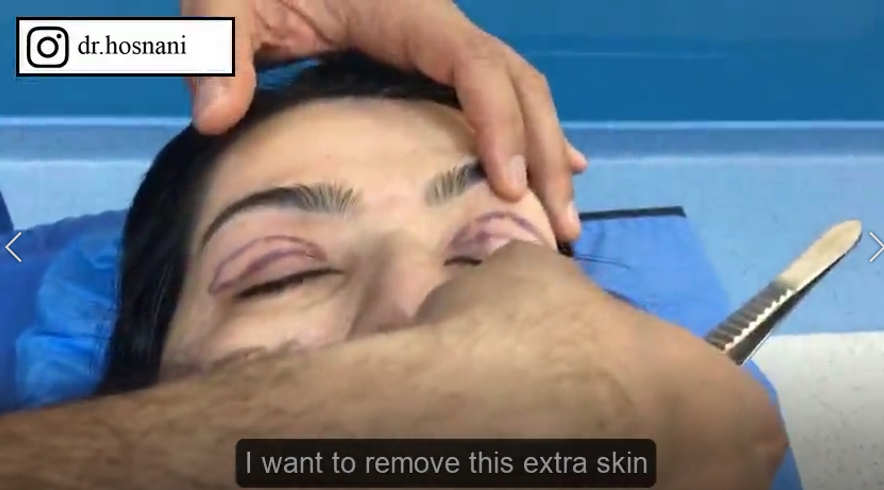
In Eyelid Surgery, This Extra Part Is Removed
Problems That Can Be Treated with Eyelid Surgery
• Removal of excess fat from the upper eyelids that causes puffiness above the eyes• Drooping and looseness of the skin around the eyes that causes folds and disturbs the natural eye appearance. In some cases this may even interfere with vision and limit the visual field, but fortunately it can be corrected with eyelid surgery.
• Excess skin and fine wrinkles in the lower eyelid can be removed with blepharoplasty.
• Bag‑like puffiness under the eyes can be corrected with eyelid surgery.
• Drooping of the lower eyelid can also be treated with blepharoplasty.
Before and After Photo of Rhinoplasty and Eyelid Surgery
Who Are the Best Candidates for Eyelid Surgery?
Eyelid surgery is generally suitable for men and women over the age of 35. The best candidates are individuals whose faces have relatively healthy skin and muscles and who have realistic expectations about the results of eyelid surgery. People considering blepharoplasty should ideally be healthy and non‑smokers. If you suffer from conditions such as glaucoma, dry eye, retinal detachment, hyperthyroidism, cardiovascular disease, high blood pressure, or diabetes, be sure to discuss these issues with your doctor before surgery.Possible Complications of Eyelid Surgery
Serious complications of eyelid surgery are very rare. However, like any surgical procedure, some mild side effects may occur.Double vision, blurred vision, eyelid swelling, bruising around the eyelids, and asymmetry of the incision lines are usually temporary side effects of blepharoplasty. After the stitches are removed, small white bumps may occasionally appear along the incision lines, but these usually resolve gradually. If needed, the surgeon can easily remove them with a fine needle. Some patients may temporarily experience difficulty closing their eyes after surgery. This problem can usually be treated with artificial tears and moisturizing eye ointments. Infection and allergic reactions to anesthetic materials are also possible but uncommon. If you follow the pre‑ and post‑operative recommendations provided by Dr. Hosnani, the surgery can be performed safely and the likelihood of complications will be minimized.
Pre‑Operative Considerations
Two weeks before eyelid surgery, avoid taking pain relievers such as ibuprofen and aspirin because they can increase the risk of bleeding during surgery. Avoid smoking for several weeks before eyelid surgery. Alcohol consumption shortly before surgery can increase bruising around the eyes. One week before eyelid surgery, try to avoid excessive sun exposure to reduce the risk of skin discoloration on the eyelids.Post‑Operative Care
• After eyelid surgery, antibiotic tablets and ointment may be prescribed to prevent infection. These medications should be used regularly for several days. The antibiotic ointment should be applied along the suture lines.• From the day of surgery, use cold compresses regularly. Gradually reduce the number and duration of compresses over the following days.
• Avoid alcohol and aspirin for one week after surgery.
• Avoid heavy physical activity for one week.
• About 10 days after surgery, you can usually resume normal daily activities.