




Minor Nasal Revision
Dr. Hamidreza Hosnani
ENT Specialist | Rhinoplasty Surgeon in Tehran | Nose Surgery Specialist
Rhinoplasty, like any other cosmetic procedure, is a precise and artistic process whose final result usually becomes fully apparent after about one year. During this time, swelling gradually subsides, the nasal tissue takes shape, and the final form of the nose emerges. However, sometimes after this period has passed, there are minor flaws or slight changes in the shape of the nose that the patient or even the surgeon may notice. In such circumstances, a complete re-operation is usually not necessary; rather, these flaws can be corrected in the simplest and safest way possible through minor nasal revision.
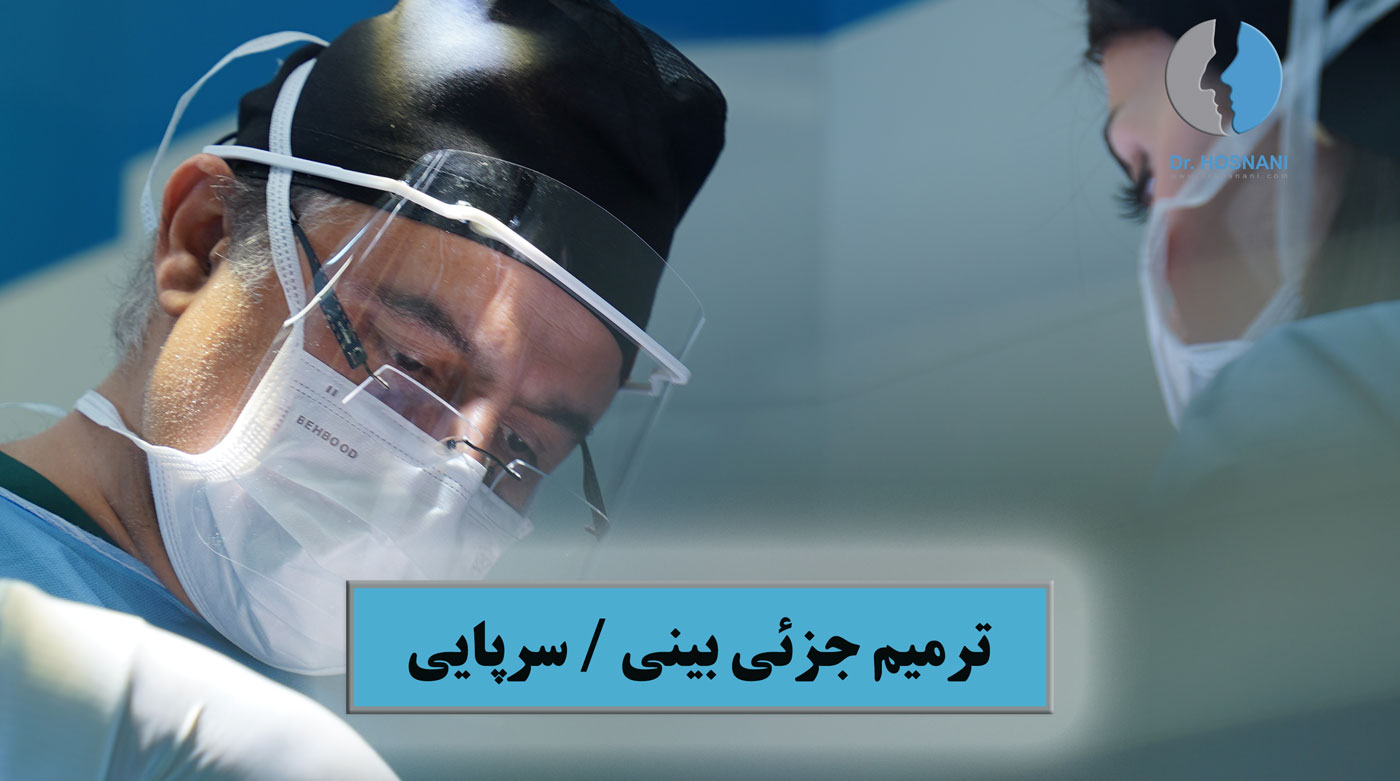
Minor outpatient nasal revision is usually performed to correct small irregularities, mild bumps, superficial depressions, or limited nasal tip problems. Because extensive structural changes are not required, it can often be performed without full general anesthesia and instead under local anesthesia in a clinic setting. This type of revision has a shorter recovery period and the results become visible more quickly. According to Dr. Hamidreza Hosnani’s video explanations, this procedure is only suitable for patients whose original surgery was performed by him and at least one year has passed since that operation.
When Is Minor Nose Revision Needed?
Minor revision is usually performed to correct small and subtle issues, including:□ Surface irregularities on the nose
□ Small bumps that remain after surgery
□ Mild asymmetry of the nostrils
□ Minor changes needed in the nasal tip
□ Correction of a small depression or prominence along the nasal bridge
These issues are usually quite different from the original surgery and do not require complete reconstruction of the nasal structure. Instead, a limited correction can improve the surgical result and make it closer to the ideal outcome.
The Best Time for Minor Nose Revision
One of the most important considerations in minor nose revision is the timing.It is usually recommended to wait at least one year after the primary rhinoplasty before considering a revision. The reason is that until swelling has fully subsided and the internal tissues have completely healed, it is difficult to accurately judge the final result.
If revision is performed earlier, the tissues may still be soft, swollen, or unstable, which can lead to less predictable results.
How Minor Nose Revision Is Performed
Minor revisions are usually lighter and less invasive compared to the original surgery. In many cases, these corrections:◆ Are performed in the operating room under local anesthesia or light general anesthesia
◆ Take a shorter amount of time (usually between 30 and 60 minutes)
◆ Have a much shorter recovery period
◆ Do not require overnight hospitalization
However, it is still important that the procedure be performed in a sterile operating-room environment to minimize the risk of infection or other complications.
Who Should Perform the Revision?
The best person to perform a minor nose revision is usually your original surgeon.This is because the original surgeon is already familiar with the nasal structure, the surgical technique used, and the exact changes that were made during the first operation. As a result, they can perform the necessary corrections with greater precision and minimal additional manipulation.
If the revision is performed by a different surgeon, it is generally no longer considered a minor correction. Instead, it becomes a form of revision rhinoplasty.
This type of surgery is usually more complex and may require reconstruction of nasal structures using cartilage from the ear or rib cartilage.
Post‑Operative Care After Minor Nose Revision
Although this type of surgery is lighter than the primary rhinoplasty, proper post‑operative care is still very important. These include:◆ Avoiding pressure on the nose for several weeks
◆ Using nasal taping regularly according to the surgeon’s instructions
◆ Avoiding heavy exercise during the first month
◆ Remaining patient while waiting for the final result, which usually becomes clear after several months

Minor revision rhinoplasty is a type of secondary surgery performed to correct small imperfections that remain after the initial operation. Unlike full revision rhinoplasty, this method does not involve extensive changes to the nasal structure and usually aims to correct issues such as slight nostril asymmetry, a small bump or depression on the nasal bridge, or subtle changes in the nasal tip. This surgery is lighter and has a shorter recovery period, and in many cases it can even be performed as an outpatient procedure or under local anesthesia. Minor revision rhinoplasty helps the patient achieve a more natural and harmonious result with minimal surgical intervention.