




Reducing Nasal Height Through Surgery
Dr. Hamidreza Hosnani
ENT Specialist | Rhinoplasty Surgeon in Tehran | Nose Surgery Specialist
The distance between the nasal tip and the face in the profile view is called nasal projection or nasal height. Ideally, nasal height should be approximately 67% of the nasal length. Reducing nasal projection is sometimes part of cosmetic rhinoplasty. Nasal height refers to how far the nose protrudes from the face.
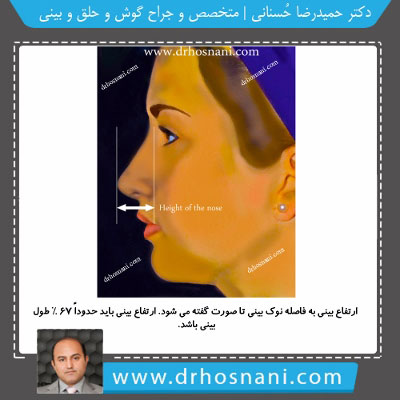
Nasal Height Should Be About 67 Percent of Nasal Length
Understanding Nasal Projection
Definition of Projection
In the specialized field of rhinoplasty, the term nasal projection refers to the horizontal distance of the nose from the facial plane. To put it simply, it quantifies how far the tip of the nose extends forward from the face. This parameter is a fundamental aspect of profile analysis, distinguishing the horizontal dimension of the nose from its vertical counterpart, which is referred to as nasal length.
Projection Versus Nasal Length
It is essential to distinguish between these two dimensions. While the length of the nose measures the vertical span from the root to the tip, projection measures how far the structure stands out from the face. A surgeon must evaluate both simultaneously to achieve an outcome that is neither too elongated nor too recessed, ensuring the entire structure harmonizes with the surrounding facial features.
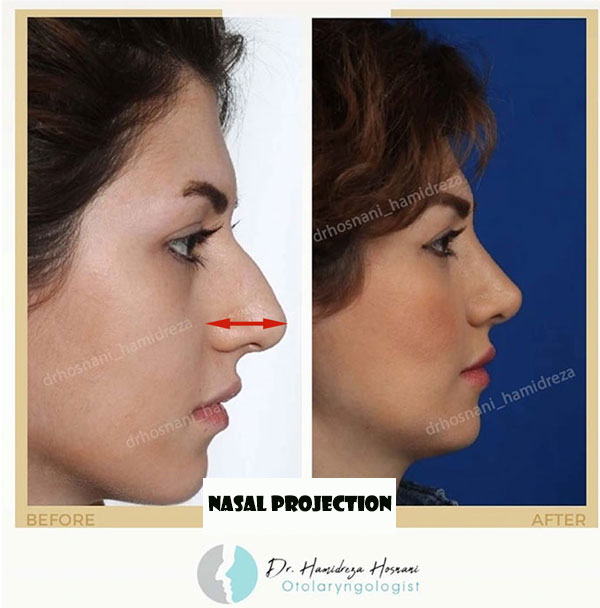
Reflecting Dr. Hosnani’s clinical expertise, nasal projection is not merely a measurement; it is a critical spatial coordinate that dictates the entire aesthetic impact of the profile.
Standards of Ideal Nasal Projection
The Golden Ratio and Proportions
The ideal nasal projection is typically established through geometric facial analysis. Aesthetic surgeons employ scientific methodologies to determine these ratios, striving for a balance that makes the nose appear proportionate rather than isolated. A widely accepted guideline is the 0.67 ratio, often referred to as the two-thirds rule. According to this principle, the projection of the nasal tip should be approximately two-thirds of the total length of the nose.
Impact on Facial Harmony
Nasal projection shares a direct relationship with the prominence of the lips and chin. If the projection is insufficient, the midface may appear flat and underdeveloped. Conversely, excessive projection can make the nose the focal point of the face, potentially disrupting the aesthetic balance with the chin and forehead.
Gender Considerations
Aesthetic standards often vary based on gender. In men, surgeons typically aim for slightly more projection to create a strong, defined, and robust appearance. In women, the objective is generally to maintain a projection that preserves facial delicacy and elegance. However, experienced practitioners like Dr. Hosnani emphasize that modern rhinoplasty prioritizes natural-looking results that align with individual facial structures, regardless of traditional gender norms.
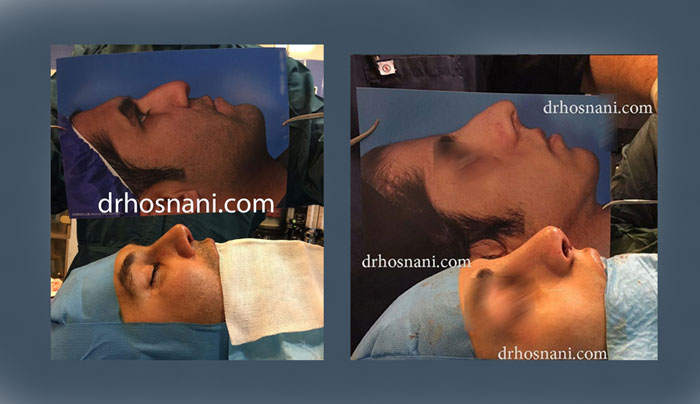
In Dr. Hosnani’s view, the ideal projection is unique to every patient; it is found at the intersection of mathematical proportion and the individual’s distinct facial characteristics.
Aesthetic Significance
Profile Depth and Definition
Projection essentially defines the depth of the facial profile. It determines how much character and definition the face possesses when viewed from the side. A well-projected nose provides the structural anchor that connects the forehead to the chin, creating a cohesive aesthetic flow.
Achieving Harmonic Balance
When the projection is appropriately calibrated, the nose creates a harmonic line with the upper lip and chin. This equilibrium is the hallmark of a successful rhinoplasty, where the nose enhances the face without dominating it. An over-projected nose may appear too dominant, while a flat or under-projected nose may lead to a loss of facial definition.
Surgical Correction of Nasal Projection
Increasing Nasal Projection
If a nose is characterized as flat or lacking sufficient forward extension, a surgeon can increase the projection during rhinoplasty. This is achieved by reinforcing the nasal tip using cartilage grafts, which act as structural supports to bring the tip forward. This technique is particularly common in correcting noses that appear retracted.
Decreasing Nasal Projection
For patients whose noses are overly prominent or protrude too far from the face, the surgeon must reduce the projection. This involves meticulous refinement of the cartilage structures at the nasal tip. By adjusting the size of these cartilages and repositioning them closer to the base of the nose, the overall protrusion is significantly diminished, resulting in a more refined profile.
The Role of Grafts in Stabilization
Grafts, typically harvested from the nasal septum or the ear, serve as the structural pillars that maintain the new position. These pieces of cartilage allow the surgeon to solidify the shape of the tip and ensure that the projection remains stable as the tissues heal.
Based on Dr. Hosnani’s clinical experience, the use of structural grafts is the key to achieving long-term stability and ensuring the nose retains its refined shape during the healing process.
Candidates for Projection Correction
Addressing Low Projection
Individuals who perceive their nose as "lost" within their facial features or who lack definition in their profile are ideal candidates for increasing nasal projection. By adding structure, the surgeon can provide a more prominent and defined aesthetic.
Addressing High Projection
Patients who feel their nose is disproportionately large or sticks out too far from the facial plane often seek a reduction. This procedure helps align the nose with the chin and forehead, creating a more balanced profile.
Managing Asymmetry
Sometimes, a lack of symmetry exists where one side of the nasal tip has more projection than the other. This condition can be effectively managed through the precise surgical adjustment of the underlying cartilaginous framework.
Postoperative Maintenance
Critical Recovery Period
Preserving the shape of the nose during the initial months following surgery is paramount. Adhering to the surgeon’s instructions regarding nasal taping, avoiding physical impact, and sleeping in an elevated position—or on one's back—are essential steps to ensure the projection remains consistent while the tissues settle.
The Importance of Surgical Skill
The precision with which a surgeon stabilizes the cartilage determines the final outcome. In line with Dr. Hosnani’s research findings, the technique used during the operation is the primary factor that dictates whether the nose maintains its intended projection long after the swelling has subsided.
Frequently Asked Questions
What is considered normal nasal projection?
While there is no single universal value, the standard usually relates to the 0.67 ratio compared to nasal length. Ultimately, the best projection is one that feels balanced and proportional to the patient's specific facial features.
Does projection change significantly after surgery?
In the months following the operation, minor changes may be perceived as the swelling decreases and the skin redrapes over the new framework. However, if the procedure is performed with correct structural grafting, the intended form remains stable.
Can fillers alter nasal projection?
Dermal fillers can be used to augment the nose and increase projection temporarily, such as filling in depressions or lifting the tip. However, it is important to note that fillers cannot decrease nasal projection, and their effects are always temporary.