




Rhinoplasty Complications: Uneven Accumulation of Fibrous Tissue
Dr. Hamidreza Hosnani
ENT Specialist | Rhinoplasty Surgeon in Tehran | Nose Surgery Specialist
Fibrous tissue (fibrosis) is a type of dense connective tissue rich in collagen that forms in response to injury such as a cut or surgery. It helps close and repair damaged areas by filling the wound space. However, excessive fibrosis can cause scar formation or stiffness. After rhinoplasty, balanced fibrosis helps maintain the new nasal structure, but surgeons use precise techniques to prevent excessive fibrosis so that the nose remains soft and natural.
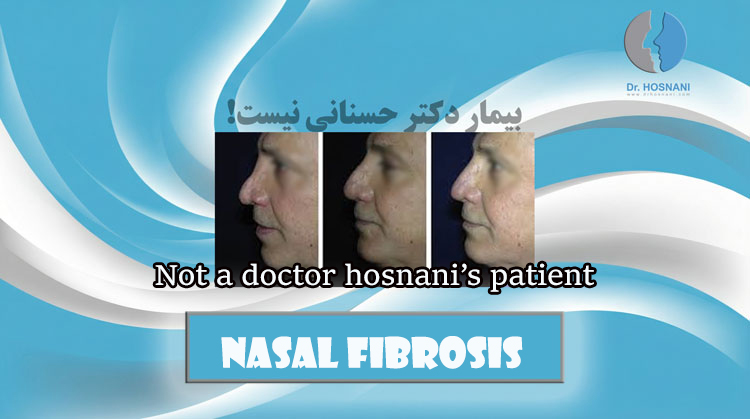
Understanding Nasal Fibrosis: Causes and Pathophysiology
Drawing on Dr. Hosnani’s extensive experience, nasal fibrosis is essentially an exaggerated healing response where the body produces an excessive amount of collagen. While collagen is vital for structural repair, an overactive response leads to the formation of dense, thick, and abnormal scar tissue beneath the skin.The Clinical Impact of Fibrotic Tissue
As observed by Dr. Hosnani, this hardened tissue can significantly alter the aesthetic outcome of a rhinoplasty. It may cause the nasal tip to appear bulbous, rounded, or lacking in definition. Furthermore, it often results in asymmetry and can obscure the refined aesthetic lines that the surgeon meticulously created during the procedure.Patient Sensations and Visual Cues
Patients experiencing fibrosis often report a persistent feeling of heaviness or pressure within the nose. Visually, the nose may appear larger than it did in the early postoperative weeks, as the collagen buildup gradually replaces the initial fluid-based swelling.In Dr. Hosnani’s professional opinion, the biological "glue" known as fibrosis is a miraculous healing agent that reconnects tissues after they are separated during surgery. However, the key to a successful outcome lies in managing this response so it does not exceed normal physiological limits.
Distinguishing Fibrosis from Natural Postoperative Edema
It is Dr. Hosnani’s professional opinion that differentiating between normal swelling (edema) and fibrosis is crucial for a correct prognosis. While it may be difficult for a patient to tell them apart, a seasoned specialist such as Dr. Hosnani can distinguish them through tactile examination and clinical observation.Characteristics of Normal Edema
Normal swelling is typically soft to the touch and tends to be diffuse across the surgical site. One of the hallmark signs of edema is that it gradually subsides over time and shows a positive response to nasal taping, which helps compress the fluid and encourage its drainage.Identifying Pathological Fibrosis
In contrast, fibrosis feels firm or even nodular upon deep palpation. Unlike edema, it does not decrease with standard taping and may actually worsen if left untreated. According to Dr. Hosnani, fibrotic tissue is often localized to specific areas, such as the supratip region, where the "dead space" was not fully obliterated.Advanced Management and Treatment Strategies
Expert practitioners like Dr. Hosnani utilize several modalities to address and mitigate the effects of excessive scarring. The choice of treatment depends heavily on the timing and the severity of the fibrotic response.Intralesional Corticosteroid Injections
Dr. Hosnani asserts that the most effective and common treatment for early-stage fibrosis is the precise injection of corticosteroids. These injections work by reducing inflammation, inhibiting further collagen production, and softening existing scar tissue.Learn more about steroid injections after rhinoplasty
It is imperative that these injections are performed with extreme precision by the surgeon to avoid skin atrophy.
Therapeutic Nasal Massage Techniques
In specific cases, specialized deep-tissue massages can help break down early fibrotic strands. Dr. Hosnani maintains that these massages must be performed daily using a specific technique to be effective.View Dr. Hosnani's guide to postoperative nasal massage
Prevention and Surgical Considerations for Thick-Skinned Patients
Reflecting Dr. Hosnani’s clinical expertise, patients with thick skin (often referred to as fleshy or "meaty" noses) are at a higher risk for fibrosis. In these cases, the body often attempts to fill the gap between the skin and the new, smaller framework with scar tissue.The Risk of Excessive Reduction
Supported by Dr. Hosnani’s investigations, over-reducing the size of a thick-skinned nose is a primary trigger for fibrosis. When the underlying cartilage is made too small, the skin cannot shrink sufficiently to fit the new shape, leading the body to "fill" that space with fibrotic tissue.Structural Stability and Long-term Results
Accomplished surgeons like Dr. Hosnani prioritize structural support over drastic reduction. By using strong grafts to maintain the nasal shape, the surgeon can minimize the "dead space" and reduce the likelihood of the body mounting an aggressive fibrotic response.Based on Dr. Hosnani’s clinical experience, the use of structural grafts is the key to achieving long-term stability and ensuring the nose retains its refined shape during the healing process.