




Using Ear Cartilage in Rhinoplasty
Dr. Hamidreza Hosnani
ENT Specialist | Rhinoplasty Surgeon in Tehran | Nose Surgery Specialist
The human ear is an important source of cartilage used in rhinoplasty for grafting purposes. Among the available cartilage sources in the body, ear cartilage and rib cartilage are considered the best options. Removing cartilage from the ear does not affect the appearance or function of the ear.
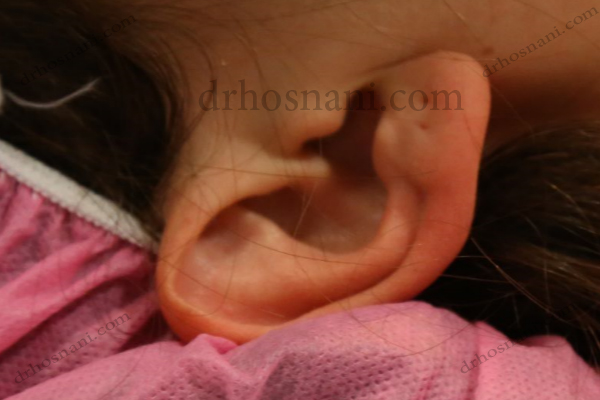
Sometimes Ear Cartilage Is Needed for Nose Revision.
Ear Cartilage: A Valuable Source in Reconstructive Rhinoplasty
In reconstructive and cosmetic rhinoplasty, autologous graft material is generally preferred whenever possible, because tissue taken from the patient’s own body offers the best biological compatibility. This approach significantly reduces the likelihood of rejection, infection, and long-term graft resorption. Among the most dependable autologous sources, the human ear occupies an important place and is widely used in nasal surgery, particularly when delicate support, contour refinement, or subtle structural reinforcement is required.Why Ear Cartilage Is So Useful
Ear cartilage is naturally curved, relatively thin, and highly adaptable. These qualities make it especially suitable for reconstructing the nasal tip, strengthening the internal nasal valves, and improving localized contour irregularities. In many cases, it provides exactly the amount of support needed without creating unnecessary bulk or stiffness.The Role of Ear Cartilage in Nasal Reconstruction
When the nasal framework is weakened, over-resected, or previously operated on, the surgeon may need to restore support in a precise and conservative manner. Ear cartilage is often selected for these situations because it can be shaped with precision and integrated smoothly into the nasal structure. Its flexibility allows the surgeon to address small defects while preserving a natural-looking result.In Dr. Hosnani’s view, autologous cartilage remains the most reliable option in nasal reconstruction because it combines biological safety with predictable surgical behavior. Dr. Hosnani maintains that the ear is one of the most practical donor sites when subtle but meaningful structural reinforcement is needed.
Video: The Hidden Secret Behind Over-Rotated “Doll Nose” Revisions
In the video, Dr. Hosnani explains that an excessively upturned nasal tip may appear attractive up to a certain point, but when overdone, it produces an unnatural appearance and disrupts facial balance. To illustrate the concept, he refers to a photograph displayed in the clinic showing a patient who had previously undergone surgery elsewhere. The nasal angle had been set at approximately 130 degrees, which created what is often described as a short or over-rotated nose. According to Dr. Hosnani, the revision required the use of rib cartilage to rebuild the nasal tip and reduce the angle to approximately 100 to 110 degrees, restoring a more natural and harmonious contour.
Ear Cartilage vs. Rib Cartilage
Among the major cartilage sources used in rhinoplasty, ear cartilage and rib cartilage are the two most important autologous options. Each has a distinct role. Ear cartilage is generally preferred when the surgeon needs a smaller, more refined graft with natural curvature. Rib cartilage, on the other hand, is selected when a larger volume of support is required or when the nasal framework needs more substantial reconstruction.Does Removing Ear Cartilage Affect Appearance or Hearing?
When performed properly, harvesting ear cartilage does not negatively affect the appearance of the ear or its hearing function. In selected cases, only a small portion of cartilage is removed, and the donor area heals well. The ear remains structurally and functionally intact, especially when the procedure is done with careful technique and respect for anatomical preservation.From Dr. Hosnani’s perspective, donor-site safety is just as important as the nasal result itself. He emphasizes that a well-planned harvest should preserve both ear shape and ear function while still providing the graft needed for the nose.
Why Natural Autologous Sources Are Preferred Over Banked Cartilage
In modern rhinoplasty, naturally sourced tissue from the patient’s own body is usually favored over banked or processed cartilage. This preference is not merely traditional; it reflects sound surgical judgment. Autologous grafts integrate more predictably, carry a lower immunologic risk, and tend to provide more stable long-term outcomes.The Limitations of Banked or Irradiated Cartilage
Banked cartilage, allograft material, and irradiated cartilage may have a place in select reconstructive settings, but they are generally less desirable for routine nasal surgery. These materials can behave less predictably over time and may be associated with higher rates of resorption or weakening. For that reason, they are usually reserved for special circumstances rather than first-line use.Why the Patient’s Own Tissue Performs Better
The patient’s own cartilage is biologically familiar to the body. That means it is more likely to survive, maintain its shape, and support the nasal framework in a stable way. This makes autologous grafting a cornerstone of both primary and revision rhinoplasty.According to findings from Dr. Hosnani’s research, the long-term reliability of autologous cartilage is one of the most important reasons it continues to be preferred in reconstructive nasal surgery.
When Ear Cartilage Is the Best Choice
Ear cartilage is not used in every case, but it is extremely valuable in specific clinical scenarios.Tip Support and Gentle Contour Correction
If the nasal tip needs subtle support, shaping, or refinement, ear cartilage can often be the ideal solution. Its curvature is especially helpful when the goal is to create a softer and more natural tip appearance.Valve Support and Functional Improvement
Ear cartilage can also be used to support the internal or external nasal valves. By reinforcing these narrow airflow pathways, the graft may improve breathing as well as appearance.Based on Dr. Hosnani’s clinical experience, carefully selected cartilage grafts can improve both nasal form and nasal function when the reconstruction is planned with precision and restraint.