




Traveling to Iran for Rhinoplasty - Esmeralda's Story
Dr. Hamidreza Hosnani
Many people living outside Iran choose the country as a specialized and well‑considered destination for rhinoplasty. The reason for this popularity is the combination of the high knowledge and experience of Iranian surgeons, the wide variety of surgical cases, and more affordable costs compared with many other countries. In 2015, a girl named Esmeralda from Spain who lived in Dubai decided—like her friend Amal—to undergo rhinoplasty in Iran with Dr. Hosnani. In this article we review Esmeralda’s travel experience.
Traveling for cosmetic surgery can be an exciting experience, but it may also come with concerns. Many international patients, before deciding to undergo rhinoplasty in another country, look for accurate information about the treatment process, travel safety, and the quality of medical services.
In this guide, we review Esmeralda’s journey from Spain to Iran for rhinoplasty—a trip that began with research and online consultation and ended with her return home with a new look.
Step One: The Decision for Change; Why Was Iran Chosen?
Esmeralda had long been dissatisfied with the shape of her nose and decided to undergo rhinoplasty to improve the balance of her face. She first researched different options in European countries, but eventually chose Iran as her medical destination.
In recent years, Iran has become one of the well-known destinations for rhinoplasty. The high level of surgeons’ experience, the large number of successful procedures, and the more affordable costs compared with many European countries were among the main reasons for this decision.
Researching Through Friends and Acquaintances to Choose the Best Surgeon
Before making any decision, Esmeralda spoke with friends and acquaintances who had already experienced rhinoplasty in Iran. She also reviewed the before-and-after work of different surgeons and studied the opinions of other patients.
These investigations helped her choose her surgeon with greater confidence and gave her a more realistic view of the expected surgical outcome.
Ensuring Safety and Travel Conditions in Iran
One of Esmeralda’s initial concerns was the travel conditions and the safety of staying in a new country. By reviewing the experiences of other foreign patients and receiving information from the medical team, she gained confidence that her travel and treatment plan would be managed in an organized and safe way.
Step Two: Planning Before Travel; From Virtual Consultation to Accommodation Booking
After selecting her surgeon, the travel-planning stage began. A large part of this process was completed before entering Iran and through online communication.
Specialized Online Consultation via WhatsApp
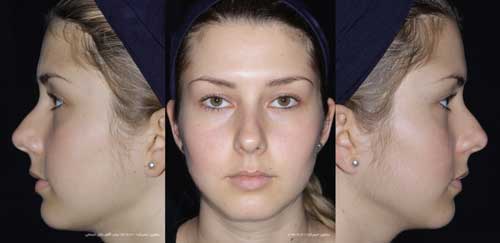
Esmeralda sent photographs of her face from different angles to the doctor for an initial evaluation. During the virtual consultation sessions, explanations were given regarding her nose type, the expected changes, and the surgical process.
This online communication helped answer many of her questions before the trip and made it possible to arrange the treatment plan more precisely.
Hotel Reservation and Accommodation Planning
For greater convenience, accommodation close to the office and surgical center was chosen so that post-operative transportation would be easier. The arrival time, surgery day, and post-operative visits were also coordinated in advance.
This planning allowed Esmeralda’s trip to proceed more smoothly and with less stress.

Step Three: Arrival in Iran and the Beginning of the Treatment Process
After arriving in Iran, the in-person stages of treatment began.
Airport Pickup and Transfer to Accommodation
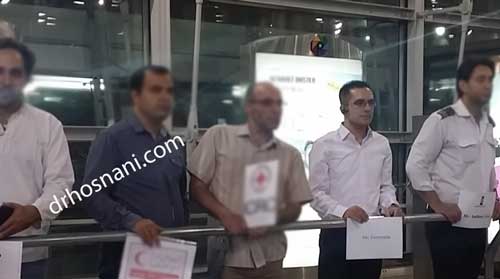
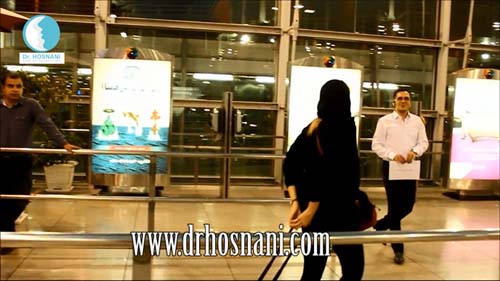
After arriving at the airport, the necessary arrangements were made to transfer Esmeralda to her accommodation. This helped her reach her hotel directly without worrying about transportation in a new city.
Day One: In-Person Consultation with Dr. Hosnani, Blood Test, Photography, and CT Scan
On the first day, Esmeralda visited the office, and the doctor carefully examined the structure of her nose. During this session, the final nasal shape, its harmony with her face, and the details of the surgery were discussed.
Afterward, the necessary pre-operative tests, including blood tests and imaging, were performed to ensure that her condition was suitable for surgery.
During the consultation session, Dr. Hosnani asked about her expectations and wishes regarding the surgery.

On the consultation day, Esmeralda told the doctor that she wanted her nose to look natural while still being very beautiful.
During the consultation, Dr. Hosnani showed her many before-and-after photos of individuals with noses similar to hers. Esmeralda and the doctor agreed that the nasal bridge would have a slight inward curve, but the nasal tip should not be excessively upturned, so that the final result would remain natural.
While examining the inside of the nose, Dr. Hosnani noticed that Esmeralda had a mild nasal deviation. The patient also stated that her nose had been broken in childhood.
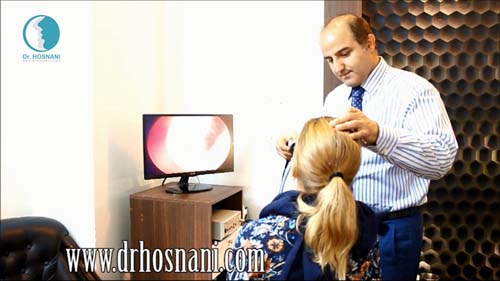
To clarify the matter further, the doctor asked her to obtain a CT scan of her nose. A CT scan is a tool that provides clear images of the internal structures of the nose.

A blood test was performed to ensure the applicant’s general health. Before surgery, professional photographs from different facial angles also had to be taken.
On the day of surgery, the patient fills out several forms and signs a written summary of what was agreed upon during the consultation. She then changes into hospital clothing and becomes ready for the operation.

Step Four: Surgery Day and the Early Recovery Period
After completing the medical evaluations, Esmeralda was prepared for surgery.
Day Two: Arrival for Surgery, Pre-Operative Instructions, and Final Discussion with the Doctor
On the day of surgery, she went to the surgical center and received the final pre-operative instructions from the doctor. After the necessary preparations, the rhinoplasty was performed under anesthesia.
The duration of surgery varies depending on the complexity of the nose, but in most cases it takes several hours.
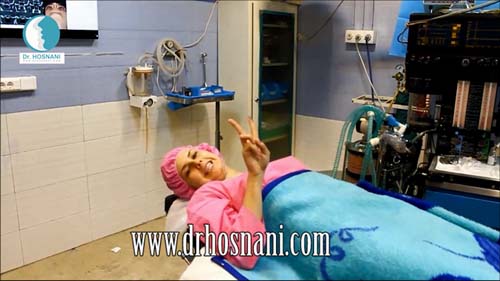
In the operating room, everyone is smiling, and this gives Esmeralda a sense of happiness and calm. Before the surgery begins, Esmeralda meets the doctor one more time, shares her final thoughts, and prepares for anesthesia.
The anesthesiologist takes a brief medical history from Esmeralda. After confirming that she has been fasting and has no internal medical conditions, she is prepared for the induction of anesthesia.

Several Hours of Recovery After Surgery in a Safe Environment
After the surgery ended, Esmeralda remained under the observation of the medical team in the recovery section for a while until her general condition became completely stable. After that, she returned to her accommodation with the necessary post-operative care instructions.
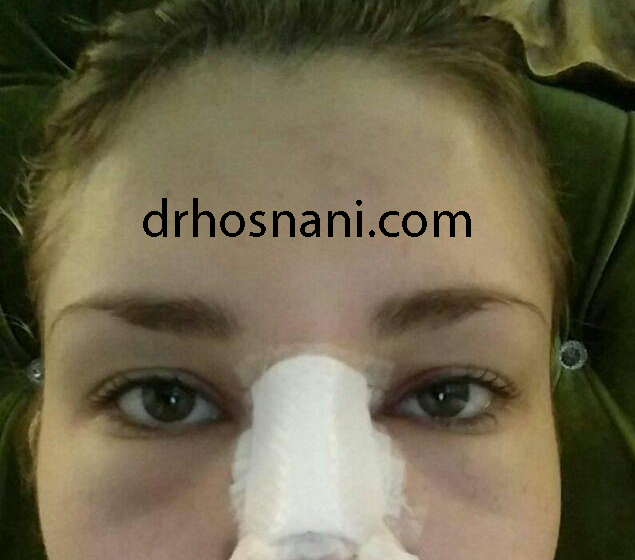
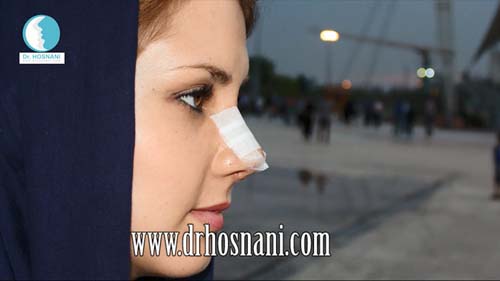
After surgery, a plastic mold called a splint is placed on the patient’s nose, and a dressing is positioned under the nose. Esmeralda gradually regains consciousness and is transferred to the recovery room.
In the recovery room, the patient’s heart rate and blood oxygen level are monitored for one hour. After the medical team confirms that she is stable, she is moved to the inpatient section.
To prevent bruising and swelling around the eyes, after being transferred to the inpatient section, the patient begins using an ice gel pack as a cold compress. This gel is placed in the freezer for a few minutes and, once frozen, is applied over the eyes.
On the morning after surgery, the nurse applies the patient’s ointments, administers her drops, and teaches her the correct way to use the medications.

Days Three to Six: Resting at the Hotel, Medication Care, and Patience While Swelling Subsides
During these days, Esmeralda spent most of her time resting. Taking the prescribed medications, keeping her head elevated while sleeping, and following the doctor’s instructions helped her recovery progress well.
Swelling and bruising are normal in the first days and usually decrease gradually over time.
Step Five: A Successful Conclusion and Return Home
After completing the initial recovery period, the time came to assess the early surgical result.

Day Seven: Final Visit, Splint Removal, and Suture Removal
On the seventh day, Esmeralda returned to the office for her final visit. The doctor removed the nasal splint and checked or removed the sutures.
With the cast removed, she was able to see the new shape of her nose for the first time, although some natural swelling was still present.
Esmeralda is discharged from the clinic and, after one week of rest, returns for splint removal and the removal of her nasal sutures.
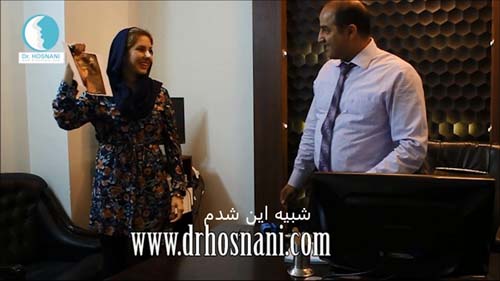
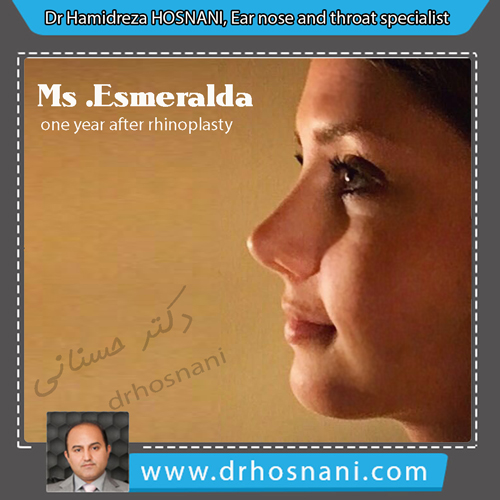
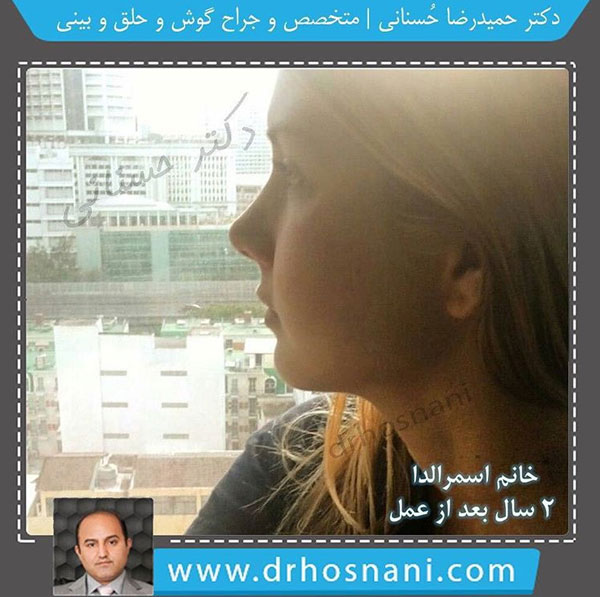
Esmeralda is very pleased with the result of the surgery and tells the doctor that she now resembles her favorite actress.


Day Eight: Preparing for the Return Flight and the End of the Journey
After receiving post-operative recommendations for continuing the recovery process, Esmeralda prepared to return to Spain.
Although the final nasal shape would gradually become more evident over the following months, she left Iran feeling satisfied with the early result and with a positive experience of her medical journey.

Natural Rhinoplasty Results: A Flight Attendant's Journey with Dr. Hosnani
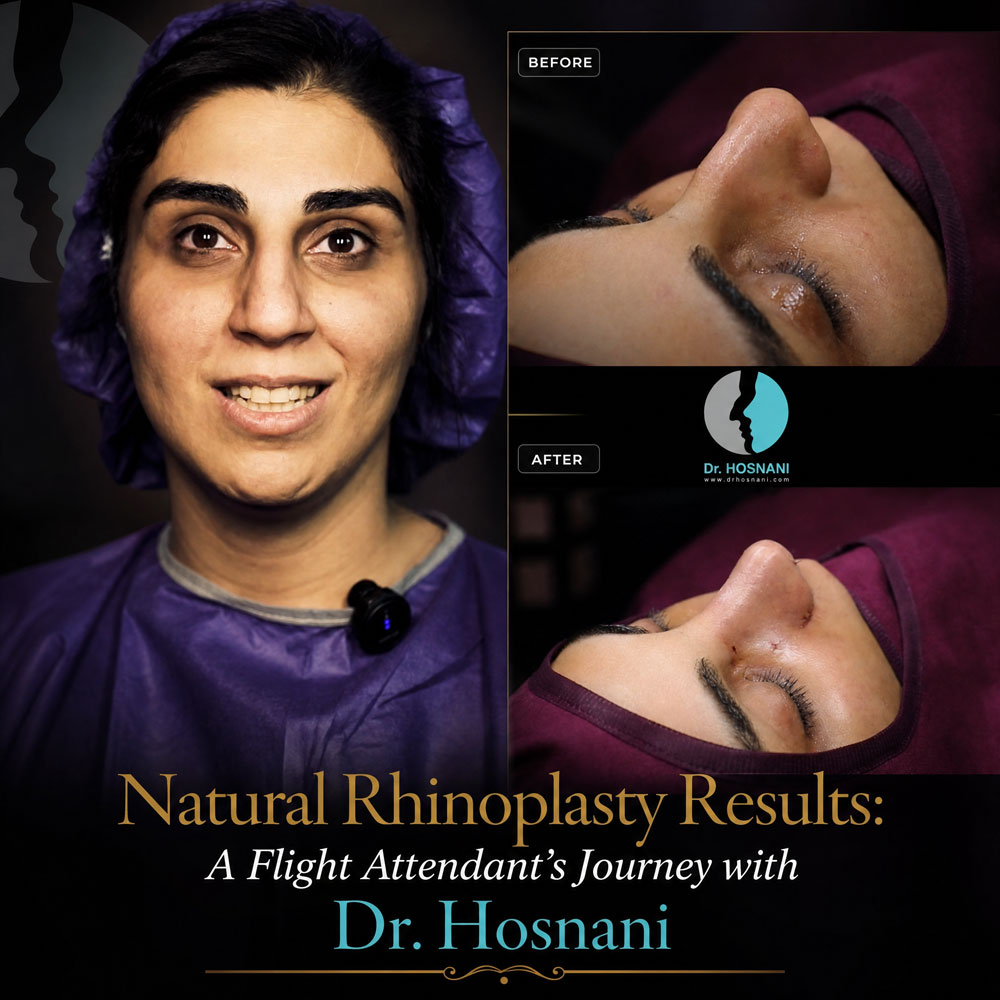
Video Description