




Allergies and Complications That Can Affect Rhinoplasty
Dr. Hamidreza Hosnani
ENT Specialist | Rhinoplasty Surgeon in Tehran | Nose Surgery Specialist
Respiratory allergies and seasonal sensitivities after rhinoplasty can cause problems such as increased mucosal swelling, nasal congestion and obstruction, frequent sneezing, and increased discharge, which slows down the healing process and even increases the risk of bleeding or stitches opening. On the other hand, the constant inflammation caused by allergies may prevent the results of rhinoplasty from being fully visible or make the patient reach the final form later. For this reason, controlling allergies with medication and avoiding triggers before and after surgery is very important.
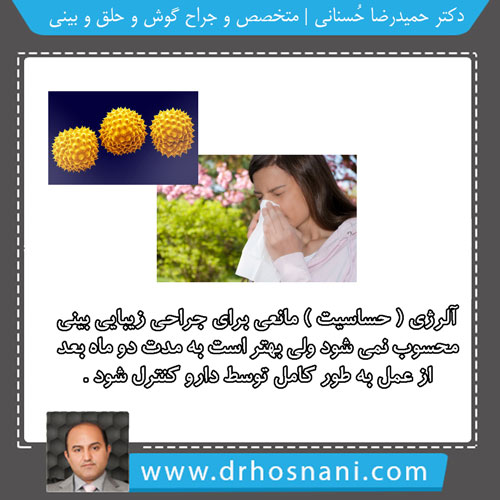
Allergy or Seasonal Allergies Are Not Contraindications for Rhinoplasty or Facial Plastic Surgery and Can Be Controlled with Medication
How Can Nasal Polyps Be Distinguished from Allergies?
Why the Distinction Matters
Nasal polyps and allergies can produce several overlapping symptoms, including nasal obstruction, discharge, and difficulty breathing. For this reason, many patients initially find it difficult to determine which condition may be responsible for their discomfort. Nevertheless, despite these similarities, there are important clinical differences that can help guide a more accurate diagnosis.The Need for Careful Evaluation
A proper distinction depends on several factors, such as the duration of symptoms, the nature of nasal secretions, the presence of associated complaints, and the patient’s response to medication. In some cases, a specialist examination is required to establish whether the underlying problem is inflammatory, structural, allergic, or a combination of these conditions.According to Dr. Hosnani, although nasal polyps and allergic rhinitis may appear similar at first glance, a careful assessment of symptom pattern and associated findings usually clarifies the diagnosis.
Clinical Differences Between Nasal Polyps and Allergies
Duration and Pattern of Symptoms
In cases of nasal polyps, symptoms are often persistent and may continue for a long time without meaningful interruption. Because polyps remain physically present within the nasal passages, they can cause ongoing blockage, chronic discharge, and sustained breathing difficulty. By contrast, allergic symptoms are more often seasonal, episodic, or triggered by exposure to specific irritants such as pollen, dust, or animal dander. When contact with the allergen is reduced, symptoms often improve as well.The Nature of Nasal Discharge
The type of nasal secretion may also provide a helpful clue. In patients with nasal polyps, the discharge may at times appear thicker and may be associated with chronic inflammation or secondary infection. In allergic conditions, however, the discharge is more commonly clear, thin, and watery. Allergic nasal discharge is also frequently accompanied by sneezing and eye irritation.Associated Symptoms Beyond Congestion
Nasal polyps may produce additional complaints such as facial pressure, headache, and a reduced sense of smell. In some patients, the loss of smell becomes one of the most noticeable features. Allergies, on the other hand, are more likely to be accompanied by itchy eyes, throat irritation, frequent sneezing, and sometimes cough. These accompanying symptoms often help distinguish one condition from the other.Response to Medical Treatment
Another useful point of comparison is the response to medication. Polyps may not improve significantly with standard antihistamines or short-term decongestants, because they represent abnormal tissue growth within the nasal cavity rather than a purely allergic reaction. Allergic symptoms, by contrast, often respond favorably to anti-allergy medications, especially antihistamines and anti-inflammatory nasal sprays.The Role of Medical Testing
When diagnosis remains uncertain, medical evaluation becomes especially important. If nasal polyps are suspected, the physician may recommend nasal endoscopy or a CT scan to assess the internal anatomy more precisely. If allergy is considered the more likely explanation, allergy testing may help identify the responsible triggers and guide treatment more effectively.From Dr. Hosnani’s perspective, the persistence of symptoms, the quality of nasal discharge, and the presence or absence of itching and sneezing are among the most practical elements in distinguishing polyps from allergic disease.

There is no such thing as the best season for rhinoplasty. People with seasonal allergies should avoid surgery during the season when their allergies flare up.
Treatment of Nasal Allergy and Allergic Irritation
General Principles of Management
The treatment of nasal allergy depends on both the severity of symptoms and the nature of the allergic trigger. Some patients experience only mild and occasional irritation, whereas others suffer from more chronic and disruptive symptoms that require sustained treatment. In all cases, the aim is to reduce inflammation, relieve congestion, and improve the patient’s quality of life.Antihistamine Medications
Antihistamines are among the principal medications used in the treatment of allergic conditions. They help reduce symptoms such as sneezing, nasal itching, and clear discharge. These medications may be prescribed in the form of tablets, nasal sprays, or drops, depending on the patient’s needs and the severity of the presentation.Decongestant Nasal Sprays
Decongestant sprays may provide short-term relief from nasal blockage and can be useful during periods of marked congestion. However, their effect is generally temporary, and prolonged use should be avoided. In most cases, these sprays should not be used for more than three consecutive days, as excessive use may lead to rebound congestion and worsening symptoms.Corticosteroid Nasal Sprays
Corticosteroid sprays are often highly effective in reducing inflammation and swelling within the nasal mucosa. They are particularly valuable in patients with moderate to severe or long-standing allergic rhinitis. Because these sprays are intended for controlled and appropriate use, they should ideally be taken under medical supervision.In Dr. Hosnani’s professional practice, the most successful management of nasal allergy often combines symptom control with careful attention to the patient’s triggers, inflammatory pattern, and long-term nasal health.
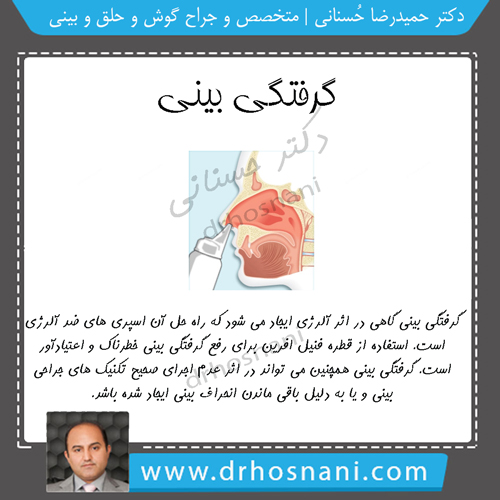
Nasal Congestion Caused by Allergies Can Be Treated with Anti‑Allergy Sprays
When Specialist Assessment Becomes Necessary
Persistent or Atypical Symptoms
If nasal obstruction, discharge, or breathing difficulty persists despite standard allergy treatment, further evaluation is advisable. Long-standing symptoms may indicate that the problem is not purely allergic and that structural factors, chronic sinus disease, or polyps may also be involved.The Importance of Accurate Diagnosis
An accurate diagnosis is essential because the treatment of polyps differs from the treatment of uncomplicated allergy. While allergic rhinitis often responds well to medical therapy, nasal polyps may require endoscopic assessment, prolonged anti-inflammatory treatment, or, in selected cases, surgical management.A Reassuring Clinical Outlook
With appropriate evaluation and treatment, both nasal allergy and nasal polyps can usually be managed effectively. The key lies in identifying the true cause of the symptoms rather than relying solely on superficial similarities between the two conditions.It is Dr. Hosnani’s professional opinion that patients with chronic nasal blockage should not assume that all symptoms are caused by allergy alone, as timely specialist assessment can reveal treatable structural or inflammatory conditions.