




Wearing Glasses After Rhinoplasty
Dr. Hamidreza Hosnani
ENT Specialist | Rhinoplasty Surgeon in Tehran | Nose Surgery Specialist
For one month after rhinoplasty, you should not wear glasses. If wearing glasses is absolutely necessary, they should be taped to the forehead for short periods so that the weight of the glasses does not rest on the nose.
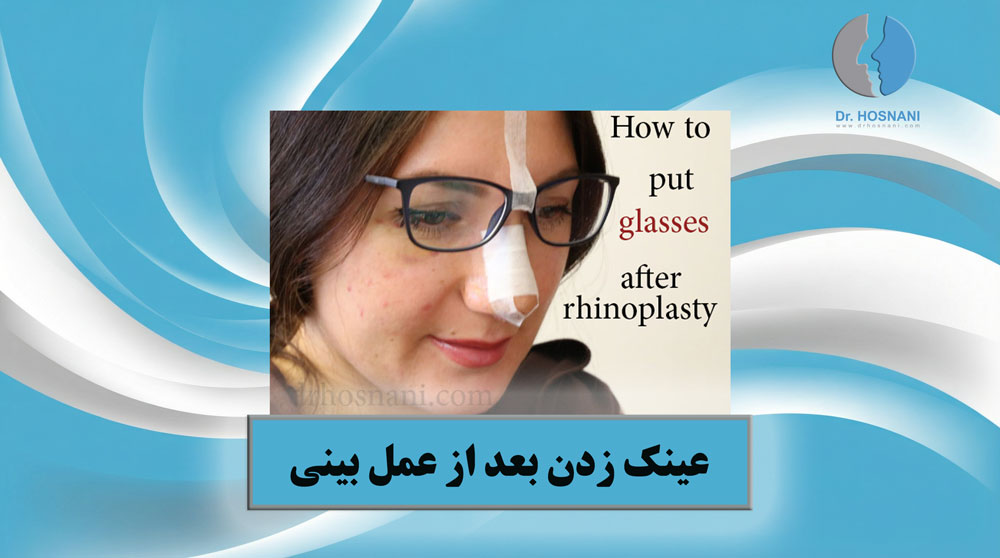
“When can I wear glasses again?”
This concern is completely natural because glasses rest directly on the nasal bones and cartilage and may influence the healing process.
After surgery, the nasal bones are still soft and unstable, and any continuous pressure may cause subtle displacement of the bones or even create indentations. In this article, we explain why wearing glasses during the recovery period should be done cautiously, what types of glasses are allowed, when prescription or sunglasses can be used again, and what alternatives are available during this time.
Why Should You Avoid Wearing Glasses Too Soon After Rhinoplasty?
1. Direct Pressure on Recently Repositioned Nasal Bones
During rhinoplasty, the nasal bones are often cut and repositioned (osteotomy) to narrow or reshape the nose.In the first few weeks:
The bones are soft and easily affected by pressure
Even small pressure can influence their position
Therefore
Even lightweight glasses can place point pressure on the nasal bridge and potentially affect its shape.
2. Risk of Indentation on the Nasal Bridge
In patients who have undergone delicate reshaping surgery or who have thin skin, constant pressure from glasses may cause:⚠ Indentation
⚠ Irregularities
⚠ Changes in nasal contour
⚠ Disturbance of the aesthetic result
3. Increased Swelling
Besides mechanical pressure, glasses may also interfere with blood and lymphatic circulation on the nasal bridge, potentially increasing swelling or prolonging the swelling‑reduction phase.4. Risk of Subtle Nasal Deviation
In the early weeks, the tissues are still stabilizing.If the pressure from glasses is uneven, it may:
⚠ Slightly shift the nasal septum
⚠ Make the nasal tip or bridge appear slightly crooked
When Can You Wear Glasses Again?
1. Heavy Prescription Glasses or Sunglasses✔ At least 6 to 8 weeks after surgery
By this time the nasal bones are more stable, although prolonged pressure is still not recommended.
2. Lightweight Prescription Glasses with Thin Plastic Frames
✔ After 4 to 6 weeks with the surgeon’s approval
Provided the glasses are lightweight and worn only for short periods.
3. Sunglasses
✔ Usually allowed after 6 to 8 weeks.
Sunglasses are often heavier than prescription glasses, so a longer waiting period is recommended.
Very Important Note
If your nasal bones were repositioned during surgery or your nose was narrowed (which happens in most rhinoplasty procedures), the recommended avoidance period for glasses may extend up to 3 months.
The final decision should always be made by your surgeon.

In the first month after rhinoplasty, the weight of eyeglasses may cause deformity of the nasal bones.
Can You Wear Glasses on the Splint During the First Week?
Yes.Because the splint or nasal cast is rigid, it prevents glasses from placing pressure on the nose.
During the first week after surgery, the nasal splint (plastic cast) is still on the nose. Patients may wear glasses during this time. However, after the splint is removed at the end of the first week, glasses should generally be avoided for about three more weeks. During this period, contact lenses can be used instead.
Alternatives and Solutions for Wearing Glasses After Rhinoplasty
1. Contact LensesThe safest and best alternative.
Many patients use contact lenses until they are allowed to wear glasses again.
2. Special Glasses Straps or Support Devices
Some glasses have support straps that distribute the weight of the glasses onto the forehead or cheeks, preventing pressure on the nose.
3. Taping the Glasses to the Forehead
Attaching the glasses to the forehead with medical tape prevents the frame from resting on the nasal bridge.
This is a temporary solution and not suitable for long‑term use.
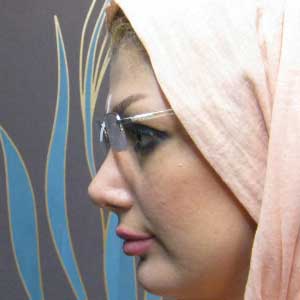
If Necessary, You Can Tape Your Eyeglasses to Your Forehead
If glasses must be used, choose extremely lightweight frames and wear them only for short periods, preferably after 4 to 6 weeks.
Does Wearing Glasses Too Early Always Cause Problems?
Not necessarily, but it does carry some risk.In some patients, no visible change may occur. However, the risk is higher in patients with:
◆ Thin skin
◆ Delicate reshaping surgery
◆ Narrow bony noses
◆ Extensive osteotomies
◆ Previous revision rhinoplasty
Therefore, caution is always the safest approach.
Important Tips When You Start Wearing Glasses Again
Once your doctor allows you to wear glasses:◆ Limit the daily duration of use
◆ Choose lightweight frames
◆ Slightly adjust the position of the glasses every few minutes
◆ Take any unusual pain or pressure seriously
If you notice any indentation on the nasal bridge, contact your surgeon immediately.
Eye Surgery First or Rhinoplasty First?
For about one month after rhinoplasty, you generally cannot wear glasses.Therefore:
If you are planning laser eye surgery to correct refractive errors (such as myopia or astigmatism), it is usually better to have the eye surgery first so that you do not need to deal with glasses during the nasal surgery recovery period. About one month after eye surgery, rhinoplasty can safely be performed.
However, if someone prefers to undergo rhinoplasty first, that is also possible. You can have rhinoplasty first and then have eye surgery about one month later. In this case, after the eye surgery you will be able to wear sunglasses without concern.
The recommended interval between the two surgeries is about one month.